
news
What Are They Afraid Of? The Relentless Resistance to Electronic Transmission of Election Results – By Chief Akinwumi Akinfenwa

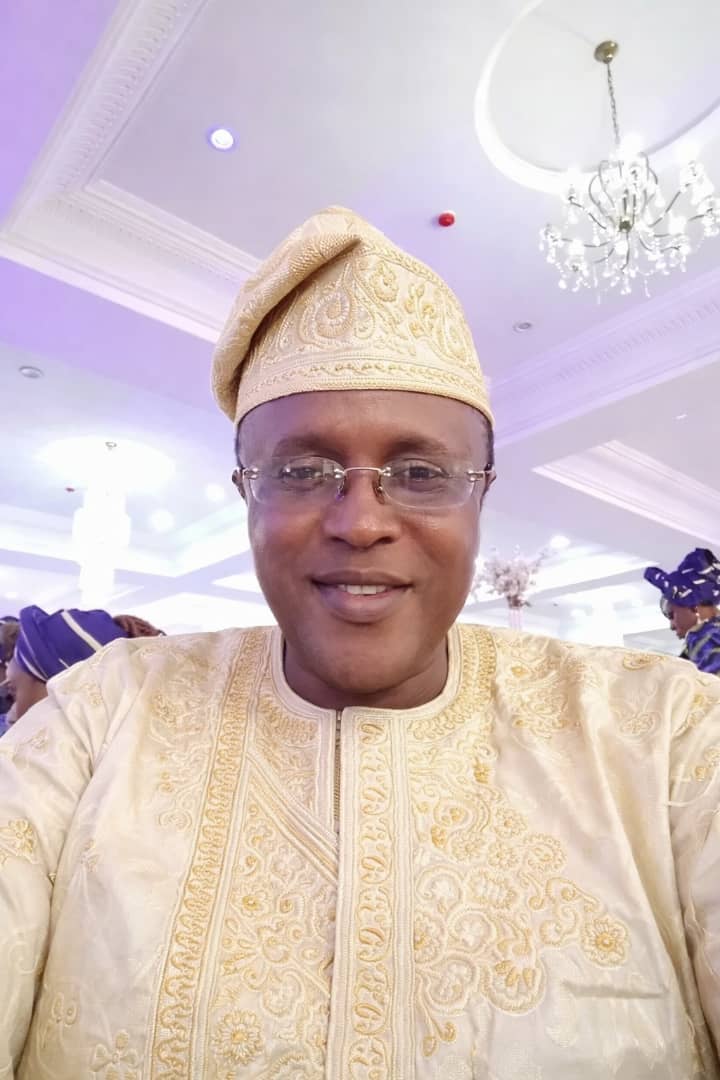
Let us stop pretending.
The debate over electronic transmission of election results in Nigeria is no longer technical. It is no longer administrative. It is no longer about network coverage in rural communities.
*It is about control.*
Every election cycle, Nigerians are told the same story: electronic transmission is “not yet feasible,” “too risky,” “legally unclear,” or “technically premature.” Yet, somehow, these same elections rely on biometric accreditation devices, digital voter registers, and electronic databases.
We trust technology to verify voters — but not to transmit their votes?
What exactly are we afraid of?
*The Most Vulnerable Stage of Nigerian Elections*
Voting is visible. Citizens watch ballots counted at polling units. Party agents sign result sheets. Observers document outcomes.
The real drama begins afterward.
Results leave the polling unit and enter a maze — ward collation, local government collation, state collation, national collation. At each stage, numbers are rewritten, re-entered, re-announced.
And somewhere along that journey, figures sometimes change.
This is not speculation. It is the recurring source of litigation, protest, and public outrage after nearly every major election.
The gap between what voters see and what is finally declared is the crack in Nigeria’s democratic wall.
Electronic transmission closes that crack.
Which is precisely why it makes some people uncomfortable.
*If There Is Nothing to Hide, Why Resist Transparency?*
Let us ask the uncomfortable question directly:
If results announced at polling units are genuine, why should they not be uploaded instantly to a secure public portal?
If the will of the people is clear at 3 p.m., why must it travel through opaque corridors before Nigerians see it?
If the process is clean, transparency should be welcomed — not feared.
Resistance to electronic transmission sends a dangerous signal: that opacity is politically useful.
*The Infrastructure Excuse Is Wearing Thin*
We are told Nigeria lacks the capacity.
This is the same Nigeria where:
Banks process trillions of naira daily through encrypted digital platforms;
Telecom companies manage over 200 million subscribers;
Citizens transfer money across continents in seconds;
Government agencies collect taxes electronically nationwide.
Suddenly, when it comes to transmitting polling unit results — typically just a few kilobytes of data — the system becomes fragile?
No.
The problem is not bandwidth. It is political will.
*Other Democracies Do Not Play This Game*
India manages elections for nearly a billion registered voters using electronic systems backed by paper audit trails. Results are transmitted and verified with speed and transparency.
The United States reports results electronically across thousands of counties, with layered authentication and audit systems.
South Africa publishes progressive results digitally under public scrutiny.
These countries are not perfect. But they understand a fundamental principle: modern democracies do not rely solely on the physical movement of paper to determine national leadership.
Nigeria cannot aspire to global leadership while defending 20th-century collation methods in the digital age.
*The Real Fear: Losing the “Collation Advantage”*
Let us speak plainly.
Manual collation creates discretion points.
Discretion creates leverage.
Leverage creates opportunity.
Electronic transmission reduces discretion. It creates an immutable digital timestamp. It locks in what was declared at the polling unit.
For those accustomed to navigating grey areas during collation, that lock is inconvenient.
But democracy is not designed for convenience. It is designed for credibility.
*The Cost of Continuing This Way*
Each disputed election:
Drains billions in tribunal proceedings;
Deepens regional and ethnic fault lines;
Erodes youth participation;
Weakens investor confidence;
Forces elected leaders to govern under clouds of doubt.
A democracy constantly defending its results cannot focus on development.
Nigeria’s political class must decide: is short-term tactical advantage worth long-term institutional damage?
*Cybersecurity Is Not an Excuse — It Is a Responsibility*
Yes, digital systems can be attacked.
So can physical ones.
Ballot boxes are snatched. Result sheets are mutilated. Collation centres are besieged. Documents disappear.
The solution to digital risk is stronger encryption, independent technical audits, multi-layer authentication, offline capture with secure upload, and criminal sanctions for interference.
The solution is not retreat.
A hybrid system — electronic transmission backed by physical copies — is more secure than paper alone.
Redundancy strengthens integrity.
*2027 Is a Test of Sincerity*
As Nigeria approaches another electoral cycle, this issue can no longer be treated as optional.
Electronic transmission must be:
Clearly mandated in law;
Technically standardised;
Publicly auditable;
Operationally non-negotiable.
Anything less signals hesitation.
And hesitation, in matters of electoral integrity, breeds suspicion.
This Is About the Republic, Not a Party
Today’s ruling party may benefit from opacity. Tomorrow, it may suffer from it.
Weak systems eventually turn on everyone.
Strong systems protect incumbents from illegitimacy and protect challengers from injustice. Most importantly, they protect citizens from despair.
The question is no longer whether electronic transmission is possible.
The question is who benefits from its absence.
*Nigeria Must Choose*
We cannot continue to celebrate digital innovation in banking, fintech, and telecommunications while defending manual opacity in our most sacred democratic exercise.
Either we trust the people enough to protect their votes with modern safeguards —
Or we admit that ambiguity serves powerful interests.
Nigeria deserves elections that are not only free and fair, but seen — instantly and transparently — to be so.
Anything less is democracy in partial darkness.
And darkness, history teaches us, always serves someone.
*© Chief Akinwumi Akinfenwa*
*Political Scientist, Public Policy Analyst, Social Commentator, and Advocate for Constitutional Decency lives in Ibadan*
*07062986613 for Calls/SMS*
*09091700203 for WhatsApp*


The Oyo State Police Command has intercepted two suspects over the alleged theft of diesel valued at about ₦12 million at a construction site in Ibadan, marking what the authorities described as a significant operational breakthrough.
Oyo state Police Public Relation Officer, DSP Ayanlade Olayinka, disclosed this in a statement on Friday evening.
The suspects according to the police, were apprehended by operatives of the Command Monitoring Unit at Kopek Construction Company in Ibadan while allegedly siphoning liquid substances believed to be diesel from a mixer truck.
According to the statement, the arrest followed credible intelligence and timely information provided by members of the public.
The police added that a search conducted at the scene led to the recovery of 24 barrels containing 240 litres each of liquid suspected to be diesel, amounting to approximately 10,000 litres.
Police authorities estimated the value of the recovered product at ₦12 million.
The Commissioner of Police in the state, CP Femi Haruna, commended the professionalism and dedication of the operatives involved in the operation.
He also lauded the leadership of the Inspector-General of Police, Kayode Adeolu Egbetokun, noting that his vision and guidance continue to strengthen policing efforts nationwide.
The Command further acknowledged the support of residents whose vigilance and cooperation aided the swift interception of the suspects and the recovery of the product, thereby preventing further losses.
The state Police command confirmed that the suspects are currently in custody, while investigations are still ongoing to determine the full extent of the alleged theft and identify any other accomplices.
Reaffirming its commitment to safeguarding lives and property, the Command urged members of the public to continue providing actionable intelligence to security agencies in the fight against crime
news
When the Iroko Answers the Ancestors: A Dirge for BJ The drum has spoken in a minor key – Lanre Ogundipe
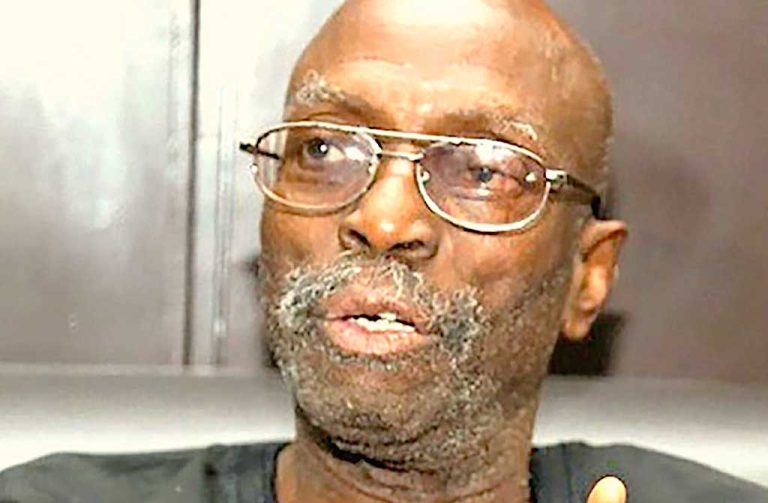
The talking drum bends low; its leather voice trembles.
An iroko has answered the call of the forest.
Professor Biodun Jeyifo has gone the way of the ancestors — not in defeat, but in fulfillment.
Eight decades he walked this red earth, measuring it with the stride of inquiry, planting questions like kola nuts in the courtyards of power.
O BJ, ọmọ ilẹ̀ Ìbàdàn, child of the dust that births stubborn thinkers,you did not come among us to decorate silence.You came with fire wrapped in grammar,with thunder disguised as scholarship.
Who now will trouble the complacent page?Who will lean into the wind of argument and call it home?In the old Yoruba way, when a great tree falls, the forest does not clap — it inhales.
It remembers the shade it gave, the birds it housed, the medicines hidden in its bark.
So we remember you: teacher of teachers, critic of critics, custodian of the word’s moral burden.Your classrooms were not bounded by walls.
From Nigeria to distant shores, from seminar halls to conference podiums, you stretched the map of African thought.
You spoke of drama as destiny, of literature as a people wrestling with history.
In your readings of Wole Soyinka, you did not genuflect; you engaged.
You wrestled brilliance with brilliance, sharpened steel against steel, and called it love — the love of truth.
You taught us that criticism is not quarrel; it is care.That to interrogate is to honor.That to disagree with rigor is to build a house strong enough to weather time.
Ah, BJ, alákọ̀ọ́bẹrẹ̀ of restless minds,you wore intellect like agbádá — ample, flowing, but never cumbersome.
Your laughter, quick and knowing, could soften the edge of your fiercest argument.Your pen, however, spared no laziness.
You insisted that ideas must earn their keep.That theory without conscience is a masquerade without a dancer.
In the marketplace of nations, where Africa is too often misread, you stood like a town crier refusing distortion. You declared that our stories are not footnotes.
That our theatre is not imitation. That our modernity is not borrowed cloth but woven aso-òkè, thick with memory.
When storms gathered around the public square, you did not retreat to ivory towers.
You walked into the square. You argued that scholarship must descend from its balcony and sit among the people.
That the academy is not a shrine but a workshop. That knowledge must carry the weight of justice.
Today, the curtain falls on your visible presence. The stage dims.
The script closes. Yet what is a life such as yours if not a rehearsal for immortality?
The elders say when a sage departs, he does not vanish; he becomes wind. He becomes proverb. He becomes that inner voice that refuses cowardice.
Already, in libraries and lecture halls, your sentences stir like harmattan dust — persistent, impossible to ignore.Nigeria mourns, yes. Africa bows its head.
The global academy lowers its flag of inquiry.
But beyond grief there is gratitude ; deep, resonant, like the bass of the bàtá drum at twilight.
Thank you for eighty years of intellectual integrity.Thank you for the stubbornness of your clarity.
Thank you for impacting us – that to think is an ethical act.
Sleep, BJ, where the ancestors debate in eternal symposium. Sit among the great disputants of our history.
Let Orun welcome you with the dignity you gave to words.
And we, your friends and admirers, named and unnamed – will keep the argument alive.
We will trouble falsehood. We will defend nuance. We will refuse easy applause.
For the iroko has fallen, yes.But its seeds are everywhere.
Go well, Professor.The drum will speak your name at dusk.
The forest will remember.
Lanre Ogundipe President, IBILE Club and former President Nigeria and Africa Union of Journalists writes from Abuja.February 13, 2026.
news
Makinde elevates Alago-oja, 13 other Oyo High Chiefs to crown wearing Obas, presents them instruments of office
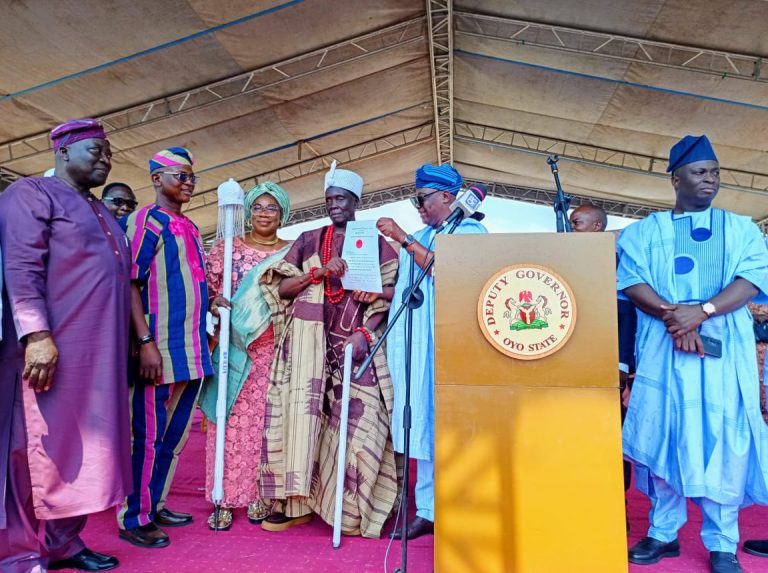
Oyo State Governor, Engr. Seyi Makinde elevated 14 High-Chiefs and Baales in Oyo town to the status of beaded crown wearing Obas, formally presenting them with instruments of office.
The coronation ceremony was held on Friday, February 13, 2026 at Oliveth Baptist High School, Oyo.
The colourful ceremony was well attended by traditional rulers, political leaders, senior government officials and traditional and cultural stakeholders from across the state.
Speaking on behalf of the Governor, the Deputy Governor, Barrister Adebayo Lawal, said the elevation of the chiefs underscored the administration’s commitment to strengthening traditional institutions and promoting peace and development at the grassroots.
He congratulated the newly crowned monarchs, noting that their ascension to the status of crown wearing Obas was both a recognition of their leadership and a reaffirmation of the enduring relevance of traditional institutions in governance, peacebuilding and grassroots community development.
According to him, the state government holds traditional rulers in high esteem because of their roles as custodians of culture, promoters of unity and partners in progress.
He urged the monarchs to uphold integrity, fairness and service to their people, stressing that their reigns should be characterized by peace, inclusiveness and support for government programmes aimed at improving citizens’ welfare in their domains.
The Deputy Governor added that the synergy that exist between government and traditional rulers remained vital in addressing security challenges, promoting unity and accelerating grassroots development.
Earlier in his welcome address, the Commissioner for Local Government and Chieftaincy Matters, Otunba Ademola Ojo, described the event as historic and culturally significant, saying it represented not just the installation of royal fathers but a reaffirmation of Oyo’s rich heritage and enduring traditions.
He said the Yoruba traditional institution, one of the oldest and most revered in Africa, remains central to governance, culture and unity in Oyo Land.
The beaded crown, he noted, is a sacred symbol of authority, service and divine responsibility, and those who wear it are called to lead with integrity, courage and compassion.
Ojo commended Governor Makinde for approving and sponsoring the programme, adding that the coronation of 14 Obas at once symbolised unity, continuity and renewal within Oyo Land.
He reaffirmed government’s commitment to strengthening collaboration with traditional rulers for conflict resolution, cultural preservation and community mobilisation.
The newly elevated monarchs include the Alaaguo of AguoLand, Oba David Oyediran; the Baba Eyaji of Oyo, Oba Afonja Mukaila; the Alajagba of Oyo, Oba Samuel Odurinde; the Ona-Isokun of Oyo, Oba Isiaka Tella-Titiloye; the Onimileke of Imileke Oyo, Oba Fakayode Alowonle; the Onigbudugbu of Gbudugbu Oyo, Oba Salawu Oyeniran; the Oloodu of Ojongbodu, Oba Olaniyi Adegboye; and the Alapa-Ara of Apa-Ara, Oba Tijani Ajeigbe.
Others are the Onidode of IdodeLand, Oba Oyeleke Yusuff; the Iba Samu of Oyo Empire, Oba Lamidi Jimoh; the Alago-Oja of Ago-Oja Land, Oba Ganiyu Busari Ajiboye; the Alakeitan of Akeitan, Oba Jimoh Oyeleye; Elepe of Iseke, Oba Abel Oyekan, and the Agbaakin of Oyo; Oba Asimiyu Jimoh.
Major highlight of the ceremony was the official presentation of instruments of office comprising the staff and certificates as well as the formal crowning of the monarchs.
Present at the event were the Olubadan of IbadanLand represented by the Asipa Olubadan, Oba Hamidu Ajibade, former Speaker of Oyo state Assembly, Senator Monsurat Sunmonu, members of 10th Oyo Assembly from Oyo geopolitical zone, top government functionaries and political leaders.
news
2027 Polls: INEC Fixes February 20 for Presidential, National Assembly; March 6 for Governorship, State Assemblies
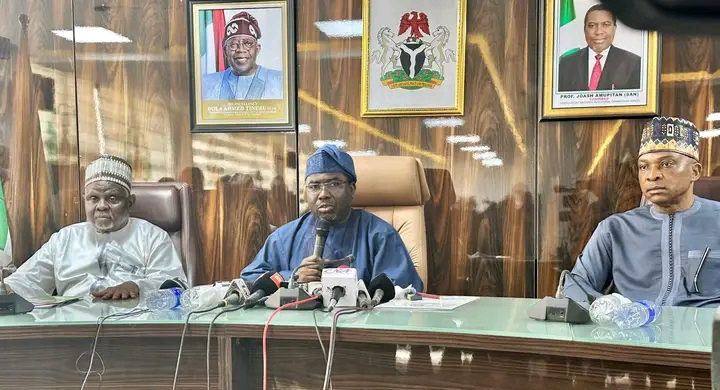
The Chairman of the Independent National Electoral Commission (INEC), Prof. Joash Ojo Amupitan, has formally released the Notice of Election and the Timetable and Schedule of Activities for the 2027 General Elections, setting February 20, 2027, as the date for the Presidential and National Assembly polls.
Addressing political party leaders, civil society organisations, and members of the press in Abuja on Friday, February 13, 2026, the INEC Chairman described the announcement as “a significant milestone in our democratic journey” and a constitutional obligation aimed at consolidating Nigeria’s democracy.
According to the Commission:
* Presidential & National Assembly Elections – February 20, 2027
* Governorship & State Houses of Assembly Elections – March 6, 2027
The elections will cover the offices of:
* President and Vice President of the Federal Republic of Nigeria
* Governors and Deputy Governors (except in Anambra, Bayelsa, Edo, Ekiti, Imo, Kogi, Ondo and Osun States)
* Members of the Senate
* Members of the House of Representatives
* Members of the State Houses of Assembly
Prof. Amupitan emphasized that the release of the Notice complies strictly with the provisions of the Constitution of the Federal Republic of Nigeria, 1999 (as amended) and Section 28(1) of the Electoral Act, 2022, which mandates publication not later than 360 days before the election date.
The INEC Chairman addressed recent speculation surrounding election dates, noting that some individuals had attempted to preempt the Commission by circulating unofficial schedules.
“For some time now, this has been a subject of speculation,” he said, adding that such actions were misleading and orchestrated by detractors. He reaffirmed that only INEC has the constitutional authority to fix election dates.
INEC is closely monitoring ongoing amendments to the Electoral Act, 2022, currently before the National Assembly. While welcoming reforms that could strengthen the electoral framework, the Commission stressed its obligation to operate within the existing law until any amendments are duly enacted.
“The timely announcement of the election date allows political parties, civil society organisations, and the electorate to prepare adequately,” Prof. Amupitan noted.
Under the approved timetable:
* Political party primaries must hold within the statutory period.
* Submission of nomination forms must comply strictly with the designated window.
* Campaigns will commence as provided by law and end 24 hours before Election Day.
The Chairman warned that the Commission would not hesitate to enforce compliance with electoral laws and timelines.
Reaffirming INEC’s independence and neutrality, Prof. Amupitan outlined key priorities for the 2027 polls, including:
* Expanded deployment of technology to enhance transparency;
* Continuous cleaning and updating of the National Register of Voters;
* Strengthened collaboration with security agencies to ensure peaceful elections;
* Increased voter education and stakeholder engagement.
He urged political parties to conduct peaceful primaries, avoid inflammatory rhetoric, and uphold internal democracy, while appealing to citizens to maintain peace throughout the electoral cycle.
Describing the 2027 General Elections as a collective national responsibility, the INEC Chairman called on government institutions, the media, security agencies, civil society groups, and Nigerians at large to play their roles in safeguarding the integrity of the process.
“As we commence this important national exercise, I assure Nigerians that the Commission is fully prepared and determined to deliver elections that reflect the sovereign will of the people,” he declared.
The formal release of the Notice of Election signals the official commencement of Nigeria’s 2027 electoral process, setting the stage for what promises to be another defining chapter in the nation’s democratic history.
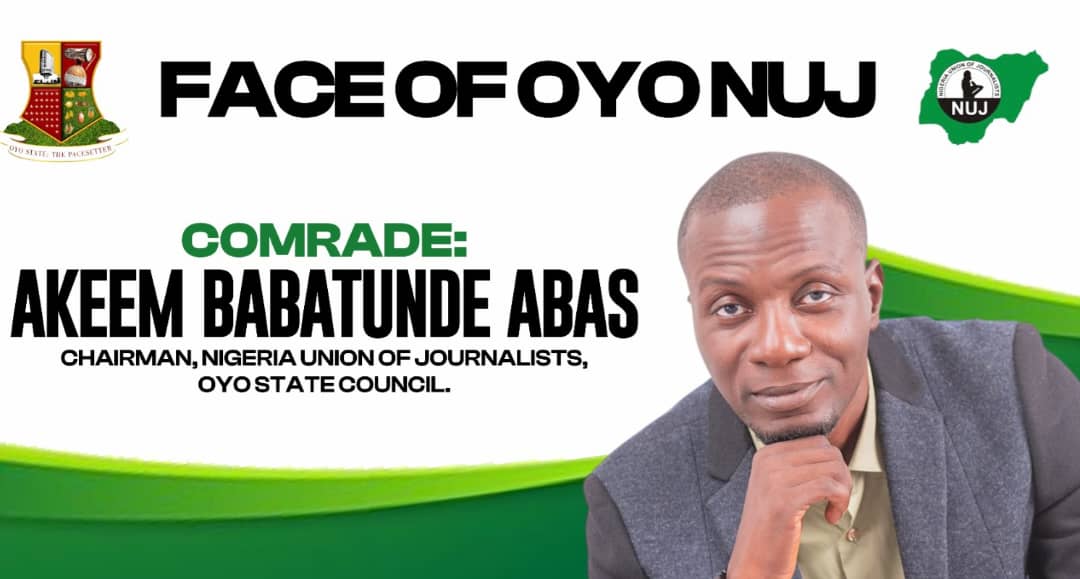
The Nigeria Union of Journalists(NUJ), Oyo State Council, has joined broadcasters, media professionals and other stakeholders worldwide to commemorate “World Radio Day 2026″.
In a statement jointly signed by its Chairman, Akeem Abas and Secretary, Temidayo Adu, hailed radio’s evolution in the age of Artificial Intelligence(AI).
The statement emphasized that the theme for the 2026 celebration “Radio and Artificial Intelligence” was very apt and timely as digital technologies has rapidly reshape communication landscapes.
Oyo NUJ further stated that radio remained one of the most accessible, trusted and people-centred media platforms, especially in bridging information gaps across urban and rural communities.
It described AI as a powerful tool capable of enhancing radio production, content delivery, audience engagement, data analysis and newsroom efficiency, while expanding creative possibilities for broadcasters.
The union cautioned that the adoption of AI must be guided by strong ethical standards, human editorial judgement, professionalism and public interest considerations.
The council added that journalists must be guided on the adoption of AI to safeguard credibility, accuracy, inclusiveness and accountability in broadcasting.
The council further called on journalists to embrace continuous training, innovation, and responsible use of AI, urging relevant policymakers and media owners to support capacity-building initiatives that aligns technology with societal development.
The union reaffirmed its commitment to defending press freedom, promoting professionalism and strong adherence to ethical standards.
It also pledged support initiatives that strengthen radio as a platform for education, peacebuilding, cultural expression and democratic participation in the AI era.
news
AU Summit: Nigeria Records Significant Diplomatic And Institutional Achievements, Get Permanent Seat of African Central Bank Board
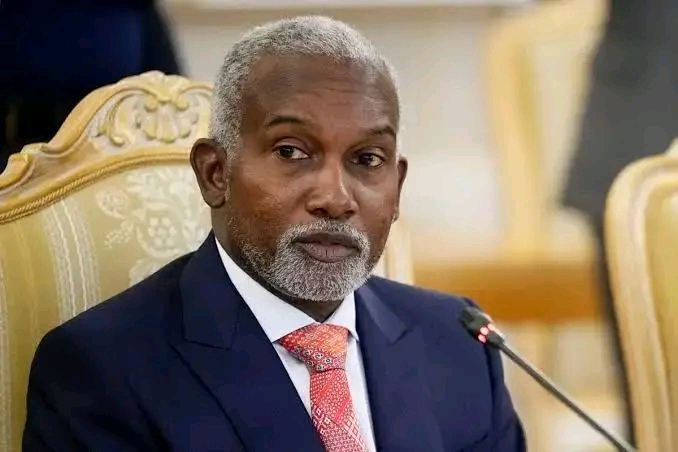
During the just-concluded 39th Session of the Executive Council of the African Union, Nigeria recorded significant diplomatic and institutional achievements, consolidating its leadership role in advancing Africa’s economic integration, peace, security, and democratic governance.
A press statement issued by Ambassador Yusuf Tuggar, Minister of Foreign Affairs, on Friday, February 13, 2026, a major highlight of the session was the Council’s agreement to grant Nigeria a permanent seat on the Board of the African Central Bank. This landmark development underscores Nigeria’s strategic role in shaping Africa’s financial architecture.
This decision also extends Nigeria’s representation to the Board of the Technical Convergence Committee of the African Monetary Institute, which serves as the precursor to the establishment of the African Central Bank.
These developments affirm Nigeria’s technical capacity, economic significance, and commitment to advancing Africa’s monetary integration agenda.
In the area of peace and security, the session witnessed the successful election of the candidates collectively agreed upon by the Economic Community of West African States to the Peace and Security Council. This outcome reflects the strong cohesion, cooperation, and unity among ECOWAS Member States, as well as the region’s shared commitment to promoting stability and collective security across the continent.
Furthermore, Nigeria demonstrated leadership in strengthening democratic governance across Africa by organising a Ministerial High-Level Panel Discussion on Regional Partnerships for Democracy. The event attracted wide participation from ministers, senior government officials, and delegates, not only from the West African region but from across the continent and the international community. The panel facilitated constructive dialogue on strengthening democratic institutions, fostering inclusive governance, and enhancing collaborative regional approaches to sustaining democratic values.
Nigeria’s engagements and outcomes at the 39th Executive Session of the Executive Council reaffirm the country’s commitment to the ideals and objectives of the African Union, particularly in promoting economic integration, institutional development, peace, security, and democratic governance across the continent.
The Federal Government of Nigeria remains dedicated to working collaboratively with Member States and regional bodies to advance Africa’s shared prosperity and sustainable development.
-

 news11 months ago
Interrogating the connection between social service and charity
-
news2 months ago
Arrive Early To Examination Centers, Comport Yourselves – Oyo HOS Admonishes Civil/Public Servants
-
news10 months ago
ANPP block in APC expresses deep concern over marginalisation to re-evaluate membership
-
news8 months ago
LG Commission Chairman ‘Wolekanle’ Gets Oyo NULGE’s Support
-

 economics12 months ago
NNPC Shipping, partners unveil joint venture to boost crude transport
-
 news11 months ago
Abdulrazaq Inspects Govt’s Multistorey Prototype School
-
 news12 months ago
Man arrested for beating girlfriend to death in Lagos
-
 economics12 months ago
Subscribers lament as MultiChoice raises DStv subscription by 21%