
news
At Ologuneru, it was a battle of wits and wills over Circular Road corridor


The atmosphere was thick with apprehension. Palpable fear filled the air. Even some government officials walked with trepidation. Everyone was cautious and most people had already mapped out an escape strategy in case things turned awry. Many, despite the presence of security officers, had their vehicles parked far away from the centre of action and had instructed their drivers to be set to speed off at the slightest sign of danger.
The feeling was not out of place; the build up to last Wednesday’s meeting between Governor Seyi Makinde and Ido Local Government residents affected by the ongoing construction of Rashidi Ladoja Circular Road had been really scary. There had been protests around Ibadan denouncing the corridor. There had been accusations of land grabbing against the government. There had been campaign of calumny against the governor. There had been insults and ill wishes. Then, at the venue of the meeting, community leaders had given strict instructions to their members not to hail the governor or applaud his speech. Their placards told the story of their agitation. The people were adamant on having their way; they wanted the road, not the setback; they wanted the road, not the corridor; they wanted just 60 metres for the road, not 150 metres or 500 metres; they wanted immediate compensation for those whose building had to go, not any promissory note. It was a high-wire drama.
The Rashidi Ladoja Circular Road (formerly known as Ibadan Circular Road) has a long history.
The idea of a circular road that would encircle Ibadan, the largest city in West Africa by land mass, was first mooted in 1995, when a private company presented the idea to Colonel Ike Nwosu, who was the Military Administrator of Oyo State at the time. The intent was to create a bypass that would free the city centre of traffic congestion caused by interstate travelers. But the road project remained just a concept until Colonel Nwosu was posted out of the state in 1996. Neither did the concept take up any form of life during the time of Colonel Ahmed Usman, who succeeded Nwosu nor did it receive any attention while Commissioner of Police Amen Oyakhire, who succeeded Usman, held sway in the state.
The idea was re-presented to Alhaji Lamidi Adesina, Oyo State’s first civilian governor in the current republic. He set up a working committee to advise on the feasibility of the project but couldn’t take it beyond that point before he left office in 2003.
The first real progress on the Ibadan Circular Road project was recorded during the tenure of Governor Rashidi Ladoja. After being briefed on the project, his administration provided the funds required for the survey of the road project. In 2005, the administration completed the Right-of-Way survey, setting it at 75 metres on either side of the road. The Ladoja administration also paid compensation to all affected by the new road.
With the exit of Ladoja from office in 2007, the project got stalled for over 10 years. Nothing was done about the project until 2017 when the Abiola Ajimobi administration expanded the acquisition of land for the project to 1 kilometre (500 metres on each side) to align with the new Ibadan Master Plan and global standards for urban growth and infrastructure safety. The administration embarked on the increase of the width of the road to make room for a business corridor with the aim of optimizing business opportunities around the circular road as well as make allowance for utilities, service lanes, drainage, and community access roads.
On June 16, 2017, the Ajimobi administration awarded the construction of 32.2km South East Wing Phase 1, between the Abiola Ajimobi Technical University (Tech U) on Lagos-Ibadan Expressway (E1) and Egbeda on Ibadan-Ife Expressway to Messrs ENL Consortium at the cost of N67bn. The company was expected to deliver the project by June 2020. As a result of the COVID-19 pandemic, ENL Consortium invoked the force majeure clause that got the completion date extended till 2021. However, following the inability of ENL to deliver the project on schedule, the Seyi Makinde administration, which took over from Ajimobi in 2019, revoked the contract in 2021. According to the state government, ENL Consortium only completed 5.5 per cent of the entire project.
In June 2021, the Makinde administration awarded the road construction to a new concessionaire, Messrs SEL-Vydra Consortium, at the cost of N138.2 billion, on a Build, Operate and Transfer arrangement. But due to the slow pace of work by the company, the state government terminated the contract with a resolve to undertake the project on its own. So on September 18, 2022, Governor Makinde flagged off the construction of the 32.2 km East-End Wing of the 110 km Ibadan Circular Road, which he renamed Senator Rashidi Ladoja Circular Road. That first segment of the road, which Makinde flagged off in September 2022, is about 80 per cent complete and is expected to be commissioned in the first quarter of 2026.
However, due to the slow progress of work on the project over a period of two decades, the Circular Road became a knotty issue embroiled in controversy. The road grew in width from the initial 75 metres aside to 500 metres on either side. With successive administrations not taking up the challenge of working on the road, many residents believed that the Circular Road would remain a mirage. Therefore, many of those who had been compensated by the Ladoja administration sold the acquired lands to others. With time, buildings started growing in areas earmarked as setback and corridor. Consequently, the road path which had been a jungle when the survey was done in 2005 had turned into clusters of buildings in 2022 when the Seyi Makinde administration resolved to give life to the all-important road project. So, the government has had to contend with demolition of structures on the road path as well as paying compensation to the affected people.
While many of the residents appreciate the efforts of the administration to upgrade Ibadan and position the state for endless opportunities through the Circular Road, and are willing to make the necessary sacrifice to see the project become a reality, some others find it difficult to come to terms with having to lose their homes because of a road. So, these people, especially those in built-up areas along the road path, its setback and the corridor, would rather have their abodes spared than have the Circular Road with a setback and corridor. This issue had pitted some people against the government.
So, when Governor Seyi Makinde decided to meet with the affected residents last Wednesday at Ologuneru in Ido Local Government Area of Ibadan with a view to resolving the matter, the stage was set for an epic battle of wits and wills. Both the governor and the people wanted the road but while the governor wanted to have the setback meant to service the road for the benefit of road users as well as residents, and the corridor designed to set the stage for sustainable development in the state, the people wanted their houses already built on the setback and the corridor spared by the government.
The affected residents nominated six people to speak on their behalf at the meeting with the governor. One after the other, each of them spoke eloquently about how their lives would be disrupted and how they might be sentenced to life-long hardship and poverty should the government insist on building the road with the setback and business corridor. They carefully marshaled their points, determined to let the governor see their plight and have a mind shift. The submission of each of them was that the government should limit itself to only 60 metres, which is the width of the road and forget about any setback or corridor. The residents hailed their representatives after each presentation.
When it was his turn to speak, Governor Makinde left the podium set for him and moved closer to the people.
Looking straight at the people, Makinde said: “You installed this government. You, the people of Oyo State, and God brought me to this office, and I am accountable to you. And if, for over the past six plus years, this government did not fail you, it means we would still not fail you.
“When most governors get to the point which I am, they stop doing any project, because they know they are leaving soon. What this means is that the problem would be transferred to the next administration. But I will work for the state till my last moment in office. I am offering myself to solve our problems as much as possible. We all belong to this state. We might have challenges but we will always look at how to solve them.”
Alluding to a Biblical story, Makinde said, “My people, there may come a Pharaoh in future who may not know your Joseph. But I am a Pharaoh that knows your Joseph. I will do that which is right for you my people.”
In spite of themselves and their pre-meeting vow, the people clapped.
The governor continued, “The Circular Road has three segments – the first is from the Technical University to Ibadan-Ife Road at Badeku, which is 32km. We are constructing the road and, within the next three months, we would have been done. We had this particular challenge there too but we were able to resolve it.
“I am glad that you are organised here but what we need is mutual understanding. I told the Ministry involved that in built-up areas like this we would stay within 150 metres, and you fence off the point, because it is a rapid transfer road. The minimum speed that a car can move on it is 80 – 100km per hour.”
Makinde then explained why the idea of sticking to 60 metres just for the road could not work. He said, “There is a highway code for setback and even for a single lane road, that is a federal highway, it is 50 metres. So, for a road such as this, there must be a setback but we will not have the corridor around here. So, if they are marking beyond 150 metres, it should be disregarded. If they mark your house outside the 150 metres, disregard it.
“What this administration can do is to ensure that the second segment is completed, which is from Badeku to Moniya, about 40 km. We are currently constructing bridges and other hydraulic structures, and I do hope that this administration would be able to complete that.
“But from Moniya to Tech U, through this point, it is another administration that would complete that.
“Personally, what I intend to do is to compensate those who are due for it. No house will be demolished without any compensation. I am not the most perfect human being. So, wherever there are issues, we are ready to listen to you. This is your government. In any built-up area, we won’t go beyond the setback. That is exactly what we did in Badeku.”
The applause was not instantaneous but it came. In a spate of seconds, the people tried to process what the governor had said. They had prayed and hoped that the governor would accede to their request of “no setback” and “no corridor” but they didn’t get that. But they saw that the governor was sincere with them. They saw that the governor was offering to protect them against future catastrophe by giving them a soft landing. They saw that the governor meant well for them by opting to take up the challenge of resolving the crisis rather than leaving it for his successor. They saw that the governor had good plans for the state and was intentionally removing every obstacle to its greatness. So, they appreciated the shift made by the governor from 500 metres to 150 metres in built-up areas.
As observed by one of the affected people, Mr Philus Adedokun, “We expected more, but now we know that it is even beyond the governor. Since the law says a road such as this must have a setback, I would not expect the governor to contravene the law. Though it is painful that we have to lose our properties, it is at the same time gratifying that the governor considers us important enough to come and explain the issues to us personally rather than sending people to us. At this point, all we can ask for is that the governor will live up to his promise of paying adequate compensation to all of us affected. Then, he will continue to be my hero.”
So, the meeting didn’t end in a fiasco as had been anticipated by some people. Rather, it ended on a friendly note as the people saw the governor to his vehicle and hailed him as his convoy departed the area.
When leaders demonstrate love, empathy and sincerity, the people’s hearts are touched and turned, then development becomes a cinch.
Dr. Olanrewaju is the Special Adviser (Media) to Oyo State governor


In a significant boost to Kisi educational development, Honourable Shina Peller, the Ayedero of Yorubaland and former member of the House of Representatives, has donated five million naira (₦5,000,000) to the Kisi Education Trust Fund.
The announcement was made during the annual Kisi Day celebrations held on Saturday, February 7, 2026.
The event, which served as a major cultural and developmental milestone for the community, brought together prominent indigenes, traditional leaders, and residents of the Oyo State town.
Addressing the gathering, Peller emphasized the critical role that education plays in the advancement of any society. He noted that the Trust Fund serves as a vital tool for ensuring that the youth of Kisi have access to quality learning opportunities and financial support for their academic pursuits.
The Kisi Education Trust Fund was established to bridge the gap in educational infrastructure and provide scholarships for brilliant but underprivileged students within the community.
Peller’s ₦5 million contribution is expected to provide an immediate impetus for several ongoing projects spearheaded by the fund.
Kisi Day is an annual festival celebrated by the people of Kisi (the headquarters of the Irepo Local Government Area). It is a day dedicated to celebrating the rich cultural heritage of the town, discussing developmental challenges and solutions and raising funds for community-led initiatives.
Moreover, the annual event is aimed at strengthening the bonds between Kisi indigenes at home and in the diaspora.
The 2026 edition has been hailed as a success, with Peller’s donation serving as a highlight of the day’s fundraising activities, signaling a renewed commitment to human capital development in the region.
Honourable Peller, a former member of the House of Representatives representing Iseyin/Itesiwaju/Kajola/Iwajowa Federal Constituency, attended the event not just as a statesman, but as a “son of the soil.” His mother, Alhaja Silifatu Peller, hails from Kisi, a connection the former lawmaker frequently cites as a source of his commitment to the town’s progress.
In his keynote remarks, Honourable Peller stated:
“Education is the bedrock of any meaningful development. My mother’s roots are here, and my heart remains with the people of Kisi.
“We must ensure that the next generation of Kisi indigenes are equipped with the knowledge and skills to compete globally. This donation is an investment in that future.”
The fund’s leadership expressed deep gratitude, noting that the contribution would significantly assist in:scholarship schemes such as providing tuition assistance for high-achieving students from low-income families, rehabilitating aging classrooms and providing modern learning materials to local schools and others.
The Iba of Kisi, HRM Oba Masoud Aweda Oyekola Lawal (Arowoduye II), along with the Kisi Progressive Union (KPU), praised the gesture as a “shining example of patriotism.”
As Kisi continues to grow as a major agricultural and cultural hub in northern Oyo State, such interventions are seen as vital to maintaining the town’s reputation for resilience and educational excellence.
news
Breaking Barriers: How the FG-ASUU Agreement Can Transform Nigerian Universities – By Tunji Oladejo

*The recent agreement between the Federal Government (FG) and the Academic Staff Union of Universities (ASUU) represents an important turning point for Nigeria’s education sector. This landmark deal, which includes a 40% salary increase for academic staff and improved working conditions, is a potential game-changer in ending the perennial labour crises that have plagued Nigerian universities for years.*
The agreement addresses long-standing issues such as inadequate funding, poor infrastructure and low staff morale, which have contributed to frequent strikes and disruptions in academic activities. Key provisions include a 40% upward review of academic staff salaries, improved pension plans and the establishment of a National Research Council with statutory funding of at least 1% of Nigeria’s Gross Domestic Product (GDP).
This development is notable for several reasons. It is the first time a sitting Nigerian President, Bola Ahmed Tinubu, has taken direct ownership of the dispute and prioritised its resolution. Dr Tunji Alausa, Minister of Education, drove the breakthrough in the crisis, championing dialogue and mutual respect. “A historic turning point”, he declared, emphasising the government’s commitment to keeping students in school and addressing academic staff concerns. By engaging ASUU with “the highest level of mutual respect”, he has paved the way for restored trust and confidence in Nigeria’s universities.
The deal addresses structural weaknesses in the university system, aiming to improve academic standards and global competitiveness.
The government has established a National Universities Commission (NUC) Committee to oversee its implementation, with regular progress reports to the President. Key mechanisms include an implementation committee chaired by the Minister of Education, a joint monitoring group to track progress and specific budgetary allocations for university improvements.
Interestingly, the government has committed to upholding university autonomy, allowing institutions to operate independently in line with existing laws and regulations. This includes respecting the rights of universities to govern themselves, appoint key officers, and determine the conditions of service for their staff. To facilitate this, laws like the Joint Admissions and Matriculation Board Act and the National Universities Commission Act will be reviewed and amended to remove impediments to autonomy and academic freedom. By doing so, the government aims to protect academic freedom and promote institutional self-governance.
The implementation of the agreement’s key provisions is already underway, with the government having released a circular directing the full implementation of the wages component, effective from January 1, 2026. Here are some specific timelines: the 40% salary increase for academic staff took effect on January 1, 2026; stabilisation and restoration fund: the government will provide N30 billion, disbursed in three equal instalments of N10 billion annually from 2026 to 2028; and the agreement is set for review after three years.
As for the state universities complying with the agreement’s terms, it’s unclear if state governors are duty-bound to implement it. Will they comply? That is the big question and that is the hurdle for the implementation monitoring committee that will oversee the process to cross.
Challenges ahead! Yes! The implementation monitoring committee is expected to identify and address potential challenges, especially the issue of transparency and accountability in the stabilisation and restoration fund. Can they pull it off? Will they deliver? Boosting Universities, the fund is to revive and strengthen academic activities likely focusing on infrastructure, research and staff welfare.
For success, the committee must keep everyone on track, ensuring that all parties adhere to agreed terms, including the 40% salary hike and N30bn Stabilisation Fund. The government must establish communication with key stakeholders, such as state governments and university administrations. Collaboration is key!
Funding challenges and transparency are the next issues to address. How’s the government planning to tackle them? Are there plans for audits or tracking mechanisms for the N30bn fund?
This agreement is expected to boost education quality and research output. Improved staff morale can attract and retain top talent, while enhanced research funding can drive innovation and global collaboration. Reduced disruptions mean more academic days and improved learning outcomes.
Universities can capitalise on this agreement to drive meaningful change. By allocating funds strategically, they can upgrade facilities, improve accommodation and enhance healthcare services for students. Investing in digital infrastructure will also prepare students for the modern workforce and improve learning experiences. Encouraging alumni and private sector partnerships can bring in additional resources and expertise.
The FG-ASUU agreement will significantly transform Nigeria’s academic sector. With a committee overseeing implementation and the government engaging stakeholders, it’s poised to boost salaries, fund universities and get things moving. Delivery is key—let’s hope they nail it!
Tunji Oladejo, mnipr, JP, writes from the University of Ibadan and is the Chairman of The Progressive Forum, Ibadan (TPFI), via oladejo65@gmail.com. 08077284442
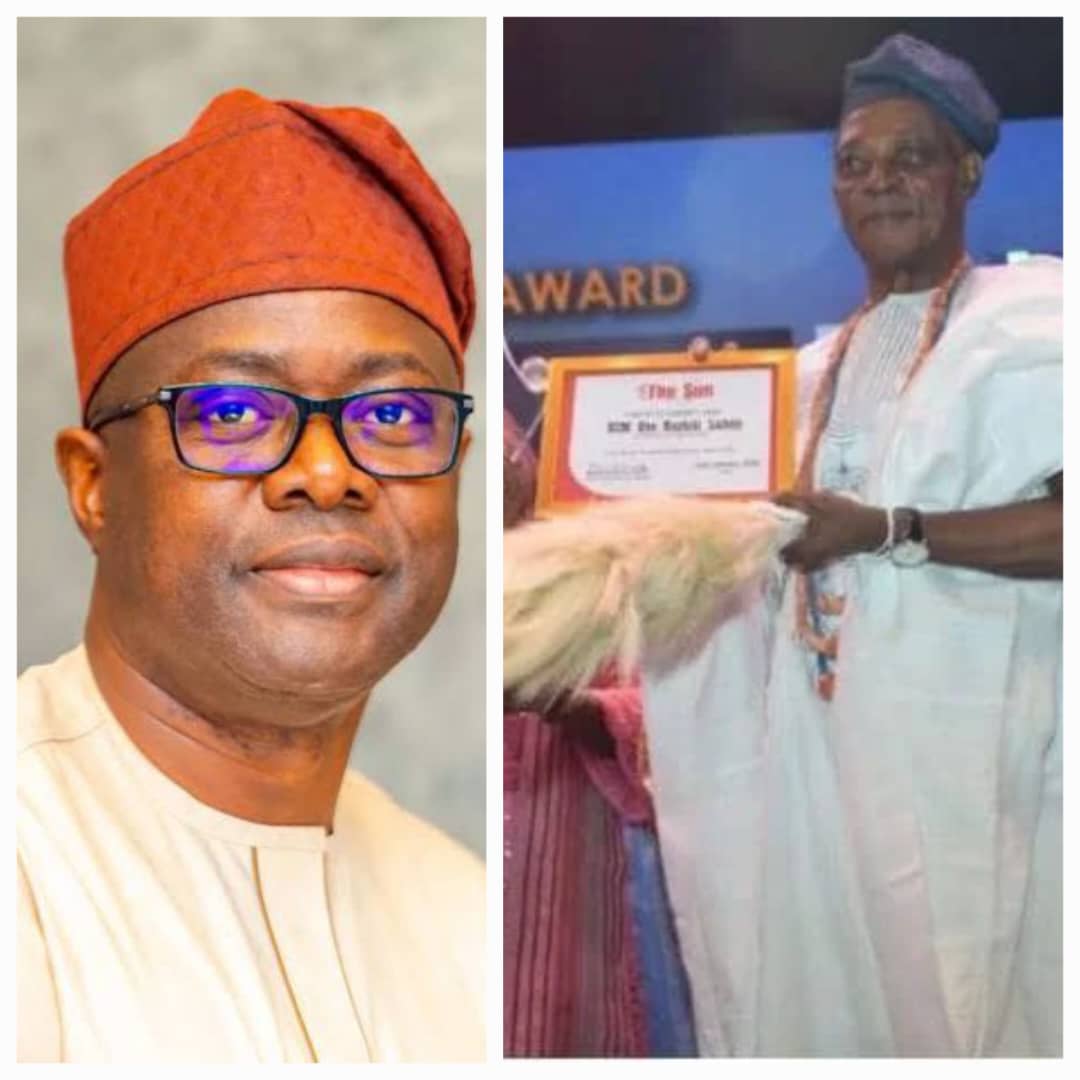
The Nigeria Union of Journalists (NUJ), Oyo State Council, has congratulated Governor Seyi Makinde and the Olubadan of Ibadanland, Oba Rashidi Adewolu Ladoja, Arusa 1, on honours conferred on them by The Sun Newspapers.
In a statement jointly signed by Chairman, Akeem Abas and Secretary, Dayo Adu, the NUJ said Makinde won Sun Political Personality of the Year, while Oba Ladoja received the Lifetime Achievement Award.
The NUJ said that Makinde’s award recognised his purposeful leadership, people-centred governance, infrastructural transformation and consistent democratic values delivered across Oyo State.
The council said Governor Seyi Makinde’s visionary policies strengthened media freedom, improved media-government relations and enhanced public trust through transparent communication, participatory governance and inclusive development initiatives.
The NUJ also congratulated Oba Rashidi Ladoja on the Lifetime Achievement Award, citing his cultural leadership, peace building, wisdom and enduring contributions to Ibadanland.
It said Oba Ladoja’s lifelong commitment to public service, politics and the traditional institution exemplified humility, statesmanship, sacrifice, while fostering harmony and development.
The union commended The Sun Newspapers for promoting excellence, accountability and national discourse through journalism awards, celebrating impactful leadership and democratic culture.
According to NUJ, such recognitions encourage public office holders and traditional rulers to deepen service delivery, uphold ethical standards and prioritise citizens’ welfare nationwide.
The council reaffirmed its commitment to objective reporting, professional journalism, constructive engagement with government and institutions, while supporting democracy and accountability in Oyo State.
It urged leaders at all levels to draw inspiration from the awardees by embracing transparency, inclusiveness and empathy in governance.
The council wished Gov. Makinde and Oba Ladoja continued wisdom, good health and greater service to humanity and Oyo State.
news
Ahmed Raji(SAN) Accomplish Another Landmark Feat, Launch New School Block, Handover Ultra-Modern CBT Center To JAMB.

Renowned legal icon, philanthropist and Senior Advocate of Nigeria (SAN), Alhaji Ahmed Adeniyi Raji, has once again reaffirmed his unwavering commitment to educational advancement as he is getting ready to launch a newly constructed school building and hand-over a modern Computer Based Test (CBT) Centre to Joint Admissions and Matriculation Board (JAMB) in Iseyin, Oyo State.
This historic event, scheduled to hold on Wednesday, February 11, 2026, is expected to attract top educationists, including the Registrar of JAMB, Professor Isiaq Oloyede, who will officially receive the CBT centre on behalf of the examination body.
According to statement issued and signed by Hon. Saheed Adejare Yusuf Alaran, brother, development partner to the legal luminary and made available to media, said this intervention initiative is part of Alhaji Raji’s long-standing vision to make quality education affordable, accessible and all-inclusive, irrespective of students’ socio-economic background.
Hon. Adejare Yusuf Alaran disclosed that the legal icon has taken full responsibility for the construction of a modern school complex comprising classrooms, administrative offices and fully equipped laboratories for the Senior Secondary arm of Raji Okeesa Memorial Comprehensive High School. The new facilities are designed to enhance teaching, learning and overall academic excellence.
In addition, Alhaji Raji has also built a well-equipped JAMB CBT Centre with a seating capacity of 250 candidates, fitted to meet global examination standards. The centre is expected to significantly ease the burden on students who previously travelled long distances to sit for UTME examinations.
Hon. Adejare Yusuf Alaran further noted that the official unveiling and handover will ensure the CBT centre is efficiently managed by JAMB for optimal use. He stressed that the initiative would save thousands of youths from avoidable stress while promoting fairness and efficiency in examination processes.
With this latest gesture, Alhaji Raji has once again etched his name in gold as a steadfast champion of education and youth empowerment in Oyo State and beyond.
Oyo State Government has reaffirmed its preparedness for the official commencement of the Computer-Based Test (CBT) mode of the West African Examinations Council (WAEC) examinations.
This is in line with the Federal Government’s directive for a gradual transition from pen-and-paper to full digital testing.
The Commissioner for Education, Science and Technology, Hon. Olusegun Olayiwola, disclosed this while receiving the Zonal Coordinator and Deputy Registrar of West African Examination Council(WAEC), Mr. Waheed Amode, and his management team during a courtesy visit to his office on Wednesday, February 4, 2026.
Olayiwola revealed that Oyo State Governor, Engr. Seyi Makinde has directed that the cost implications for the procurement of over 60,000 laptops for public senior secondary schools across the state be worked out, noting that the move is aimed at positioning Oyo State ahead of the full adoption of CBT examinations.
He commended WAEC for the proactive measures taken to address the challenges experienced during the 2025 examinations, while pledging the Ministry’s continued support in curbing examination malpractice and preventing vandalisation of school facilities.
In his remarks, Amode said the visit was to appreciate the Oyo State Ministry of Education for its support during the 2025 WAEC examinations and for its consistent collaboration with the Council over the years, describing the Ministry as a key stakeholder in the success of WAEC operations.
He disclosed that registration for the 2026 May/June WAEC examination closed on 2nd February, 2026, adding that the forthcoming examinations would be conducted using both CBT and pen-and-paper modes depending on the readiness of individual schools, while schools interested in full CBT participation are expected to formally indicate their interest through official correspondence.
Amode also warned that severe penalties await any candidate caught with mobile phones in the examination hall.
He stressed that such misconduct could lead to the cancellation of an entire school’s results, depending on the circumstances, and urged principals and teachers to uphold integrity in order to strengthen educational standards.
Meanwhile, Honourable Olusegun Olayiwola has called on parents, guardians and teachers to strengthen collaboration in order to address moral decline in schools, noting that effective partnership between the home and the school is essential for raising disciplined, responsible and value-driven students.
The Commissioner made the call while receiving members of the National Education Reform Movement (NERM), urging stakeholders to prioritise discipline and quality teaching, while NERM leader, Mr. Adewumi Abass, warned that weak parent–teacher synergy and rising examination malpractice pose serious threats to Nigeria’s education system and recommended the use of the resource book, “Parenting for Excellence,” as a guide for improvement.
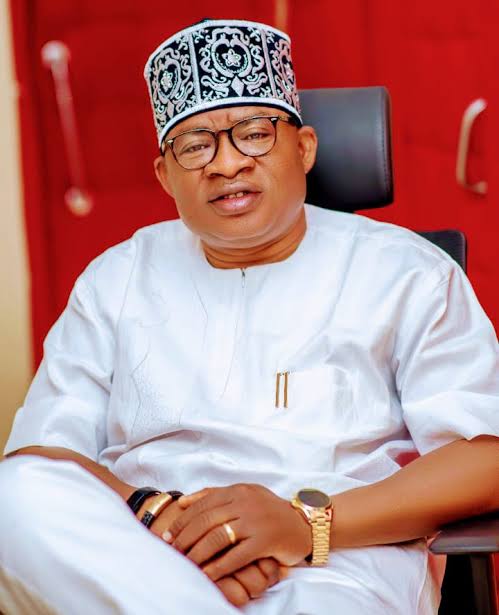
The Nigeria Union of Journalists (NUJ), Oyo State Council, has congratulated a distinguished Patron and renowned mediapreneur, Olooye Adeboyega Taofeek Adegoke, on the occasion of his birthday, describing him as a pillar of support for journalists and media development in the state.
In a congratulatory statement jointly signed by the Chairman, Mr. Akeem Abas, and Secretary, Dayo Adu, the Council extolled Oloye Adegoke’s outstanding commitment to the growth of the Union and the welfare of its members.
The council noted that as a responsible and dependable Patron, Oloye Adegoke has consistently demonstrated deep passion for the progress of journalism, maintaining a cordial and mutually beneficial relationship with the NUJ Oyo State Council.
It added that his unreserved benevolence to the Union and to journalists who cross his path, stressing that his interventions and support have positively impacted many practitioners within the media space.
According to the Council, the celebrant has remained a strong pillar behind several NUJ programmes and activities, offering support that has contributed immensely to the successful execution of professional and welfare-driven initiatives.
The Union particularly commended his rare gesture of giving without demanding anything in return, describing his selflessness as a virtue worthy of emulation within and outside the media industry.
Oyo NUJ added that Oloye Adegoke’s contributions as a mediapreneur have also helped in advancing media enterprise, capacity building, and opportunities for journalists across the state.
The Council wished him a happy birthday and prayed for continued good health, greater accomplishments, and more impactful years in service to humanity and the journalism profession.
-

 news11 months ago
Interrogating the connection between social service and charity
-
news2 months ago
Arrive Early To Examination Centers, Comport Yourselves – Oyo HOS Admonishes Civil/Public Servants
-
news10 months ago
ANPP block in APC expresses deep concern over marginalisation to re-evaluate membership
-
news8 months ago
LG Commission Chairman ‘Wolekanle’ Gets Oyo NULGE’s Support
-
 news11 months ago
Abdulrazaq Inspects Govt’s Multistorey Prototype School
-

 economics12 months ago
NNPC Shipping, partners unveil joint venture to boost crude transport
-
 news12 months ago
Man arrested for beating girlfriend to death in Lagos
-

 economics12 months ago
Subscribers lament as MultiChoice raises DStv subscription by 21%