
news
Can Tinubu, our Eddie Kwansa, now come home?

 By Festus Adedayo
Today’s Gen Z world may not know of “Eddie Kwansa”. It is a famous folk song Owerri, Imo State, donated to the rest of Nigeria. Released shortly after the piercing agony of the Nigerian civil war in 1972 by Dan Orji and his Peacock Band, the song should remind people of my generation of the equally famous NTA soap opera, New Masquerade. The Orji song became the signature tune of that opera and it runs thus, “Eddie Kwansa oo, bia o, bia o (3ce) Izu ka nma na nneji oo, bia o, bia o…” Translated, the melodious song says, “Come, Eddie Kwansa; It’s good when blood brothers reason together.” Another version translates the lyrics into “Come, Eddie Kwansa, come; quarrels among brothers are best resolved at home.”
The legend behind it makes it an evergreen folk song among Owerri people. The legend, the claim of which has been disputed by those close to the musician who sang it, has it that a handsome young man named John Obikwe entertained Owerri people with his guitar before the civil war. Shortly after the war, he and his three brothers discovered that their late father left land for them in Port Harcourt. They then agreed to sell it and share the proceeds equally. Upon the sale of the land, however, Obikwe’s siblings short-changed him, giving him not even a dime. Downcast and frustrated, Obikwe relocated to Ghana where fate smiled on him. He then totally disconnected from his siblings. His successful life story, especially entreaties from his now repented brothers to him to come back home, became the legend strewn into a song by Orji.
I digress. Yoruba’s world of incantations is built round literary devices of alliteration, similes, metaphors, onomatopoeia, etc. When you are assailed from within and without by enemies, necessitating your running helter-skelter for remedy, my people deploy the imagery of the leaf called “àáràgbá” to describe your situation. As an incantation, using the homophone in “gbã” which collocates with and is an alliteration to the name of the “aàárà-gbá” leaf, they sew together the poetic incantation of “ilé ò gbá, ònà ò gbàá níí se ewé àáràgbá”. Translated, that incantation curses that, as the leaf of “àáràgbá” moves hither thither in discomfort, so shall it be for the recipient of the incantation. Buffeted at home by pellets from terrorists, and abroad by the razor-sharp tongue and gruff of Donald Trump, the American global policeman of democracy – apologies to General Sani Abacha – I suspect that political enemies must have cast the spell of a troublous presidency on my Yoruba kinsman in Aso Rock. In this piece, however, I volunteer to be there for my kinsman. It is at times like this that consanguines, whose blood is reputed to be thicker than water, ought to be there for one another.
Now that our kinsman in Aso Rock is being pummeled by artillery fire from everywhere, we hope his travails will enable him listen to our Eddy Kwansa call on him to let us reason like children of same Oduduwa parent. Didn’t the lines of Eddy Kwansa song say it is good when brothers reason together? The truth is, when you think you have fooled the rest of the world, unbeknown to you, you are the greatest victim of your contrivance. When you luxuriate in such a fool’s paradise, my people have two very powerful sayings for you. In the first, they say you are Amuda’s concubine. She was a jester who gave birth to a child and named him Yésúfù – “Oníyèyé àlè Àmùdá t’ó bímo tó soó ní Yésúfù” Amuda is a colloquial rendering of “Ahmad” which in Arabic translates to a “thankful person,” while Yesufu is a collocation of the name “Ahmad”. The etymology of the phrase and the plot which gave birth to it are unknown. However, the phrase has widespread appreciation and affiliation with self-delusion and hypocrisy.
There is another saying of my people which explains and disdains self-conceitedness. It rests on the pedestal of the earlier saying’s format and, like it, euphemistically expresses bother about self-deception. It is woven round a woman, whose son is named Jimoh and who walks into a mosque on a Friday and, satisfied by its ambience, claims she had arrived the home of her son. Yoruba express this saying as, “Èèyàn ò tan ara rè bíi Ìyá Jímòh t’ó wo Mósálásí t’ó níòhun dé ilé omo òhun.”
Now, this is the link: “Jimoh” is a nativized rendering of the Arabic word, “Jum’ah” or “Mosalasi” (mosque) among Yoruba Muslims. When Iya Jimoh gets so hypocritical and self-delusional as to conflate “Jimoh” the mosque, with “Jimoh,” her son, then her self-deception is perceived to have landed her in cloud-cuckoo-land.
Nigeria’s national pains knew no bounds as terrorists struck the country two weeks ago. It was one of the country’s most nightmarish weeks ever. That week brought into vivid remembrance the British proverb, “it never rains, it pours”, possibly taken from a 1726 satirical article with the title, “It Cannot Rain, But It Pours”. It is a literary description of a cacophony of misfortunes befalling a people. In Eruku, Kwara State, right inside the Christ Apostolic Church, a viral video showed terrorists wielding automatic rifles. Two worshipers were gunned down, and 38 congregants abducted. In a few hours’ interval, 25 students of Government Girls Comprehensive Senior Secondary School (GGCSS) were kidnapped. One of them escaped. On November 21, 315 students of St Mary’s School, Papiri, Niger State, were also abducted by terrorists. Aftermath of the shock, the parents of one of the abductees reportedly slumped and died. That same week, news of the brutal killing of Nigeria’s Brigadier-General, Sani, suffocated the air.
I pitied my kinsman. In my piece of last week, I reckoned that Karma was again shooting its shot. Not to worry. The Builder of Lagos had a response. When it comes to ‘effizy,” (showmanship) no one can surpass Lagos people. It is in their gene. The man who would not stop his flight in September, in spite of huge national clamour, but proceeded to Paris, the nestling home of his buddy and business partner, Gilbert Chagoury, for a “10-day working vacation,” stopped his plane from flying to South-Africa this time around. Pronto, the Minister of Defence, Bello Matawalle, was ordered to relocate to Kebbi State. Many wondered what the minister, severally accused of being godfather of bandits, would do in Kebbi.
But, Allellujah! The work of God is wondrous. It reminds me of the childhood song we sang while growing up: “Come and see, American Wonder!” we chorused. Like an apparition, the 38 abducted parishioners of Eruku walked home, too. Praise the Lord! Before we could say Jack Robinson – pardon this sudden trip into yesteryears – the abductees of Kebbi State also resurfaced, eight days after. Can you not see that God loves Nigeria? Almost immediately, regime data boys could not contain their paroxysm of anxiety. Couldn’t we see that this government is not clueless? Was this feat not what the Muhammadu Buhari government couldn’t achieve?
Governor Idris of Kebbi was the first to burst our bubble. No single naira was paid in ransom, he said. The presidenttoo said he was relieved. Glad that the abductees are back home, Nigerians still wanted to know how the Tinubu wonder came about. On his X handle and on a national television interview, Onanuga claimed it was the work of non-kinetics. Whatever that meant! Couldn’t he spare us of bombast? He said the Eruku 38 were released after security agents made direct contact with the kidnappers, maintaining that government always chooses to avoid direct armed assaults due to risk to civilians.
The Nigerian senate continued its groveling pedigree. Senate spokesman, Yemi Adaramodu, said not only didn’tgovernment pay a dime to the abductors, the “bandits fled when they saw superior power.” It reminds me of that evergreen James Hadley Chase’s counsel that liars must have a good memory. From Onanuga’s statement above, which clearly contradicts Adaramodu’s, you would imagine that the military team on a rescue mission and the bandits were in a ‘paddy-paddy’ detente while negotiating the abductees’ release. How did an expedition that was said to be ‘negotiation’ morph to become Adaramodu’s “superior power”?
The lead story headline of the Daily Trust newspaper of November 27 – “Released, Rescued or Ransomed?” – speaks directly to the anxiety and apprehension of Nigerians about the Tinubu wonder rescue. Knowing Nigerian governments’ predilection for the untruth and this particular government’s obsession for barefaced lies, interests in the mode of the rescue of the abductees went upswing. The queerest of government’s assertions on the rescue is the claim that, for perpetrators of such heinous act of terrorism, who killed two in Eruku, a vice principal in Papiri and a guard, there would be no consequences. In the words of government officials who were at the vanguard of the rescue, the government found the bandits’ location, engaged them, and they released their captives. QED.
Not long after news of the release of the Kebbi girls, their abductors released a concerning video where they affirmed that there was indeed negotiation between them and the government. In the video, the gloating abductors said that, in spite of Nigerian fighter jets hovering over the captors, government security agents were helpless until they negotiated with the bandits. Like Amuda’s concubine and the woman who walks into a mosque on a Friday and claims she had arrived the home of her son, this government and its officials are on a roulette of lies. While they think they have made a fool out of us, little did they know that we watch them live in a fool’s paradise.
All over the world, state negotiation with terrorists is not only seen as an anathema, it is a weak alternative. It is also enveloped in dark motives. Most governments that choose to negotiate with terrorists do so in order to find a mediated way out of a conflict. In doing this, they merely postpone an imminent defeat, or a detour out of what is called a mutually hurting stalemate.
Negotiation is frowned at as a means of combating terrorists because, in the long run, it violates states’ domestic and international legitimacy. When a state credited with a monopoly of force goes to terrorists to negotiate, it, by that very fact, loses its regards.
From the other side, negotiations are ego-boosters for terrorists. They often seek it so as to drastically improve their popular standing and legitimacy. In the recent ransomed negotiation with the terrorists in Nigeria, they could be seen doing a video of their victory with the Kebbi girls and flexing their muscles. Negotiations thus legitimize their philosophy, if there is any, and strengthen them. In the words of Isabelle Duyvesteyn and Bart Schuurman, in their ‘The Paradoxes of Negotiating with Terrorist and Insurgent Organisations’ (The Journal of Imperial and Commonwealth History, 2011) it“elevat(es) their status from violent criminals to potent political activists.”
Moreover, in insurgency and counterinsurgency, the weaker party is perceived to be the one that engages in negotiation. Didn’t Nigeria show, by the Eruku and Papiri captives’ negotiation, that it was a weaker party to the terrorists? In this vein, governments that negotiate are seen to be negotiating from a position of weakness and run significant risks in battle against insurgents. According to the two scholars above, negotiated settlements are viewed with skepticism. In their words, “(T)hese (negotiations) are often surrenders masquerad(ed) as calculated decisions, and their main effect has been to allow extremists to consolidate their control and push for greater gains.”
Many times, darker motives come with negotiations. Though they appear as non-violent ways of resolving conflicts, in disguise, negotiations could be paradoxes. First, they imbue the terrorists with growing strength and confidence. Second, terrorists may also negotiate with the aim of concealing their ulterior aims of gaining enough time for recovery and preparing for greater onslaughts. Countries like Cyprus, Spain, and Northern Ireland are good illustrations of nations at war which took the route of negotiation with terrorists to their regret. In Sri Lanka, the Tamil Tigers ceaselessly repudiated negotiations and used them as opportunity to regroup, rearm themselves and as catalyst for renewed attacks against government forces.
When money is involved in negotiation with terrorists or bandits, it is even worse. The tactlessness of doing this is that, it gives more legroom to the bandits. This we could see in the Papiri girls abductors who gloatingly and literally dragged Nigeria’s sovereignty and claim to being a powerful country in the mud in the viral video. Giving bandits money for a detente also affords them access to more resources for purchase of higher-grade weapons with which to launch the next attacks.
Now, many talks, which have the Bayo Onanuga flavour, have claimed that the military chose negotiation rather than shelling the terrorists for fear of collateral damage. They cite the failures of US’ Operation Eagle Claw and the Operation Urgent Fury. Why not cite the successful Operation Thunderbolt or Operation Entebbe, a 1976 Israeli counter-terrorist mission in Uganda? Those who argue from the angle of collateral damage fail to reckon with the fact that, warfare has gone beyond this. With drones, targets can be taken out without any collateral damage.
While the apparently ransomed rescue of Eruku and Papiri abductees was going on, my kinsman ordered a sweeping nationwide emergency on security. He also ordered massive recruitment in the army and police, as well as a withdrawal of policemen from VIPs. Which are very commendable steps. The presidential order that has had Nigerians clapping ever since is the go-ahead he gave the National Assembly to review extant laws disallowing states from establishing their own police forces. However, shortly after the release of the abductees and after the president ordered a state of emergency on security, bandits again struck a rice farm in Palaita, Shiroro Local Government Area of Niger State. They abducted 24 persons, which included pregnant women. In Kano and Kwara States between Monday and Tuesday last week, 20 people were also said to have been abducted by bandits.
Now is the time to urge our own Eddie Kwansa to come home for a truthful discussion. Didn’t a line of that immediate post-civil war song say it is good when brothers reason together? First, let our Eddie Kwansa draw his pillow close to him and have a heart-to-heart talk with it. When all else fails, the pillow is man’s closest associate. A line of Juju music legend, Ebenezer Obey’s evergreen song of the 1970s, K’á so’wópò, says even if nobody else knows, one’s undies know the whole gamut of one’s closely guarded secrets. Eddie Kwansa’s pillow would tell him things are not looking up at all under him, at least security-wise. He and his “Oníyèyé Àlè Àmùdá” security chiefs have told themselves lies that terrorists shook hands with them and released the hostages without ransom payment. Two persons cannot suffer a mutual colossal loss from a lie; either the person telling the lie or to whom it is being told is richer in the truth of it.
Let Eddie Kwansa ask for the tape of his predecessor, Olusegun Obasanjo’s speech at the Plateau State Unity Christmas Carol and Praise Festival held in Jos, Plateau State on Friday. Thereafter, let him ask for a meeting with Obasanjo. He should ignore data boys and regime fawners saying otherwise. Even if there was a quarrel between Obasanjo and him, quarrels among brothers are best resolved at home, so says the lines of Eddy Kwansa. A breakdown of Obasanjo’s homily is this: Nigeria is burning under the feeble grips of our Lagos brother. Nigerians have the right to ask for assistance from other world leaders if theirs have shown incompetence. He left a capable government that could deal with the Mephistopheles. I agree with Obasanjo absolutely.
We do not hate our brother, Eddie Kwansa. We will share the glory if he destroys those who want to destroy Nigeria. God bless Eddie.


In a significant boost to Kisi educational development, Honourable Shina Peller, the Ayedero of Yorubaland and former member of the House of Representatives, has donated five million naira (₦5,000,000) to the Kisi Education Trust Fund.
The announcement was made during the annual Kisi Day celebrations held on Saturday, February 7, 2026.
The event, which served as a major cultural and developmental milestone for the community, brought together prominent indigenes, traditional leaders, and residents of the Oyo State town.
Addressing the gathering, Peller emphasized the critical role that education plays in the advancement of any society. He noted that the Trust Fund serves as a vital tool for ensuring that the youth of Kisi have access to quality learning opportunities and financial support for their academic pursuits.
The Kisi Education Trust Fund was established to bridge the gap in educational infrastructure and provide scholarships for brilliant but underprivileged students within the community.
Peller’s ₦5 million contribution is expected to provide an immediate impetus for several ongoing projects spearheaded by the fund.
Kisi Day is an annual festival celebrated by the people of Kisi (the headquarters of the Irepo Local Government Area). It is a day dedicated to celebrating the rich cultural heritage of the town, discussing developmental challenges and solutions and raising funds for community-led initiatives.
Moreover, the annual event is aimed at strengthening the bonds between Kisi indigenes at home and in the diaspora.
The 2026 edition has been hailed as a success, with Peller’s donation serving as a highlight of the day’s fundraising activities, signaling a renewed commitment to human capital development in the region.
Honourable Peller, a former member of the House of Representatives representing Iseyin/Itesiwaju/Kajola/Iwajowa Federal Constituency, attended the event not just as a statesman, but as a “son of the soil.” His mother, Alhaja Silifatu Peller, hails from Kisi, a connection the former lawmaker frequently cites as a source of his commitment to the town’s progress.
In his keynote remarks, Honourable Peller stated:
“Education is the bedrock of any meaningful development. My mother’s roots are here, and my heart remains with the people of Kisi.
“We must ensure that the next generation of Kisi indigenes are equipped with the knowledge and skills to compete globally. This donation is an investment in that future.”
The fund’s leadership expressed deep gratitude, noting that the contribution would significantly assist in:scholarship schemes such as providing tuition assistance for high-achieving students from low-income families, rehabilitating aging classrooms and providing modern learning materials to local schools and others.
The Iba of Kisi, HRM Oba Masoud Aweda Oyekola Lawal (Arowoduye II), along with the Kisi Progressive Union (KPU), praised the gesture as a “shining example of patriotism.”
As Kisi continues to grow as a major agricultural and cultural hub in northern Oyo State, such interventions are seen as vital to maintaining the town’s reputation for resilience and educational excellence.
news
Breaking Barriers: How the FG-ASUU Agreement Can Transform Nigerian Universities – By Tunji Oladejo

*The recent agreement between the Federal Government (FG) and the Academic Staff Union of Universities (ASUU) represents an important turning point for Nigeria’s education sector. This landmark deal, which includes a 40% salary increase for academic staff and improved working conditions, is a potential game-changer in ending the perennial labour crises that have plagued Nigerian universities for years.*
The agreement addresses long-standing issues such as inadequate funding, poor infrastructure and low staff morale, which have contributed to frequent strikes and disruptions in academic activities. Key provisions include a 40% upward review of academic staff salaries, improved pension plans and the establishment of a National Research Council with statutory funding of at least 1% of Nigeria’s Gross Domestic Product (GDP).
This development is notable for several reasons. It is the first time a sitting Nigerian President, Bola Ahmed Tinubu, has taken direct ownership of the dispute and prioritised its resolution. Dr Tunji Alausa, Minister of Education, drove the breakthrough in the crisis, championing dialogue and mutual respect. “A historic turning point”, he declared, emphasising the government’s commitment to keeping students in school and addressing academic staff concerns. By engaging ASUU with “the highest level of mutual respect”, he has paved the way for restored trust and confidence in Nigeria’s universities.
The deal addresses structural weaknesses in the university system, aiming to improve academic standards and global competitiveness.
The government has established a National Universities Commission (NUC) Committee to oversee its implementation, with regular progress reports to the President. Key mechanisms include an implementation committee chaired by the Minister of Education, a joint monitoring group to track progress and specific budgetary allocations for university improvements.
Interestingly, the government has committed to upholding university autonomy, allowing institutions to operate independently in line with existing laws and regulations. This includes respecting the rights of universities to govern themselves, appoint key officers, and determine the conditions of service for their staff. To facilitate this, laws like the Joint Admissions and Matriculation Board Act and the National Universities Commission Act will be reviewed and amended to remove impediments to autonomy and academic freedom. By doing so, the government aims to protect academic freedom and promote institutional self-governance.
The implementation of the agreement’s key provisions is already underway, with the government having released a circular directing the full implementation of the wages component, effective from January 1, 2026. Here are some specific timelines: the 40% salary increase for academic staff took effect on January 1, 2026; stabilisation and restoration fund: the government will provide N30 billion, disbursed in three equal instalments of N10 billion annually from 2026 to 2028; and the agreement is set for review after three years.
As for the state universities complying with the agreement’s terms, it’s unclear if state governors are duty-bound to implement it. Will they comply? That is the big question and that is the hurdle for the implementation monitoring committee that will oversee the process to cross.
Challenges ahead! Yes! The implementation monitoring committee is expected to identify and address potential challenges, especially the issue of transparency and accountability in the stabilisation and restoration fund. Can they pull it off? Will they deliver? Boosting Universities, the fund is to revive and strengthen academic activities likely focusing on infrastructure, research and staff welfare.
For success, the committee must keep everyone on track, ensuring that all parties adhere to agreed terms, including the 40% salary hike and N30bn Stabilisation Fund. The government must establish communication with key stakeholders, such as state governments and university administrations. Collaboration is key!
Funding challenges and transparency are the next issues to address. How’s the government planning to tackle them? Are there plans for audits or tracking mechanisms for the N30bn fund?
This agreement is expected to boost education quality and research output. Improved staff morale can attract and retain top talent, while enhanced research funding can drive innovation and global collaboration. Reduced disruptions mean more academic days and improved learning outcomes.
Universities can capitalise on this agreement to drive meaningful change. By allocating funds strategically, they can upgrade facilities, improve accommodation and enhance healthcare services for students. Investing in digital infrastructure will also prepare students for the modern workforce and improve learning experiences. Encouraging alumni and private sector partnerships can bring in additional resources and expertise.
The FG-ASUU agreement will significantly transform Nigeria’s academic sector. With a committee overseeing implementation and the government engaging stakeholders, it’s poised to boost salaries, fund universities and get things moving. Delivery is key—let’s hope they nail it!
Tunji Oladejo, mnipr, JP, writes from the University of Ibadan and is the Chairman of The Progressive Forum, Ibadan (TPFI), via oladejo65@gmail.com. 08077284442
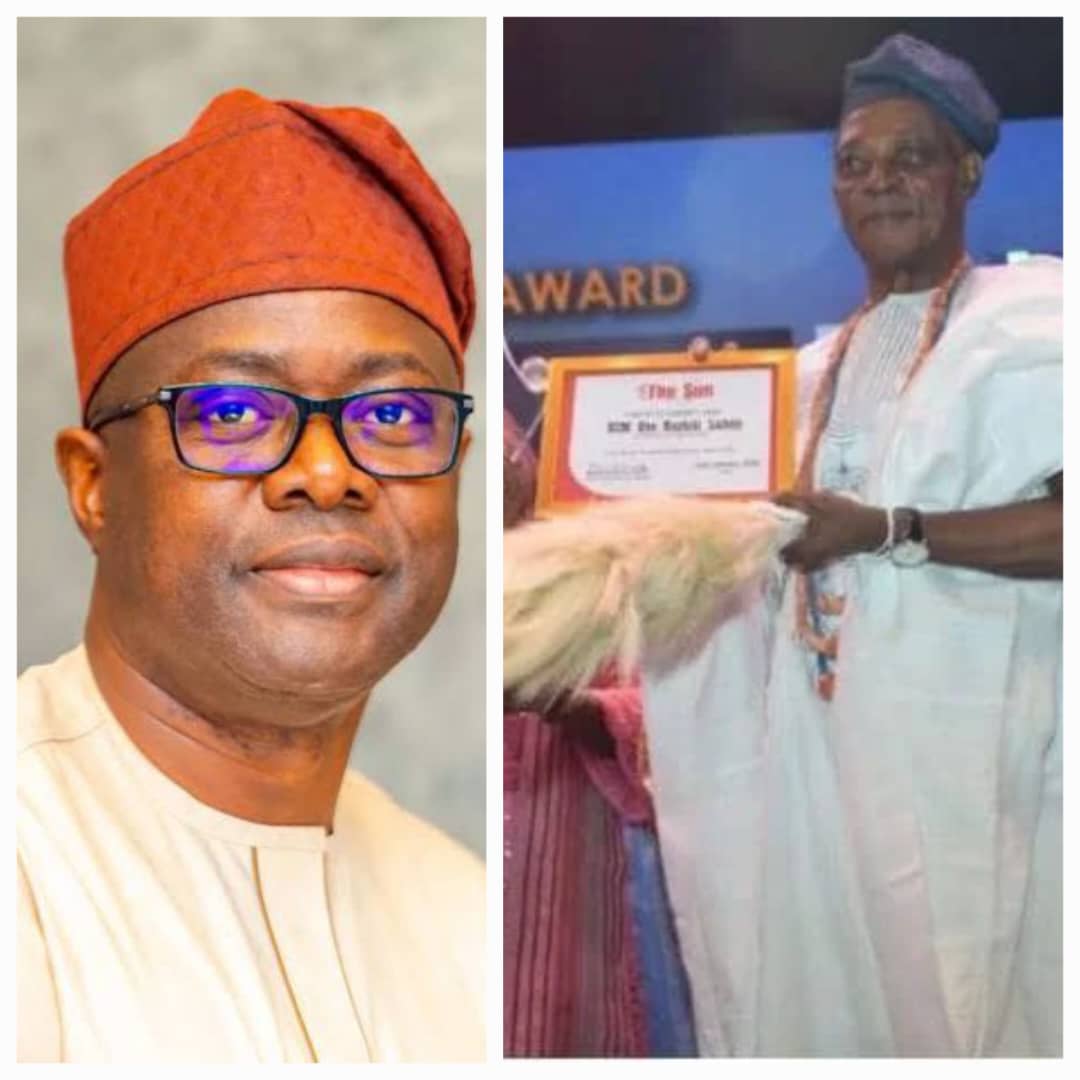
The Nigeria Union of Journalists (NUJ), Oyo State Council, has congratulated Governor Seyi Makinde and the Olubadan of Ibadanland, Oba Rashidi Adewolu Ladoja, Arusa 1, on honours conferred on them by The Sun Newspapers.
In a statement jointly signed by Chairman, Akeem Abas and Secretary, Dayo Adu, the NUJ said Makinde won Sun Political Personality of the Year, while Oba Ladoja received the Lifetime Achievement Award.
The NUJ said that Makinde’s award recognised his purposeful leadership, people-centred governance, infrastructural transformation and consistent democratic values delivered across Oyo State.
The council said Governor Seyi Makinde’s visionary policies strengthened media freedom, improved media-government relations and enhanced public trust through transparent communication, participatory governance and inclusive development initiatives.
The NUJ also congratulated Oba Rashidi Ladoja on the Lifetime Achievement Award, citing his cultural leadership, peace building, wisdom and enduring contributions to Ibadanland.
It said Oba Ladoja’s lifelong commitment to public service, politics and the traditional institution exemplified humility, statesmanship, sacrifice, while fostering harmony and development.
The union commended The Sun Newspapers for promoting excellence, accountability and national discourse through journalism awards, celebrating impactful leadership and democratic culture.
According to NUJ, such recognitions encourage public office holders and traditional rulers to deepen service delivery, uphold ethical standards and prioritise citizens’ welfare nationwide.
The council reaffirmed its commitment to objective reporting, professional journalism, constructive engagement with government and institutions, while supporting democracy and accountability in Oyo State.
It urged leaders at all levels to draw inspiration from the awardees by embracing transparency, inclusiveness and empathy in governance.
The council wished Gov. Makinde and Oba Ladoja continued wisdom, good health and greater service to humanity and Oyo State.
news
Ahmed Raji(SAN) Accomplish Another Landmark Feat, Launch New School Block, Handover Ultra-Modern CBT Center To JAMB.

Renowned legal icon, philanthropist and Senior Advocate of Nigeria (SAN), Alhaji Ahmed Adeniyi Raji, has once again reaffirmed his unwavering commitment to educational advancement as he is getting ready to launch a newly constructed school building and hand-over a modern Computer Based Test (CBT) Centre to Joint Admissions and Matriculation Board (JAMB) in Iseyin, Oyo State.
This historic event, scheduled to hold on Wednesday, February 11, 2026, is expected to attract top educationists, including the Registrar of JAMB, Professor Isiaq Oloyede, who will officially receive the CBT centre on behalf of the examination body.
According to statement issued and signed by Hon. Saheed Adejare Yusuf Alaran, brother, development partner to the legal luminary and made available to media, said this intervention initiative is part of Alhaji Raji’s long-standing vision to make quality education affordable, accessible and all-inclusive, irrespective of students’ socio-economic background.
Hon. Adejare Yusuf Alaran disclosed that the legal icon has taken full responsibility for the construction of a modern school complex comprising classrooms, administrative offices and fully equipped laboratories for the Senior Secondary arm of Raji Okeesa Memorial Comprehensive High School. The new facilities are designed to enhance teaching, learning and overall academic excellence.
In addition, Alhaji Raji has also built a well-equipped JAMB CBT Centre with a seating capacity of 250 candidates, fitted to meet global examination standards. The centre is expected to significantly ease the burden on students who previously travelled long distances to sit for UTME examinations.
Hon. Adejare Yusuf Alaran further noted that the official unveiling and handover will ensure the CBT centre is efficiently managed by JAMB for optimal use. He stressed that the initiative would save thousands of youths from avoidable stress while promoting fairness and efficiency in examination processes.
With this latest gesture, Alhaji Raji has once again etched his name in gold as a steadfast champion of education and youth empowerment in Oyo State and beyond.
Oyo State Government has reaffirmed its preparedness for the official commencement of the Computer-Based Test (CBT) mode of the West African Examinations Council (WAEC) examinations.
This is in line with the Federal Government’s directive for a gradual transition from pen-and-paper to full digital testing.
The Commissioner for Education, Science and Technology, Hon. Olusegun Olayiwola, disclosed this while receiving the Zonal Coordinator and Deputy Registrar of West African Examination Council(WAEC), Mr. Waheed Amode, and his management team during a courtesy visit to his office on Wednesday, February 4, 2026.
Olayiwola revealed that Oyo State Governor, Engr. Seyi Makinde has directed that the cost implications for the procurement of over 60,000 laptops for public senior secondary schools across the state be worked out, noting that the move is aimed at positioning Oyo State ahead of the full adoption of CBT examinations.
He commended WAEC for the proactive measures taken to address the challenges experienced during the 2025 examinations, while pledging the Ministry’s continued support in curbing examination malpractice and preventing vandalisation of school facilities.
In his remarks, Amode said the visit was to appreciate the Oyo State Ministry of Education for its support during the 2025 WAEC examinations and for its consistent collaboration with the Council over the years, describing the Ministry as a key stakeholder in the success of WAEC operations.
He disclosed that registration for the 2026 May/June WAEC examination closed on 2nd February, 2026, adding that the forthcoming examinations would be conducted using both CBT and pen-and-paper modes depending on the readiness of individual schools, while schools interested in full CBT participation are expected to formally indicate their interest through official correspondence.
Amode also warned that severe penalties await any candidate caught with mobile phones in the examination hall.
He stressed that such misconduct could lead to the cancellation of an entire school’s results, depending on the circumstances, and urged principals and teachers to uphold integrity in order to strengthen educational standards.
Meanwhile, Honourable Olusegun Olayiwola has called on parents, guardians and teachers to strengthen collaboration in order to address moral decline in schools, noting that effective partnership between the home and the school is essential for raising disciplined, responsible and value-driven students.
The Commissioner made the call while receiving members of the National Education Reform Movement (NERM), urging stakeholders to prioritise discipline and quality teaching, while NERM leader, Mr. Adewumi Abass, warned that weak parent–teacher synergy and rising examination malpractice pose serious threats to Nigeria’s education system and recommended the use of the resource book, “Parenting for Excellence,” as a guide for improvement.
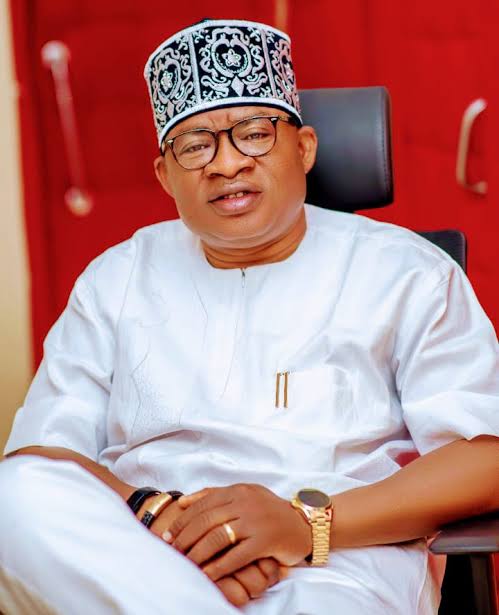
The Nigeria Union of Journalists (NUJ), Oyo State Council, has congratulated a distinguished Patron and renowned mediapreneur, Olooye Adeboyega Taofeek Adegoke, on the occasion of his birthday, describing him as a pillar of support for journalists and media development in the state.
In a congratulatory statement jointly signed by the Chairman, Mr. Akeem Abas, and Secretary, Dayo Adu, the Council extolled Oloye Adegoke’s outstanding commitment to the growth of the Union and the welfare of its members.
The council noted that as a responsible and dependable Patron, Oloye Adegoke has consistently demonstrated deep passion for the progress of journalism, maintaining a cordial and mutually beneficial relationship with the NUJ Oyo State Council.
It added that his unreserved benevolence to the Union and to journalists who cross his path, stressing that his interventions and support have positively impacted many practitioners within the media space.
According to the Council, the celebrant has remained a strong pillar behind several NUJ programmes and activities, offering support that has contributed immensely to the successful execution of professional and welfare-driven initiatives.
The Union particularly commended his rare gesture of giving without demanding anything in return, describing his selflessness as a virtue worthy of emulation within and outside the media industry.
Oyo NUJ added that Oloye Adegoke’s contributions as a mediapreneur have also helped in advancing media enterprise, capacity building, and opportunities for journalists across the state.
The Council wished him a happy birthday and prayed for continued good health, greater accomplishments, and more impactful years in service to humanity and the journalism profession.
-

 news11 months ago
Interrogating the connection between social service and charity
-
news2 months ago
Arrive Early To Examination Centers, Comport Yourselves – Oyo HOS Admonishes Civil/Public Servants
-
news10 months ago
ANPP block in APC expresses deep concern over marginalisation to re-evaluate membership
-
news8 months ago
LG Commission Chairman ‘Wolekanle’ Gets Oyo NULGE’s Support
-
 news11 months ago
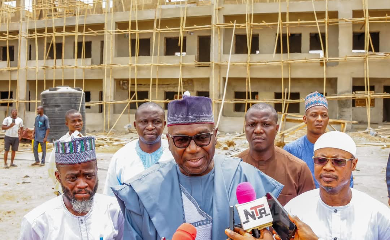
Abdulrazaq Inspects Govt’s Multistorey Prototype School
-

 economics12 months ago
NNPC Shipping, partners unveil joint venture to boost crude transport
-
 news12 months ago
Man arrested for beating girlfriend to death in Lagos
-

 economics12 months ago
Subscribers lament as MultiChoice raises DStv subscription by 21%