
news
*COLGIO, Oyo State Chapter congratulates Oduola Adeola Omoyeni, as he assumes duty at OYSLGSC.*


Conference Of Local Government Information Officers, Oyo State Chapter expresses profound joy on the appointment and posting of Pastor Oduola Adeola Omoyeni to the Local Government Service Commission. The conference is confident that Pastor Oduola’s wealth of experience, dedication to public service, and commitment to ethical leadership will bring renewed vigour, administrative excellence, and progressive reforms to the Commission.
COLGIO recognizes the vital role of the Local Government Service Commission in Strengthening Grassroots Governance and Enhancing Service Delivery Across the thirty-three Local Government Areas and Lcda’s in Oyo State. We believe that under Pastor Oduola’s Leadership, the Commission will continue to advance policies and initiatives that promote efficiency, professionalism, and sustainable development within the Local Government System.
We therefore, pledge our Continued Cooperation, Loyalty, and Professional Support in Promoting Government Policies, Programmes, and Activities through Effective Information Management and Dissemination.
The Conference also prays for a peaceful, productive, and successful tenure. May his time in office be marked by wisdom, sound judgment, and unlimited progress for the benefit of the Commission, the local government workforce, and the good people of Oyo State.


The Chairman, Oyo State Universal Basic Education Board, Dr. Nureni Aderemi Adeniran, has congratulated Muslims across the State on the successful completion of the Ramadan fast and the celebration of the 2026 Eid-El-Fitr festival.
In a goodwill message issued.and released to journalists, Adeniran described Eid-El-Fitr as a moment of deep reflection, gratitude, and renewed commitment to the values of discipline, compassion, sacrifice, and unity demonstrated throughout the holy month of Ramadan.
He commended the Muslim community for their steadfastness and devotion during the fast, noting that their spiritual exercise has contributed to the moral strengthening of society.
Adeniran urged all Muslims to continue embodying the virtues learnt during Ramadan and channel them towards building a more peaceful, tolerant, and progressive Oyo State.
He emphasized that the spirit of Eid offers an opportunity to reinforce communal harmony and strengthen social cohesion.
The OYOSUBEB Chairman also reaffirmed the Board’s commitment to ensuring quality basic education across the state, stressing that the development of children remains a collective responsibility that thrives on peace and unity.
He called on parents and guardians to use the festive season to guide their children towards positive values and encourage them to remain focused as schools prepare to resume for the next academic activities.
“On behalf of the Board, I extend heartfelt felicitations to our Muslim brothers and sisters. May the blessings of Eid-El-Fitr fill every home with joy, and may Oyo State continue to enjoy peace, growth, and divine favour,” Adeniran said.
He wished all Muslim faithfuls a joyous and hitch-free celebration.

It has become necessary to debunk the raft of misinformation assailing the migration partnership between Nigeria and the United Kingdom, as contained in the Memorandum of Understanding signed by the two nations on the sidelines of President Bola Ahmed Tinubu’s historic state visit to the UK.
The memorandum on immigration cooperation, like other memoranda signed, aimed to strengthen the partnership between Nigeria and the United Kingdom.
Nigeria’s Minister of Interior and the Secretary of State for the Home Department of the Government of the United Kingdom and Northern Ireland signed the Migration MoU.
The MoU establishes a framework to facilitate a regulated and safe migration flow between the two countries and to encourage further bilateral cooperation in the fight against irregular migration and associated acts by citizens of each country, in accordance with their respective immigration and citizenship laws and extant international treaties, conventions, protocols, agreements, and charters.
Nowhere in the 12-page memorandum is Nigeria required to accept foreign nationals other than Nigerians. Nationals to be repatriated must have undergone multiple levels of identification and verification, and, where errors occur, they are returned to the requesting country at the requesting country’s cost.
Under the agreement, Nigeria and the United Kingdom will work together to secure the dignified return of their nationals who do not, or no longer, have the right to enter or remain in the territory of the other country.
A clear condition in the MoU is that the returnees concerned are bona fide nationals of the country and are treated with dignity and respect, with due regard to their human rights and fundamental freedoms.
Law enforcement officers in each country will take the necessary action to protect the interests and well-being of citizens of either party and to mitigate conflict triggers related to migration matters.
A key provision in the MoU is that the migrant to be returned must carry his legally acquired personal belongings to the country of destination, unlike in the past when migrants left with nothing.
Article 12 further reinforces this good deal: “Every returnee will be given ample opportunity to make adequate arrangements for the transfer or disposal of his property in the territory of the requesting party, under the supervision of the mission of the requested party.”
Another provision is that where a return is being considered, and the person has made a claim under relevant domestic or international human rights legislation, that claim will be considered in line with the provisions under the party’s respective domestic legislation. The appeal may relate to circumstances in which the foreign nationals have been lawfully resident in the territory of the requesting party for most of their lives and socially and culturally integrated in the territory of the requesting party. Another ground of appeal may be where the nationals would face significant obstacles to their integration into the country to which they are to be deported.
Article 9 of the MoU sets out the conditions for the migrant’s return.
“Before departure, identification checks will be carried out by the officers of the requested party in the territory of the requesting party and on arrival by the competent authorities of the requested party. The requesting party will coordinate all returns with the officers of the requested party.
“A return may be conducted by means of a scheduled aircraft or an aircraft chartered specifically for this purpose by the authorities of the parties; the requesting party will provide the flight details and particulars of each returnee five (5) working days before the date of return.
“A return will be conducted using an original, valid passport, or, if the requesting party can biometrically match a returnee to a visa application made in the territory of the requested party, then an expedited process will be permissible, via which the requesting party will facilitate the return or repatriation using a UK Letter (UKL).
“If a returnee cannot be biometrically matched to a visa application by the requesting party, but there is otherwise strong evidence to confirm nationality, including a copy of a passport, a passport number or a national identity card, then an expedited process will again be permissible via which the requesting party will facilitate return or repatriation using a UK Letter (UKL).
“Should the requested party not be satisfied with a returnee’s identity within five (5) working days of submission of the UK Letter (UKL) to Nigerian authorities, detailed reasons should be presented to the requesting party why the identity cannot be satisfied. In these circumstances, removal will be deferred.
“If subsequent evidence shows that a returnee who has been returned is not a national of the requested party, the requesting party will take the person back to its territory at the requesting party’s cost and by the most efficient means possible. The request for the return of the person referred to in Article X will be made within ten (10) working days following the return exercise and carried out within fourteen (14) working days after acceptance of the request.”
Article 9, subsection 3, shows that Nigeria has not ceded to the UK the right to document the repatriated person.
The section says: It shall be the sole responsibility of the Nigeria Immigration Service (NIS) to issue and handle, as is necessary under Nigerian domestic legislation, any Nigerian documentation (including the
digital acknowledgement of receipt of a UK Letter) ahead of the notified date of return as stated in the UK Letter. This shall be distinct from the UK Letter process and remains the sole right and responsibility of Nigerian authorities, including the handling of the
travel document and any onward transmission required from the issuing office to enable entry.
Article 11 deals with returnee reintegration assistance. It states that every returnee will be able to access basic on-arrival and reintegration assistance in the territory of the requested party.
“Short-term assistance may include airport reception, accommodation, onward transportation, care and provision packs and small cash assistance. Medium-term assistance can include support to find and reunite with family; support in obtaining the in-country documentation required, signposting to local services, and the potential provision of mental well-being and counselling services (if required).
“Longer-term assistance may allow access to a Returnee Education and Entrepreneurship Fund to enable sustainable reintegration. Support may include accessing the local job market, setting up a business, accessing vocational training or further education, and assistance with legal migration opportunities.
“Should the parties’ domestic legislation regarding the provision of reintegration support to all or certain categories of returnees change, or should the overarching non-legally mandated package of reintegration support change, the parties will inform each other as soon as is practicable.”
The MoU, similar to those signed in 2012, 2017, and 2022, is for an initial period of five years, renewable for a further five-year period, as may be agreed by the parties.
We reiterate that media organisations should seek clarification when uncertain about any issue to avoid misinforming the public.
Bayo Onanuga,
Special Adviser to the President
(Information & Strategy)
March 21, 2026
news
*How Ibadan Taught the University: Professor Adesina’s Town-and-Gown £879,117 Award – By Tunji Oladejo*

*In April 2024, Professor Olutayo Charles Adesina, a historian at the University of Ibadan, won a Global Professorship award: £879,117 (about ₦1.8 billion). The project is titled, “The Town and Gown Interface: Ibadan and the Decolonisation of Social Knowledge in the 20th Century”.*
The project traces its historical roots to the 1940s–60s heyday of University College Ibadan (UCI), a time when the fields of history, sociology, anthropology, ethnomusicology, language and literature underwent significant transformations..Adesina argues that three strands fed each other: (1) nationalist historiography—scholars writing Ibadan and Nigeria into world history; (2) academic social science—UCI’s seminars, archives and field methods; and (3) vernacular knowledge—the city itself: family histories, praise poetry, guild memories and neighbourhood archives.
For the first time, he highlights that these were not separate layers but mutually constitutive social epistemologies, with the “town” and “gown” collaboratively defining what counted as knowledge. His sources move from canonical works of Ajayi, Biobaku seminars, Atanda’s studies to extensive interviews and fieldwork across Ibadan’s quarters, markets and compounds.
The award matters beyond the sum. At a time when decolonisation debates can sound abstract, Adesina roots them in Ibadan streets and UCI corridors, showing how social knowledge was actually built. The project promises books, open archives and collaborations connecting campus to city. In doing so, it gives Nigeria a case study and the world a method—for how universities and their host cities might think together, then and now.
I spoke with him today, Saturday, 21 March, 2026, about the project and his relationship with the Central Council of Ibadan Indigenes (CCII). Suave and intellectually humble, Professor Adesina left me with notes I’ll one day fold into my memoir as a university administrator.
Professor Adesina has already presented this Ibadan project to scholars at the King’s College London and Oxford. On December 4, 2025 at the African Studies Centre, St Antony’s College, Oxford, he gave “The Town and Gown in Ibadan: Re-exploring the Legends of Mbari”. Earlier, on March 5, 2025, at a lunchtime seminar in Roscoe Building 2.3, University of Manchester, he presented “University College Ibadan: The ‘Gown’ in the People’s Imagination, 1948–1962″.
*Tunji Oladejo, mnipr, JP,* writes from the University of Ibadan and is the Chairman of The Progressive Forum, Ibadan (TPFI) via oladejo65@gmail.com. 08077284442

The Oyo State Government has intensified efforts to explore international collaboration opportunities with the German Government as part of its drive to advance environmental sustainability and innovation.
Speaking during the West African Clean Energy and Environment Exhibition (WACEE) 2026 held in Lagos, the Honourable Commissioner for Environment and Natural Resources, Hon. Ademola Aderinto, stated that the state is actively engaging development partners to strengthen its environmental initiatives and attract investment into key sectors.
He noted that discussions with the German Consul General, Mr. Daniel Krull, focused on potential areas of cooperation, including clean energy, waste management, and climate resilience strategies aimed at improving the quality of life for residents.
The Commissioner emphasized that Oyo State remains committed to leveraging global best practices and technical expertise through strategic partnerships that will support sustainable development goals and foster economic growth.
He added that the engagement at WACEE 2026 underscores the state government’s readiness to collaborate with international stakeholders in addressing environmental challenges while positioning Oyo State as a hub for green investment in Nigeria.
Speaking as one of the WASH panelists during the session, the commissioner pointed to inadequate infrastructure as a key constraint, explaining that access to clean water, effective sewage systems, and proper sanitation services depends largely on the availability of essential facilities.
The Commissioner noted that additional challenges such as poor maintenance culture, rapid urbanization, and low public awareness, particularly in densely populated areas, require a coordinated and sustained response.
To address these issues, he called for increased government investment, strengthened public-private partnerships, and improved policy implementation and monitoring. He also emphasized the need for continuous public sensitization to encourage behavioural change and ensure sustainability.
In his response, the German Consul General, Mr. Daniel Krull, highlighted several German institutions through which Oyo State could access support, including KfW and DEG, German development finance institutions focused on infrastructure and economic development.
Other members of the Oyo State delegation included the Special Adviser on Intervention and Donor Funds, Mrs. Aderonke Adedayo, the Special Adviser on Environment, Mr. Lamidi Kazeem Ajibola, the Permanent Secretary, Ministry of Environment and Natural Resources, Dr. Sunday Ojelabi, and other management staff of the ministry.
.
news
*Honour Is Not Scholarship: Nigeria Must Protect the Integrity of the Title “Dr.”- By Lanre Ogundipe*

“The institutional goal of science is the extension of certified knowledge.”— Robert K. MertonCertification is not ceremonial. It is procedural. It is earned through disciplined inquiry, supervised research, peer review, and intellectual defence. It is recorded, verified, and preserved within the institutional memory of academia.
When certification becomes ambiguous, authority itself becomes fragile.Nigeria today faces a quiet but consequential erosion in the meaning of one of its most recognisable academic distinctions—the title “Dr.” What was historically reserved for individuals who completed rigorous postgraduate research and successfully defended original scholarship is increasingly treated as a decorative prefix in public life.
An earned doctorate represents methodological discipline, intellectual labour, and verified scholarly contribution. An honorary doctorate represents institutional recognition of achievement or service. Both possess value. But they are not equivalent. They were never intended to be.Yet across Nigeria’s public sphere the distinction is often blurred. Recipients of honorary doctorates frequently adopt the unqualified prefix “Dr.” in political campaigns, corporate communication, religious platforms, and public identity branding. Over time repetition normalises equivalence. Equivalence dilutes meaning. And dilution erodes standards.
This development is no longer merely a matter of etiquette. It has become a question of institutional governance.The 1999 Constitution of the Federal Republic of Nigeria vests authority in the state to regulate educational standards. Section 4 grants legislative powers to the National Assembly, while Item 60 of the Exclusive Legislative List empowers the Federation to coordinate university education and regulate institutions responsible for academic standards. Sections 16 and 18 further mandate the State to promote efficient and dynamic education.
Pursuant to this constitutional authority, the National Universities Commission (NUC) was established under the National Universities Commission Act (Cap N81, Laws of the Federation of Nigeria 2004). Section 4 of that Act empowers the Commission to lay down minimum academic standards and accredit academic awards.If the state can regulate degrees, it must also protect the integrity of the titles that represent those degrees.
Yet a troubling regulatory gap persists. While the NUC accredits programmes and supervises universities, its authority to regulate the public representation of honorary doctoral titles remains largely advisory. It may discourage misuse, but it lacks explicit statutory enforcement powers to prevent confusion between honorary recognition and earned scholarship.This silence has created a dangerous grey zone.
Under current criminal law, misuse of academic titles becomes actionable mainly when it intersects with fraud—such as impersonation or obtaining benefits under false pretence. Outside those circumstances, ambiguity persists even when the representation misleads the public.Ambiguity, even when not criminal, has systemic consequences.
Academic titles function as signals within a knowledge economy. Employers rely on them. International collaborators rely on them. Funding agencies rely on them. When those signals become elastic, credibility contracts.
Nigeria aspires to global competitiveness in research, innovation, and higher education. Universities seek international partnerships, research grants, and improved global rankings. These ambitions require the reliability of academic certification. A doctoral title must convey the same meaning in Abuja as it does in Oxford, Berlin, or Toronto: verified scholarly attainment.
Recent developments within Nigeria’s legal profession illustrate that this concern is no longer theoretical. The Body of Senior Advocates of Nigeria (BOSAN) recently cautioned Senior Advocates against using the prefix “Dr.” in court where the title derives solely from an honorary doctorate. The warning reflects a growing awareness among professional institutions that honorary recognition must not be mistaken for certified academic achievement.
When even the legal profession begins to safeguard the distinction between honour and scholarship, the message is clear: precision in professional titles matters.
Nigeria’s own regulatory culture already recognises this principle in other fields. The Medical and Dental Council of Nigeria, for example, strictly regulates who may present themselves as a medical doctor. Misrepresentation in clinical settings attracts sanction because professional trust depends on verified training and licensure.No one interprets such regulation as hostility to honour. It is simply protection of public trust.
Academic titles deserve similar clarity.
The proliferation of honorary doctorate awards—sometimes conferred by institutions whose accreditation histories are unclear or contested—has intensified the urgency of reform. Universities have every right to celebrate distinguished citizens who contribute meaningfully to society. Recognition of excellence beyond academia enriches national culture.
But recognition must not become credential simulation.There is also a democratic dimension to this issue. Citizens rely on public titles to assess authority and expertise. When honorary awards are presented indistinguishably from earned academic credentials, the public may infer scholarly competence where none was formally conferred. Such ambiguity undermines transparency.
Transparency is the foundation of democratic trust.
Nigeria therefore needs deliberate regulatory clarity. The National Assembly should consider legislative amendments that explicitly distinguish honorary doctoral awards from earned doctoral degrees within statutory language governing higher education.
Such reforms could empower the National Universities Commission to issue binding regulations on the formal use of academic titles, require honorary degree recipients to indicate “Honoris Causa” in official representations, and introduce proportionate civil sanctions for deliberate academic misrepresentation.
These measures would not diminish honour. They would protect scholarship.Nigeria’s intellectual infrastructure depends on reliable academic signals. When the meaning of “Dr.” becomes negotiable, the value of earned scholarship depreciates. When scholarship depreciates, the credibility of universities declines. And when universities lose credibility, national development itself suffers.
Academic integrity is not symbolic. It is structural.
The State’s constitutional duty to promote efficient and dynamic education cannot coexist with permissive ambiguity surrounding the nation’s highest academic distinction. Protecting the meaning of “Dr.” is not about prestige. It is about preserving the integrity of certification—the very mechanism through which knowledge becomes credible.
Nigeria possesses the constitutional authority. The legal framework already exists. What remains is regulatory courage.
Honour is important. Scholarship is indispensable. They must never be confused.
Lanre Ogundipe, Public Affairs Analyst, former President Nigeria Union of Journalists and the Federation of African Journalists, writes from Abuja
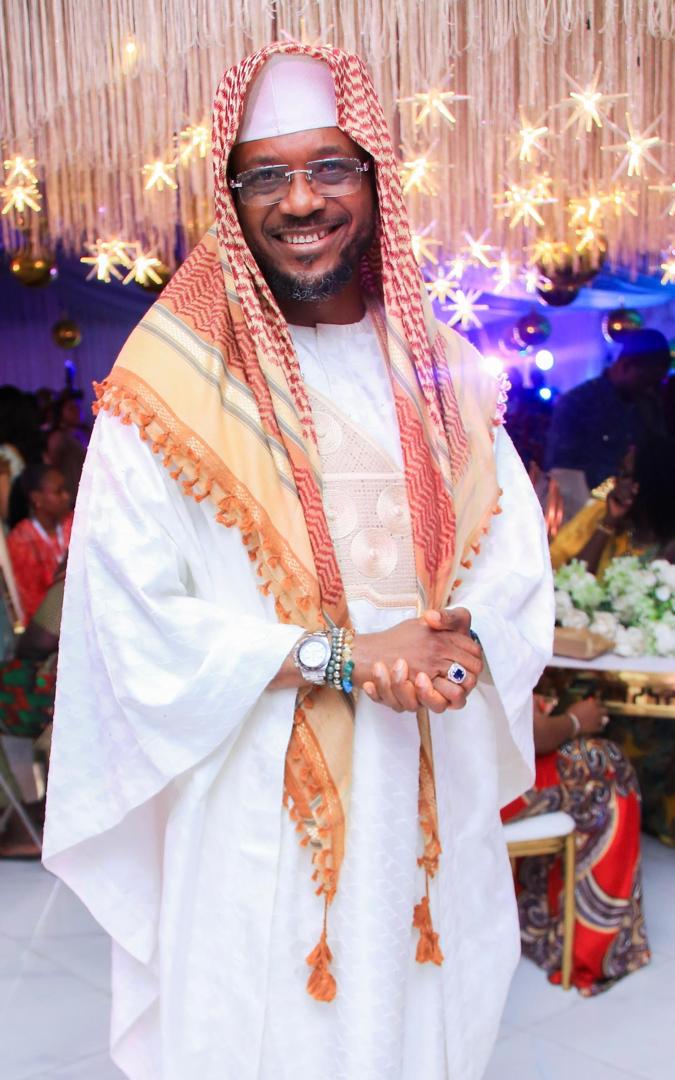
LAGOS, NIGERIA — As the crescent moon marks the end of the holy month of Ramadan, the Ayedero of Yorubaland, Hon. Shina Peller, has issued a stirring call for national rebirth, declaring that Nigeria stands at a “pivotal point” where only the collective character of its citizens can determine its future trajectory.
In an expansive Eid-ul-Fitr address delivered to the Muslim Ummah and the wider Nigerian public, the former federal lawmaker described the 2026 Ramadan season as a profound journey of spiritual reflection and self-discipline.
He maintained that the thirty days of fasting and prayer served a higher purpose than personal devotion, acting as a crucible to strengthen the bond with the Almighty and renew a national commitment to the virtues of patience and empathy.
According to the Ayedero, the essence of Eid-ul-Fitr extends far beyond the festivities of the day. He framed the celebration as a symbolic “triumph of faith over desire,” offering a timely reminder to a nation facing complex socio-economic hurdles that sacrifice and steadfastness are the primary tools required to overcome even the most daunting challenges.
“In a world that often feels divided, the lessons of Ramadan teach us the importance of brotherhood, charity, and looking out for the most vulnerable among us,” Hon. Peller stated. He further challenged Nigerians to internalize the spirit of Zakat (charity) and Taqwa (the fear of God) as active components of their daily lives, rather than treating them as seasonal observations.
Addressing the country’s internal dynamics, the renowned peace advocate emphasized that Nigeria’s diversity remains its greatest untapped strength. He argued that regardless of faith or background, the universal values of love and mutual respect are the only foundations upon which a secure and stable environment can be built.
He called on all citizens to use this sacred period to pray fervently for the peace and prosperity of their motherland, noting that the opportunity for every citizen to thrive depends on a unified national front.
Hon. Peller concluded his address with a call for moderation during the celebrations. He urged the faithful to share the joy of the season with their neighbors and the less privileged, ensuring that the spirit of Ibadah is reflected in acts of kindness.
He prayed that Allah (SWT) would accept the fasting and prayers of the Ummah and fill every Nigerian home with peace and prosperity.
Shina Peller, as the Ayedero of Yorubaland, a title meaning “The Promoter of Peace,” is a leading voice for youth empowerment, social justice, and national unity.
-

 news1 year ago
Interrogating the connection between social service and charity
-
news3 months ago
Arrive Early To Examination Centers, Comport Yourselves – Oyo HOS Admonishes Civil/Public Servants
-
news11 months ago
ANPP block in APC expresses deep concern over marginalisation to re-evaluate membership
-
news9 months ago
LG Commission Chairman ‘Wolekanle’ Gets Oyo NULGE’s Support
-

 news1 year ago
Abdulrazaq Inspects Govt’s Multistorey Prototype School
-

 news1 year ago
Man arrested for beating girlfriend to death in Lagos
-
 economics1 year ago
NNPC Shipping, partners unveil joint venture to boost crude transport
-
 economics1 year ago
Subscribers lament as MultiChoice raises DStv subscription by 21%