
news
Futures: UAE’s 6G and Nigeria’s Technology Gap


Beneath the Surface By Dakuku Peterside
The race to 6G is not just an engineering contest; it is a quiet referendum on which societies will set the pace of human connection, productivity, and security in the next decade. Nigeria—and much of Africa—faces a critical crossroads. One path is familiar: incremental investments, ad hoc policy, fragile pilots, and the hope that market forces alone will pull us forward. The other path is deliberate: a national roadmap that treats connectivity as infrastructure, research as strategy, spectrum as statecraft, and partnerships as leverage. The United Arab Emirates has offered a glimpse of what this second path looks like in practice. India is establishing itself as a 6G hub with the Bharat 6G Vision, while Saudi Arabia is emerging as a 6G hub through strategic infrastructure investments and innovation-driven initiatives. Embracing a proactive 6G strategy could bring a wave of optimism and hope for a brighter, more connected future.
When the UAE, working with researchers at New York University Abu Dhabi, pushed a pilot 6G terahertz experiment to a headline 145 gigabits per second under controlled conditions, it did more than set a speed record. It showcased a philosophy: plan early, experiment openly, learn fast, and align actors—regulator, industry, academia—around a shared horizon. Their regulator was quick to add the necessary caveat: this is not commercial 6G, and consumer deployment remains a 2030s story. Yet the point stands. The UAE’s trial and its national 6G roadmap show how a country can convert foresight into first-mover advantage long before mass rollout. They are rehearsing the future so they can perform it on opening night.
Nigeria can do the same—if we choose. Our economy is broad, our market deep, our entrepreneurs inventive. Innovation needs support to succeed, and it is one area we can do better. 6G will not arrive as a single technology; it will arrive as an ecosystem that fuses communications and sensing, runs on AI-native networks, and stretches into terahertz frequencies that demand new radios, new devices, new backhaul, and new security practices. It will privilege countries with fibre in the ground, power at the edge, and people trained to design, deploy, and defend complex systems. Without proper planning and continuous investment, we’ll enter the 2030s with outdated infrastructure from the 2020s. Let’s stay committed to strategic planning and ongoing investment to prevent this risk.
The question, then, is not whether we can afford to plan for 6G. It is whether we can afford not to. A nation that depends on efficient ports, trusted payments, resilient grids, secure borders, and precision agriculture cannot treat ultra-reliable, low-latency connectivity as a luxury item. The same is true for inclusive growth: the further 6G pushes computation and analytics to the edge, the more essential it becomes to ensure rural coverage, device affordability, and digital literacy. If we ignore these layers now, we will inherit a faster network that reproduces old divides. However, with strategic planning and investment, 6G can revolutionise these sectors, improving efficiency, security, and inclusivity.
A reflective strategy starts by acknowledging our present. Nigeria’s 5G rollouts are underway but uneven. Fibre gaps limit what even the best radios can do. Electricity reliability remains a stubborn bottleneck that quietly taxes every digital ambition. The operation and maintenance of the extensive infrastructure required for 6G networks are constrained by inadequate and unreliable power supply. Our universities house bright minds yet often lack well-funded applied research programmes, stable pathways into industry labs, and access to advanced Radio Frequency equipment. We have cybersecurity talent and startups, but the institutions that must protect critical infrastructure do not drill often enough for the worst-case scenarios a hyperconnected era will bring. None of these is a reason to relent; they are the very reasons to act.
Acting means setting a vision that reaches beyond procurement cycles: secure, inclusive, AI-native 6G that creates jobs, lifts productivity, and anchors digital sovereignty. It means building a delivery architecture—a time-bound mission office reporting to the highest levels, an advisory council that mixes universities with operators and OEMs, quarterly scorecards the public can read. This delivery architecture will ensure the 6G development plan is executed efficiently and transparently. It means rules that make experimentation routine rather than exceptional: exploratory terahertz licenses, sandboxes for joint sensing-communications, and spectrum sharing for research. It means showing up in standards bodies not as spectators but as contributors, so our needs and constraints are reflected in the systems we will one day buy at scale.
Most of all, it means bringing research and deployment into conversation. Flagship 6G labs can focus on terahertz radios, AI-driven RAN and core, edge security, and energy-efficient networking. University–industry consortia can align doctoral work to Nigeria’s most complex problems—oil and gas safety with integrated sensing, smart logistics across ports and dry ports, fintech fraud prevention at the edge, precision farming in the Middle Belt, disaster response along floodplains, and telemedicine for underserved regions—so that proofs-of-concept become pilots and pilots become markets.
Infrastructure is the quiet hero of every wireless leap. We will need more than towers: long-haul and metro fibre to carry the surge of data; regional edge zones to keep latency under ten milliseconds for critical services; reliable power, including mini-grids and renewables, to harden sites against outages; and smarter backhaul—optical where density justifies it, high-capacity microwave and satellite integration where it does not. Rights-of-way reform and “dig once” policies can cut costs and time. Data centre incentives can attract operators while mandating energy efficiency and robust security. If we build these layers well, 6G radios will have something worthy to ride on.
Talent is the multiplying factor. A 6G Academy network can connect universities, polytechnics, and industry labs around shared curricula: RF and terahertz fundamentals, AI for networks, cybersecurity, semiconductor basics, and field engineering. This network will play a crucial role in developing the skills and knowledge needed for 6G development. Scholarships and apprenticeships can create pathways into real projects, and the TVET programme of the Federal Ministry of Education is relevant. Diaspora expertise—our great, underused advantage—can be woven into visiting-scholar programmes, co-supervised theses, and standards contributions.
Financing this agenda requires imagination as much as money. R&D tax credits, matched grants, and spectrum-fee holidays for testbeds are levers within reach. Blended finance—development banks, sovereign wealth funds, infrastructure bonds, and well-structured PPPs—can share risk on fibre and edge build-outs that unlock enterprise demand. Even diaspora bonds can play a niche role if the projects are transparent, audited, and tied to clear milestones that people can see and feel.
Any reflective plan must dwell on ethics and security. 6G’s sensing capabilities promise safety and efficiency—and a new surface for misuse. Privacy-preserving analytics, transparent governance of lawful access, zero-trust architecture, continuous red-teaming, and supply-chain assurance are not afterthoughts; they are preconditions for trust. Build the guardrails early, test them often, and communicate them plainly. The surest way to slow technology adoption is to roll it out faster than public confidence can catch up.
Timelines should discipline hope. By 2028, we can fiberise priority corridors and industrial clusters, light up regional edge zones, graduate the first cohorts from a 6G academy network, and demonstrate cross-border pilots with ECOWAS partners—an “ECOWAS 6G corridor” for harmonised roaming, shared testbeds, and pooled procurement. As the 2030s open, we can pre-commercialise use cases that demonstrate clear business value and social returns, while scaling inclusion programmes that keep the door open to every community.
What would success look like? Success would be a network of Nigerian labs publishing credible research, our engineers co-authoring standards, our ports cutting turnaround times because sensors and analytics work in real time, rural clinics diagnosing with remote expertise because latency is finally low enough, farms deploying precision irrigation at scale, and startups building products for our problems and exporting them. Success would be citizens who notice that their digital life is faster, cheaper, and safer—and who trust it because the rules are clear and consistently applied.
The UAE has not “arrived” at 6G; it has committed to the journey and is travelling well. That is the lesson worth borrowing. Speed records are not the point. Alignment is the point: a regulator who signals, a carrier who experiments, a university that co-creates, a government that orchestrates and invests for the long term, and a public that can see progress in quarterly daylight. Nigeria can choose this alignment. We can build the fibre and the power, the labs and the testbeds, the skills and the safeguards. We can step into standard rooms with informed positions and into boardrooms with viable business cases. We can insist that the next generation of networks is a platform for national transformation, not just a faster way to stream video. If we do, we won’t merely avoid digital lag; we will reclaim technological agency. In a world where connectivity is destiny, that may be the most crucial sovereignty of all.
•Dr Dakuku Peterside is the author of bestsellers, Leading in a Storm and Beneath the Surface.


In a significant boost to Kisi educational development, Honourable Shina Peller, the Ayedero of Yorubaland and former member of the House of Representatives, has donated five million naira (₦5,000,000) to the Kisi Education Trust Fund.
The announcement was made during the annual Kisi Day celebrations held on Saturday, February 7, 2026.
The event, which served as a major cultural and developmental milestone for the community, brought together prominent indigenes, traditional leaders, and residents of the Oyo State town.
Addressing the gathering, Peller emphasized the critical role that education plays in the advancement of any society. He noted that the Trust Fund serves as a vital tool for ensuring that the youth of Kisi have access to quality learning opportunities and financial support for their academic pursuits.
The Kisi Education Trust Fund was established to bridge the gap in educational infrastructure and provide scholarships for brilliant but underprivileged students within the community.
Peller’s ₦5 million contribution is expected to provide an immediate impetus for several ongoing projects spearheaded by the fund.
Kisi Day is an annual festival celebrated by the people of Kisi (the headquarters of the Irepo Local Government Area). It is a day dedicated to celebrating the rich cultural heritage of the town, discussing developmental challenges and solutions and raising funds for community-led initiatives.
Moreover, the annual event is aimed at strengthening the bonds between Kisi indigenes at home and in the diaspora.
The 2026 edition has been hailed as a success, with Peller’s donation serving as a highlight of the day’s fundraising activities, signaling a renewed commitment to human capital development in the region.
Honourable Peller, a former member of the House of Representatives representing Iseyin/Itesiwaju/Kajola/Iwajowa Federal Constituency, attended the event not just as a statesman, but as a “son of the soil.” His mother, Alhaja Silifatu Peller, hails from Kisi, a connection the former lawmaker frequently cites as a source of his commitment to the town’s progress.
In his keynote remarks, Honourable Peller stated:
“Education is the bedrock of any meaningful development. My mother’s roots are here, and my heart remains with the people of Kisi.
“We must ensure that the next generation of Kisi indigenes are equipped with the knowledge and skills to compete globally. This donation is an investment in that future.”
The fund’s leadership expressed deep gratitude, noting that the contribution would significantly assist in:scholarship schemes such as providing tuition assistance for high-achieving students from low-income families, rehabilitating aging classrooms and providing modern learning materials to local schools and others.
The Iba of Kisi, HRM Oba Masoud Aweda Oyekola Lawal (Arowoduye II), along with the Kisi Progressive Union (KPU), praised the gesture as a “shining example of patriotism.”
As Kisi continues to grow as a major agricultural and cultural hub in northern Oyo State, such interventions are seen as vital to maintaining the town’s reputation for resilience and educational excellence.
news
Breaking Barriers: How the FG-ASUU Agreement Can Transform Nigerian Universities – By Tunji Oladejo

*The recent agreement between the Federal Government (FG) and the Academic Staff Union of Universities (ASUU) represents an important turning point for Nigeria’s education sector. This landmark deal, which includes a 40% salary increase for academic staff and improved working conditions, is a potential game-changer in ending the perennial labour crises that have plagued Nigerian universities for years.*
The agreement addresses long-standing issues such as inadequate funding, poor infrastructure and low staff morale, which have contributed to frequent strikes and disruptions in academic activities. Key provisions include a 40% upward review of academic staff salaries, improved pension plans and the establishment of a National Research Council with statutory funding of at least 1% of Nigeria’s Gross Domestic Product (GDP).
This development is notable for several reasons. It is the first time a sitting Nigerian President, Bola Ahmed Tinubu, has taken direct ownership of the dispute and prioritised its resolution. Dr Tunji Alausa, Minister of Education, drove the breakthrough in the crisis, championing dialogue and mutual respect. “A historic turning point”, he declared, emphasising the government’s commitment to keeping students in school and addressing academic staff concerns. By engaging ASUU with “the highest level of mutual respect”, he has paved the way for restored trust and confidence in Nigeria’s universities.
The deal addresses structural weaknesses in the university system, aiming to improve academic standards and global competitiveness.
The government has established a National Universities Commission (NUC) Committee to oversee its implementation, with regular progress reports to the President. Key mechanisms include an implementation committee chaired by the Minister of Education, a joint monitoring group to track progress and specific budgetary allocations for university improvements.
Interestingly, the government has committed to upholding university autonomy, allowing institutions to operate independently in line with existing laws and regulations. This includes respecting the rights of universities to govern themselves, appoint key officers, and determine the conditions of service for their staff. To facilitate this, laws like the Joint Admissions and Matriculation Board Act and the National Universities Commission Act will be reviewed and amended to remove impediments to autonomy and academic freedom. By doing so, the government aims to protect academic freedom and promote institutional self-governance.
The implementation of the agreement’s key provisions is already underway, with the government having released a circular directing the full implementation of the wages component, effective from January 1, 2026. Here are some specific timelines: the 40% salary increase for academic staff took effect on January 1, 2026; stabilisation and restoration fund: the government will provide N30 billion, disbursed in three equal instalments of N10 billion annually from 2026 to 2028; and the agreement is set for review after three years.
As for the state universities complying with the agreement’s terms, it’s unclear if state governors are duty-bound to implement it. Will they comply? That is the big question and that is the hurdle for the implementation monitoring committee that will oversee the process to cross.
Challenges ahead! Yes! The implementation monitoring committee is expected to identify and address potential challenges, especially the issue of transparency and accountability in the stabilisation and restoration fund. Can they pull it off? Will they deliver? Boosting Universities, the fund is to revive and strengthen academic activities likely focusing on infrastructure, research and staff welfare.
For success, the committee must keep everyone on track, ensuring that all parties adhere to agreed terms, including the 40% salary hike and N30bn Stabilisation Fund. The government must establish communication with key stakeholders, such as state governments and university administrations. Collaboration is key!
Funding challenges and transparency are the next issues to address. How’s the government planning to tackle them? Are there plans for audits or tracking mechanisms for the N30bn fund?
This agreement is expected to boost education quality and research output. Improved staff morale can attract and retain top talent, while enhanced research funding can drive innovation and global collaboration. Reduced disruptions mean more academic days and improved learning outcomes.
Universities can capitalise on this agreement to drive meaningful change. By allocating funds strategically, they can upgrade facilities, improve accommodation and enhance healthcare services for students. Investing in digital infrastructure will also prepare students for the modern workforce and improve learning experiences. Encouraging alumni and private sector partnerships can bring in additional resources and expertise.
The FG-ASUU agreement will significantly transform Nigeria’s academic sector. With a committee overseeing implementation and the government engaging stakeholders, it’s poised to boost salaries, fund universities and get things moving. Delivery is key—let’s hope they nail it!
Tunji Oladejo, mnipr, JP, writes from the University of Ibadan and is the Chairman of The Progressive Forum, Ibadan (TPFI), via oladejo65@gmail.com. 08077284442
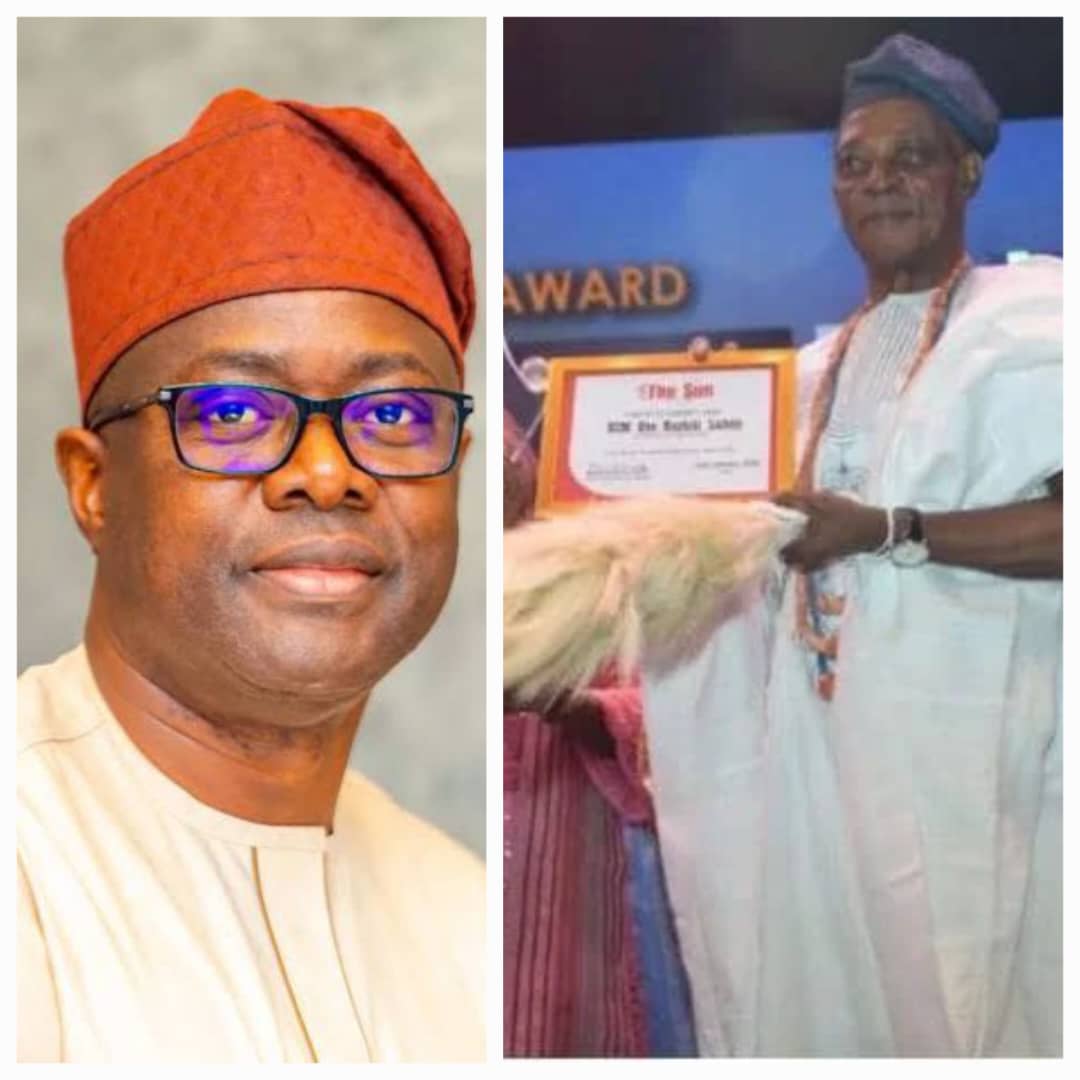
The Nigeria Union of Journalists (NUJ), Oyo State Council, has congratulated Governor Seyi Makinde and the Olubadan of Ibadanland, Oba Rashidi Adewolu Ladoja, Arusa 1, on honours conferred on them by The Sun Newspapers.
In a statement jointly signed by Chairman, Akeem Abas and Secretary, Dayo Adu, the NUJ said Makinde won Sun Political Personality of the Year, while Oba Ladoja received the Lifetime Achievement Award.
The NUJ said that Makinde’s award recognised his purposeful leadership, people-centred governance, infrastructural transformation and consistent democratic values delivered across Oyo State.
The council said Governor Seyi Makinde’s visionary policies strengthened media freedom, improved media-government relations and enhanced public trust through transparent communication, participatory governance and inclusive development initiatives.
The NUJ also congratulated Oba Rashidi Ladoja on the Lifetime Achievement Award, citing his cultural leadership, peace building, wisdom and enduring contributions to Ibadanland.
It said Oba Ladoja’s lifelong commitment to public service, politics and the traditional institution exemplified humility, statesmanship, sacrifice, while fostering harmony and development.
The union commended The Sun Newspapers for promoting excellence, accountability and national discourse through journalism awards, celebrating impactful leadership and democratic culture.
According to NUJ, such recognitions encourage public office holders and traditional rulers to deepen service delivery, uphold ethical standards and prioritise citizens’ welfare nationwide.
The council reaffirmed its commitment to objective reporting, professional journalism, constructive engagement with government and institutions, while supporting democracy and accountability in Oyo State.
It urged leaders at all levels to draw inspiration from the awardees by embracing transparency, inclusiveness and empathy in governance.
The council wished Gov. Makinde and Oba Ladoja continued wisdom, good health and greater service to humanity and Oyo State.
news
Ahmed Raji(SAN) Accomplish Another Landmark Feat, Launch New School Block, Handover Ultra-Modern CBT Center To JAMB.

Renowned legal icon, philanthropist and Senior Advocate of Nigeria (SAN), Alhaji Ahmed Adeniyi Raji, has once again reaffirmed his unwavering commitment to educational advancement as he is getting ready to launch a newly constructed school building and hand-over a modern Computer Based Test (CBT) Centre to Joint Admissions and Matriculation Board (JAMB) in Iseyin, Oyo State.
This historic event, scheduled to hold on Wednesday, February 11, 2026, is expected to attract top educationists, including the Registrar of JAMB, Professor Isiaq Oloyede, who will officially receive the CBT centre on behalf of the examination body.
According to statement issued and signed by Hon. Saheed Adejare Yusuf Alaran, brother, development partner to the legal luminary and made available to media, said this intervention initiative is part of Alhaji Raji’s long-standing vision to make quality education affordable, accessible and all-inclusive, irrespective of students’ socio-economic background.
Hon. Adejare Yusuf Alaran disclosed that the legal icon has taken full responsibility for the construction of a modern school complex comprising classrooms, administrative offices and fully equipped laboratories for the Senior Secondary arm of Raji Okeesa Memorial Comprehensive High School. The new facilities are designed to enhance teaching, learning and overall academic excellence.
In addition, Alhaji Raji has also built a well-equipped JAMB CBT Centre with a seating capacity of 250 candidates, fitted to meet global examination standards. The centre is expected to significantly ease the burden on students who previously travelled long distances to sit for UTME examinations.
Hon. Adejare Yusuf Alaran further noted that the official unveiling and handover will ensure the CBT centre is efficiently managed by JAMB for optimal use. He stressed that the initiative would save thousands of youths from avoidable stress while promoting fairness and efficiency in examination processes.
With this latest gesture, Alhaji Raji has once again etched his name in gold as a steadfast champion of education and youth empowerment in Oyo State and beyond.
Oyo State Government has reaffirmed its preparedness for the official commencement of the Computer-Based Test (CBT) mode of the West African Examinations Council (WAEC) examinations.
This is in line with the Federal Government’s directive for a gradual transition from pen-and-paper to full digital testing.
The Commissioner for Education, Science and Technology, Hon. Olusegun Olayiwola, disclosed this while receiving the Zonal Coordinator and Deputy Registrar of West African Examination Council(WAEC), Mr. Waheed Amode, and his management team during a courtesy visit to his office on Wednesday, February 4, 2026.
Olayiwola revealed that Oyo State Governor, Engr. Seyi Makinde has directed that the cost implications for the procurement of over 60,000 laptops for public senior secondary schools across the state be worked out, noting that the move is aimed at positioning Oyo State ahead of the full adoption of CBT examinations.
He commended WAEC for the proactive measures taken to address the challenges experienced during the 2025 examinations, while pledging the Ministry’s continued support in curbing examination malpractice and preventing vandalisation of school facilities.
In his remarks, Amode said the visit was to appreciate the Oyo State Ministry of Education for its support during the 2025 WAEC examinations and for its consistent collaboration with the Council over the years, describing the Ministry as a key stakeholder in the success of WAEC operations.
He disclosed that registration for the 2026 May/June WAEC examination closed on 2nd February, 2026, adding that the forthcoming examinations would be conducted using both CBT and pen-and-paper modes depending on the readiness of individual schools, while schools interested in full CBT participation are expected to formally indicate their interest through official correspondence.
Amode also warned that severe penalties await any candidate caught with mobile phones in the examination hall.
He stressed that such misconduct could lead to the cancellation of an entire school’s results, depending on the circumstances, and urged principals and teachers to uphold integrity in order to strengthen educational standards.
Meanwhile, Honourable Olusegun Olayiwola has called on parents, guardians and teachers to strengthen collaboration in order to address moral decline in schools, noting that effective partnership between the home and the school is essential for raising disciplined, responsible and value-driven students.
The Commissioner made the call while receiving members of the National Education Reform Movement (NERM), urging stakeholders to prioritise discipline and quality teaching, while NERM leader, Mr. Adewumi Abass, warned that weak parent–teacher synergy and rising examination malpractice pose serious threats to Nigeria’s education system and recommended the use of the resource book, “Parenting for Excellence,” as a guide for improvement.
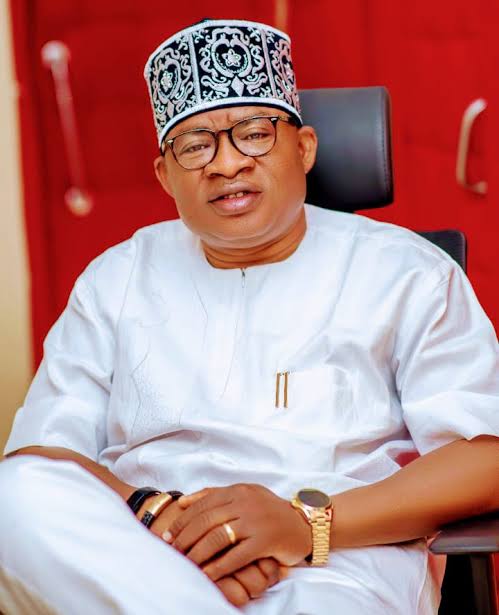
The Nigeria Union of Journalists (NUJ), Oyo State Council, has congratulated a distinguished Patron and renowned mediapreneur, Olooye Adeboyega Taofeek Adegoke, on the occasion of his birthday, describing him as a pillar of support for journalists and media development in the state.
In a congratulatory statement jointly signed by the Chairman, Mr. Akeem Abas, and Secretary, Dayo Adu, the Council extolled Oloye Adegoke’s outstanding commitment to the growth of the Union and the welfare of its members.
The council noted that as a responsible and dependable Patron, Oloye Adegoke has consistently demonstrated deep passion for the progress of journalism, maintaining a cordial and mutually beneficial relationship with the NUJ Oyo State Council.
It added that his unreserved benevolence to the Union and to journalists who cross his path, stressing that his interventions and support have positively impacted many practitioners within the media space.
According to the Council, the celebrant has remained a strong pillar behind several NUJ programmes and activities, offering support that has contributed immensely to the successful execution of professional and welfare-driven initiatives.
The Union particularly commended his rare gesture of giving without demanding anything in return, describing his selflessness as a virtue worthy of emulation within and outside the media industry.
Oyo NUJ added that Oloye Adegoke’s contributions as a mediapreneur have also helped in advancing media enterprise, capacity building, and opportunities for journalists across the state.
The Council wished him a happy birthday and prayed for continued good health, greater accomplishments, and more impactful years in service to humanity and the journalism profession.
-

 news11 months ago
Interrogating the connection between social service and charity
-
news2 months ago
Arrive Early To Examination Centers, Comport Yourselves – Oyo HOS Admonishes Civil/Public Servants
-
news10 months ago
ANPP block in APC expresses deep concern over marginalisation to re-evaluate membership
-
news8 months ago
LG Commission Chairman ‘Wolekanle’ Gets Oyo NULGE’s Support
-
 news11 months ago
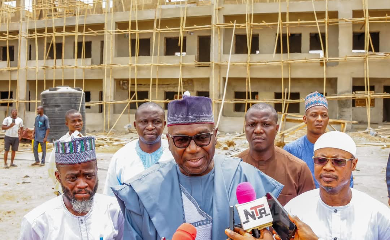
Abdulrazaq Inspects Govt’s Multistorey Prototype School
-

 economics12 months ago
NNPC Shipping, partners unveil joint venture to boost crude transport
-

 news12 months ago
Man arrested for beating girlfriend to death in Lagos
-

 economics12 months ago
Subscribers lament as MultiChoice raises DStv subscription by 21%