
news
Musa is Coming, Trump is Watching – By Festus Adedayo

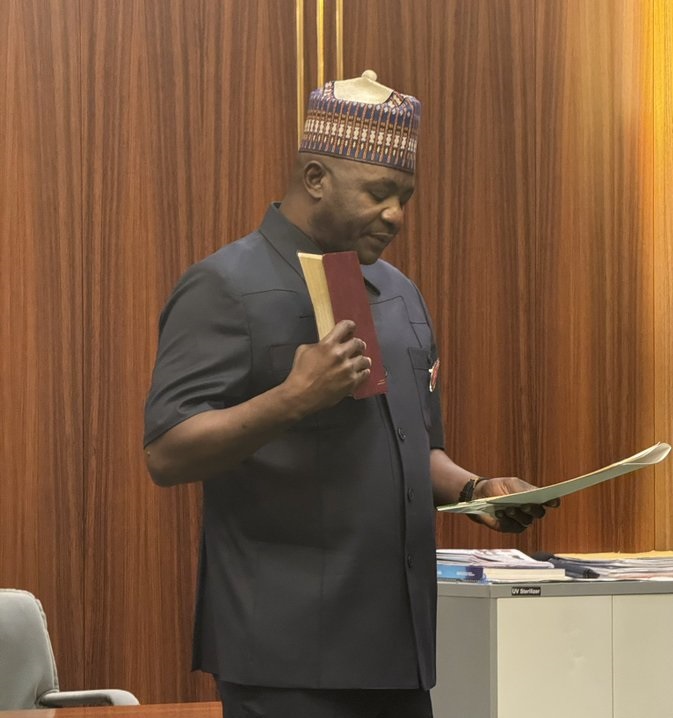
He who finds favour of the world is without blemish in its eyes. “Eni ayé ńfé ò l’árùn kan l’ára”. That was a verdict given close to five decades ago by my musical idol, lord of Apala genre of Yoruba traditional music, Ayinla Omowura. This verdict of his came in one of his songs after a self-assessment of his personal existential uplift. The bard must have wondered at his transmutation from the rung of societal ladder to a place of reckoning in the commanding height of society, especially in Yoruba popular culture. Stardom replaced outlawry, wealth came in place of lack and celebration came for a man whose song was considered to be the preoccupation of dregs of society. General Christopher Musa, the new Minister of Defence, epitomizes that transformation. In less than three weeks of leaving the saddle as Chief of Defence Staff (CDS) and being appointed as minister, adulation and commendations have gushed like a broken cistern for Musa and his appointor, President Bola Tinubu.
The aggregate of opinions on the street of Nigeria is that this was Tinubu’s best appointment thus far. But, what happened? How did a man who appointed, as minister of defence and minister of state for defence, two men perceived to be enablers “agbódegbà”(s) of bandits and terrorists suddenly meander into appointing another man who, by popular belief, is the best suited for the job, as minister of defence? What happened? How did that same appointor, whose judgment chose Musa, choose Mahmood Yakubu, who supervised his election, as ambassador-designate?
Senate President, Godswill Akpabio, a renowned fawner of the seat of power, provided an answer last week. At the swearing-in of Musa, when Sani Musa, senator representing Niger East, gave the sycophantic proposal that Musa be made to “bow and go”, Akpabio’s fury was unexampled. For the first time in his groveling senate presidency, Akpabio was so miffed that he stood up while wedging home his point. Not even when his senator colleague alleged sexual harassment did he show that level of anger. “Even Donald Trump is on our neck… and you stand up and say he should take a bow … with over 200 Nigerian children in the bush kidnapped and being tortured?” the senate president spat.
For Akpabio, even when a dog exhibits signs of malady, it dares not jump inside a scalding fire. Trump is watching. Not only did that senatorial outburst encapsulate the about-turn from the papering-over of insecurity that Nigerians have witnessed in the last 30 months of this administration, it explains the choice of Musa. So, there is indeed an innate walzing, dancing steps inside the cripple?
Permit me to digress a bit to explain this Trump phenomenon. If the grave indulges the sacrilege of flowing tears of dead patriots, decayed skulls of African anti-colonial ancestors must be shedding tears at the moment. Guinea-Bissau and Cape Verde’s Amílcar Cabral. Guinea’s Ahmed Sékou Touré. Mozambique’s Samora Machel. Zambia’s Kenneth Kaunda. Ethiopia’s Menelik II. Democratic Republic of Congo’s Patrice Lumumba. Kenya’s Jomo Kenyatta. Tanzania’s Julius Nyerere. South Africa’s Nelson Mandela. Ghana’s Kwame Nkrumah. Nigeria’s Funmilayo Ransome-Kuti. Kenya’s Mekatilili Wa Menza. Bibi Titi Mohamed of Tanzania. And many more. If you watched the December 4 peace meeting between DRC’s Felix Tshisekedi and Rwanda’s Paul Kagame at the newly renamed Donald J. Trump Institute of Peace building in Washington, DC, with petulant American president, Donald Trump, making sophisticated jokes of these African countries’ buffoonery, you could not but notice the droplets of tears down the chins of these African ancestors.
Earlier, Donald Trump had picked on our brothers in Somalia. “I don’t want them in my country,” Trump had begun, in his no-smiling vile attack, “Their country is no good for a reason. Their country stinks.” In an earlier repeated obnoxious attacks on South Africa, ostensibly borne out of his impulsive bellicose character, Trump repeatedly maintained that there is a white “genocide” unfolding in Cyril Ramaphosa’s country. Following this same trope of Africa-denigration, in the last three weeks or so, Nigeria has been a berthing bay for Trump to moor his querulous boat. Early last month, in a video he posted on his Truth Social, he had promised to “do things to Nigeria that Nigeria is not going to be happy about” as he would “go into that now-disgraced country guns-a-blazing”.
In July, the grumpy Trump had invited select African leaders to a three-day summit in Washington DC. White House referred to the summit, which had presidents of Gabon, Guinea-Bissau, Liberia, Mauritania and Senegal, as an “incredible” commercial opportunity.” All the invited African leaders’ countries possess important minerals like gold, oil, manganese, gas, wood and zircon in the bellies of their earths. At a televised lunch meeting with the African leaders, each of them festooned Trump with obsequious praise-singing. While Mohamed Ould Ghazouani of Mauritania lauded him for his “peace-making” evangelism in Africa, Senegal’s Bassirou Diomaye Faye commended his golf skills.
In D.C. last week, as Tshisekedi and Kagame sat, while he bungled their names in a mis-pronunciation orgy, Trump cracked grisly jokes at them for “killing each other”. He was before a rancorous audience which ostensibly enjoyed how he made a fool of these presidents. “Some people may be surprised. I think they’ve spent a lot of time killing each other and now they’re going to spend a lot of time hugging, holding hands and taking advantage of the United States of America economically, like every other country does.” The takeaways were “killing each other”, “taking advantage of the United States of America economically”, and, “like every other country does”. Construct an image in your mind’s eye of a daddy holding his child’s teddy bear and urging the child to walk. Not satisfied with that seemingly harmless jab, Trump then said, smiling, in what was obviously a pun, “Look at them. Look at the way they love each other.”
Indeed, the two African leaders have made sport of killing each other. Embroiled in decades-long conflict which began in the 1990s, they have fought two major regional wars which took place in 1996 and 2003, leaving millions of their people dead. Preceded by the brutal Rwandan genocide of 1994, with no less than one million people killed, that event became a precursor for the 1996-1997 war between the two countries. In this war, which was kindled by a Laurent-Désiré Kabila-led Rwandan and Ugandan-backed rebel force which overthrew Mobutu Sese Seko’s, the casualty estimate was about 250,000 souls. In the second war, nicknamed “Africa’s World War,” this conflict grossed death toll of 5.4 million people who died mainly from preventable causes like disease and starvation. In this recent conflict said to have begun in 2003, persistent violence, which ravaged Eastern Congo, birthed the M23 rebels, backed by Rwanda and various armed groups. In total, about 5.4m people are estimated to have died in the conflict, earning it the unflattering cognomen of the deadliest conflict worldwide since World War II.
In March 2020, a few years before it fell into the hands of the M23 rebels, I was in Goma. By the way, Congo is reputed with huge reserves of cobalt, gold, gems, copper, timber, and uranium, the hugest in the world. Its most valuable resource is its large reserve of diamonds. Indeed, the Congo has world’s second-largest diamond reserves, at 150Mct, or 20.5% of the global total. Substantial diamond reserves can be found in Kasai Occidental and Kasai Oriental. Then known as the Congo Free State from 1885 to 1908, it was the personal estate of Leopold II, who was the second King of the Belgians from 1865 to 1909. Leopold was known to have founded and was the sole owner of the Free State which he administered as a private estate, ran by a surrogate called Henry Morton Stanley. After the “peace meeting” facts emerged that America had made a go for DRC and Rwandan precious stones.
But, Frantz Fannon predicted all these. In his Black Skin, White Masks, (1952) a historical critique of the complex ways in which identity, particularly Blackness, impacts on the African and the way it is constructed and produced, Fannon dissected the feelings of dependency on white-skin persons, as well as our feeling of inadequacy in our black skin, what he called “psychopathology” of inferiority complex of the African.
So, there is no doubt that Donald Trump’s threat is strategically reshaping the minds of our leaders. And for good. Which is both lamentable and commendable. Lamentable as per the facts I stated overleaf but commendable because, though the Nigerian presidency, in answering the archetypal Frantz Fannon’s ‘Black Skin, White Mask’, has buckled up due to Trump’s bullying tirades. If we didn’t have that white-skin democratic demon, Trump, threatening to apply the Venezuelan treatment against our president, we would most likely continue to have dross as anti-insecurity leadership.
Last week, the 19 Northern governors also became the Black Skin, White Masks. Perceiving the Trump fire to have crept up the mountain, it suddenly occurred to these governors that they could not continue to breathe region and religion while their their own rebellious children who have morphed to become terrorists, bandits and kidnappers, kill in hundreds. A pledge to contribute N1b each monthly towards demonstrating to Trump that they are not chummy with terrorism is a huge elephant to swallow. Akpabio too also immediately became a Black Skin, White Mask. But for Trump, he would have continued in his boot-licking sycophancy. And the president would have continued to vicariously abet terrorists by being politically right in his choice of sensitive appointees, and failing to name and shame terrorism financiers.
If there is any public officer today no one must envy, General Musa is. One is that he carries a huge-monster responsibility on his head. When there is a unanimous adulation for you, the type the retired General has harvested across board in Nigeria in the last one week, any right-thinking person should be afraid. First is that the land he steps upon is very slippery. Though he partakes in the encomium of Musa’s discovery and identification, Musa’s appointment commendations expose the president as hitherto self-serving. How could the same pot that cooked Musa be the same that cooked Badaru and Matawalle? Why would the vine (creeping plant) that ties the calabash, be the one that ties the gourd and at the same time, the one that ties the ball-like seed of a vegetable called “elégédé”? Yoruba say this as “ìtàkùn t’ó so’gbà, ló s’agbè tó tún so elégédé”. This equivocation can only be possible if within the cooking pot is the capacity for evil and good in same proportion.
Musa’s appointment might have brought him on collision course with Robert Greene’s admonition in his 48 laws of power. The minister’s appointment has unwittingly made him to outshine the master. In the calculus of power, it is a lethal infraction. Trust politicians, by now, they are probably thinking he could be the right choice for the 2027 vice presidency. In which case, he would begin to harvest political enemies. This dais is different from the army where guns understand no politics.
General Musa (rtd) has found the favour of the world and in the world’s eyes, he is without blemish. But we must not forget that it was this same Musa, as Chief of Defence Staff, that the Canadian government denied entry visa to Canada in February of this year. It speaks to the institutional horror and complicity in the nourishment of terrorism that the Nigerian military is perceived to have been trapped. What should bother us is why and how that same Nigerian military, rated as one of the best in the world, has become a scum of the world. The answer is that it has been unequally yoked with political power and its rotten apples. Since 2009 when insurgency grew to become a hydra in Nigeria, military top-brasses have grown rotund cheeks and inflated tummies from fat defence budget. They purchase substandard armaments and sell equipment to insurgents. It is same with banditry which is fueled by illegal mining activities alleged to be the brainchild of retired generals. Unfortunately, it is the rank and file, and occasional big-epaulette like the late Brigadier-Gen Uba who Karma catches.
General Musa’s submission in the Senate last week coheres with mine on this page last week. The Nigerian military must never negotiate with terrorists, bandits or kidnappers. The state must be above those animals. Negotiating with them puts it at par with them. And lastly, to show that his political correctness in dealing with insurgency has ended, the president must sack Bello Matawalle. Either rightly or wrongly, the minister of state for defence carves the image of an ”agbódegbà ”. His successor, Dauda Lawal and many other testimonies, have argued this fact very convincingly. Now, the news of Musa coming into the Defence Ministry is the beginning of national excitement. That Trump is watching is also the precursor of wisdom. Can Matawalle’s exit then be the icing on the cake?

news
Ahmed Raji(SAN) Accomplish Another Landmark Feat, Launch New School Block, Handover Ultra-Modern CBT Center To JAMB.

Renowned legal icon, philanthropist and Senior Advocate of Nigeria (SAN), Alhaji Ahmed Adeniyi Raji, has once again reaffirmed his unwavering commitment to educational advancement as he is getting ready to launch a newly constructed school building and hand-over a modern Computer Based Test (CBT) Centre to Joint Admissions and Matriculation Board (JAMB) in Iseyin, Oyo State.
This historic event, scheduled to hold on Wednesday, February 11, 2026, is expected to attract top educationists, including the Registrar of JAMB, Professor Isiaq Oloyede, who will officially receive the CBT centre on behalf of the examination body.
According to statement issued and signed by Hon. Saheed Adejare Yusuf Alaran, brother, development partner to the legal luminary and made available to media, said this intervention initiative is part of Alhaji Raji’s long-standing vision to make quality education affordable, accessible and all-inclusive, irrespective of students’ socio-economic background.
Hon. Adejare Yusuf Alaran disclosed that the legal icon has taken full responsibility for the construction of a modern school complex comprising classrooms, administrative offices and fully equipped laboratories for the Senior Secondary arm of Raji Okeesa Memorial Comprehensive High School. The new facilities are designed to enhance teaching, learning and overall academic excellence.
In addition, Alhaji Raji has also built a well-equipped JAMB CBT Centre with a seating capacity of 250 candidates, fitted to meet global examination standards. The centre is expected to significantly ease the burden on students who previously travelled long distances to sit for UTME examinations.
Hon. Adejare Yusuf Alaran further noted that the official unveiling and handover will ensure the CBT centre is efficiently managed by JAMB for optimal use. He stressed that the initiative would save thousands of youths from avoidable stress while promoting fairness and efficiency in examination processes.
With this latest gesture, Alhaji Raji has once again etched his name in gold as a steadfast champion of education and youth empowerment in Oyo State and beyond.
Oyo State Government has reaffirmed its preparedness for the official commencement of the Computer-Based Test (CBT) mode of the West African Examinations Council (WAEC) examinations.
This is in line with the Federal Government’s directive for a gradual transition from pen-and-paper to full digital testing.
The Commissioner for Education, Science and Technology, Hon. Olusegun Olayiwola, disclosed this while receiving the Zonal Coordinator and Deputy Registrar of West African Examination Council(WAEC), Mr. Waheed Amode, and his management team during a courtesy visit to his office on Wednesday, February 4, 2026.
Olayiwola revealed that Oyo State Governor, Engr. Seyi Makinde has directed that the cost implications for the procurement of over 60,000 laptops for public senior secondary schools across the state be worked out, noting that the move is aimed at positioning Oyo State ahead of the full adoption of CBT examinations.
He commended WAEC for the proactive measures taken to address the challenges experienced during the 2025 examinations, while pledging the Ministry’s continued support in curbing examination malpractice and preventing vandalisation of school facilities.
In his remarks, Amode said the visit was to appreciate the Oyo State Ministry of Education for its support during the 2025 WAEC examinations and for its consistent collaboration with the Council over the years, describing the Ministry as a key stakeholder in the success of WAEC operations.
He disclosed that registration for the 2026 May/June WAEC examination closed on 2nd February, 2026, adding that the forthcoming examinations would be conducted using both CBT and pen-and-paper modes depending on the readiness of individual schools, while schools interested in full CBT participation are expected to formally indicate their interest through official correspondence.
Amode also warned that severe penalties await any candidate caught with mobile phones in the examination hall.
He stressed that such misconduct could lead to the cancellation of an entire school’s results, depending on the circumstances, and urged principals and teachers to uphold integrity in order to strengthen educational standards.
Meanwhile, Honourable Olusegun Olayiwola has called on parents, guardians and teachers to strengthen collaboration in order to address moral decline in schools, noting that effective partnership between the home and the school is essential for raising disciplined, responsible and value-driven students.
The Commissioner made the call while receiving members of the National Education Reform Movement (NERM), urging stakeholders to prioritise discipline and quality teaching, while NERM leader, Mr. Adewumi Abass, warned that weak parent–teacher synergy and rising examination malpractice pose serious threats to Nigeria’s education system and recommended the use of the resource book, “Parenting for Excellence,” as a guide for improvement.
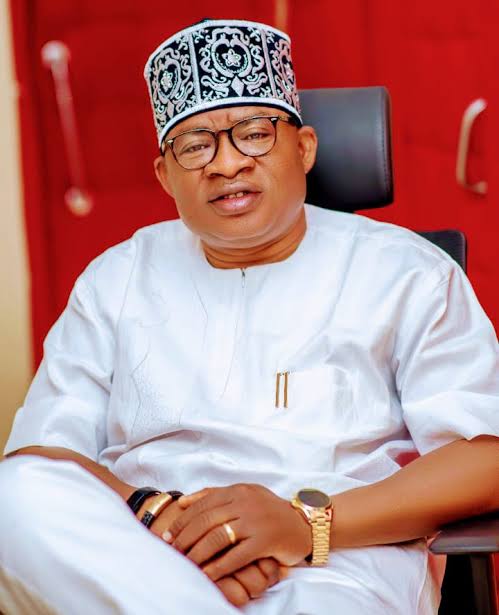
The Nigeria Union of Journalists (NUJ), Oyo State Council, has congratulated a distinguished Patron and renowned mediapreneur, Olooye Adeboyega Taofeek Adegoke, on the occasion of his birthday, describing him as a pillar of support for journalists and media development in the state.
In a congratulatory statement jointly signed by the Chairman, Mr. Akeem Abas, and Secretary, Dayo Adu, the Council extolled Oloye Adegoke’s outstanding commitment to the growth of the Union and the welfare of its members.
The council noted that as a responsible and dependable Patron, Oloye Adegoke has consistently demonstrated deep passion for the progress of journalism, maintaining a cordial and mutually beneficial relationship with the NUJ Oyo State Council.
It added that his unreserved benevolence to the Union and to journalists who cross his path, stressing that his interventions and support have positively impacted many practitioners within the media space.
According to the Council, the celebrant has remained a strong pillar behind several NUJ programmes and activities, offering support that has contributed immensely to the successful execution of professional and welfare-driven initiatives.
The Union particularly commended his rare gesture of giving without demanding anything in return, describing his selflessness as a virtue worthy of emulation within and outside the media industry.
Oyo NUJ added that Oloye Adegoke’s contributions as a mediapreneur have also helped in advancing media enterprise, capacity building, and opportunities for journalists across the state.
The Council wished him a happy birthday and prayed for continued good health, greater accomplishments, and more impactful years in service to humanity and the journalism profession.
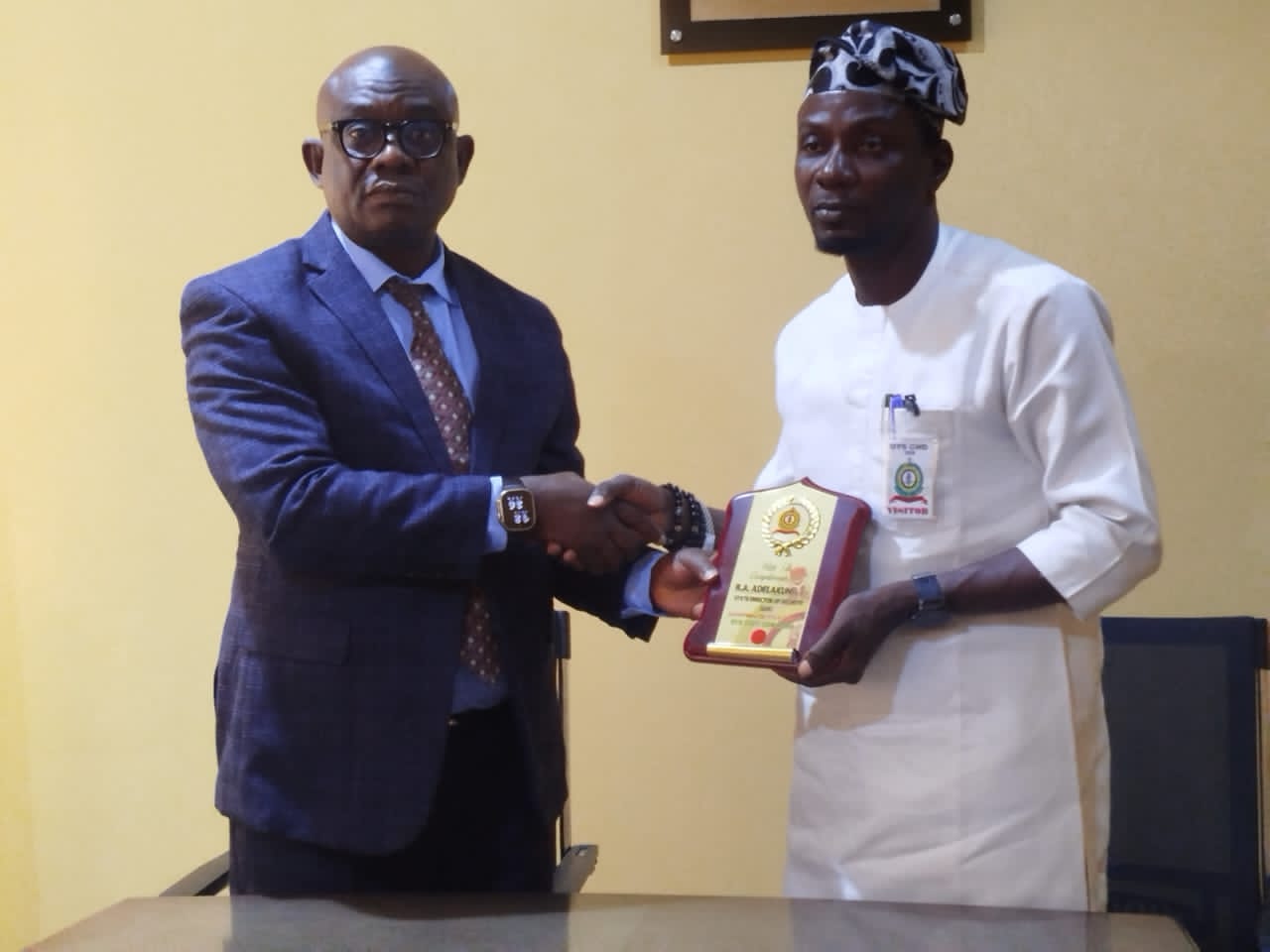
The Department of State Services (DSS) in Oyo State has reiterated its commitment to working closely with the Nigeria Union of Journalists (NUJ) to address security challenges and curb the activities of fifth columnists.
The State Director of DSS , Mr. Rasheed Adelakun, made this known when the executives of the NUJ, Oyo State Council, led by its Chairman, Mr. Akeem Abas, paid a courtesy visit to the state headquarters of the service in Ibadan.
Adelakun described the media as a critical partner in national security, stressing that effective information management and responsible reportage were essential tools to sustaining peace and stability.
He expressed concern over the increasing activities of fifth columnists, warning that their actions pose grave dangers to national security and peaceful coexistence.
According to him, the spread of misinformation and unverified reports could be exploited by such elements to undermine public confidence and social cohesion.
Adelakun, therefore, urged journalists to uphold professionalism and ethical standards in the discharge of their duties in the interest of national development.
Earlier in his remarks, the Oyo NUJ Chairman, Mr. Akeem Abas, assured the DSS of the union’s readiness to sustain collaboration with security agencies to promote peace, security and unity in Oyo State and across the country.
Abas added that NUJ would continue to sensitise its members on the importance of responsible journalism, fact-checking and adherence to ethical standards, noting that accurate and timely information remains a vital tool in supporting security agencies and strengthening national cohesion.
news
One Death Too Many: Government Must Be Held Accountable ““The opposite of love is not hate, it is indifference.”- Elie Wiesel – By Lanre Ogundipe
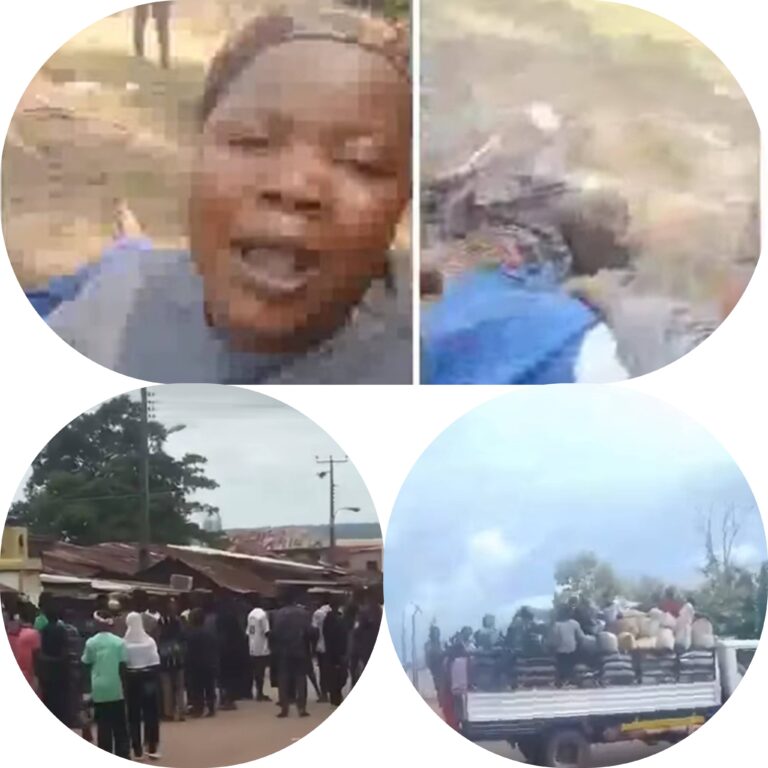
There are moments in the life of a nation when condolences become an insult. The massacre in the Woro and Nuku communities of Kaiama Local Government, Kwara State is one such moment.
Over one hundred and sixty Nigerians men, women and children were rounded up, bound, and executed in cold blood.
Not in a war zone. Not in a declared battlefield. But in their homes, on their farms, in the ordinary spaces of daily life where citizens are supposed to be protected by the state.
In response, government spoke. It always speaks. Condolences were offered. Troops were deployed after the fact. Statements were issued. And then silence followed, the familiar Nigerian silence that descends after tragedy, as though the mere passage of time could substitute for justice.
But when citizens are slaughtered in one coordinated attack and the primary response is sympathy, the issue is no longer insecurity alone. It is governance failure.
When warnings are ignored, graves multiply.
Several years ago, a former Chief of Army Staff and Minister of Defence publicly expressed loss of confidence in the ability of Nigeria’s security architecture to protect its citizens. He warned that communities were becoming sitting targets and suggested that citizens might have to defend themselves. At the time, the statement was controversial. Some dismissed it as reckless; others saw it as frustration.
Today, after repeated mass killings across the North-Central, the North-West, parts of the Middle Belt, and now creeping steadily into the South-West, that warning no longer sounds extreme. It sounds like an unaddressed alarm.
When a figure who once sat at the heart of the military establishment openly questions the system’s effectiveness, responsible governance demands inquiry and reform. Instead, the system closed ranks. The result is visible in mass graves.
Missing weapons, unanswered questions
Nigeria’s insecurity is sustained not only by ideology but by logistics. Armed groups operate with weapons, ammunition, intelligence and mobility. This raises a fundamental question that has never been satisfactorily answered: how do non-state actors consistently acquire arms in such quantities in a country with supposedly regulated armouries?
Over the years, there have been persistent allegations of missing or diverted weapons from police and military stockpiles. Senate inquiries have been announced. Committees have been formed. Investigations have been promised. Yet the outcomes remain largely invisible to the public.
Weapons do not simply disappear in a functioning state. When they do, and no one is held accountable, it creates an environment where criminal networks thrive. Citizens are entitled to know whether arms procured with public funds to defend them have been mismanaged, diverted, or abandoned to corruption.
Until there is a transparent forensic audit of arms procurement, storage and deployment, every massacre will raise the same disturbing suspicion: that state failure is not accidental.
Security agencies under scrutiny.
It must be stated clearly: many officers have paid with their lives trying to protect communities. Their sacrifice deserves respect. But institutions are judged by outcomes, not intentions.
Nigeria’s security agencies have long struggled with poor intelligence coordination, slow response times, weak oversight, and public trust deficits.
Allegations of corruption, abuse of power and selective enforcement are not new.
They are part of a documented pattern that has eroded confidence between citizens and those tasked with protecting them.
When attacks occur despite repeated warnings, when perpetrators operate for hours without resistance, and when accountability rarely follows, citizens are justified in asking whether the problem is merely incompetence or something deeper.
Asking such questions is not an attack on the uniform. It is a demand for institutional accountability.
Violence reaches the South-West.
For years, the South-West assumed a measure of insulation from the scale of violence seen elsewhere.
That assumption is now dangerously outdated. Criminal networks and extremist violence have found entry points into parts of Osun State through Ora-Igbomina and surrounding communities.
Farmers are afraid to work their land. Families fear nightfall. The early warning signs are unmistakable.
Yet political leadership appears distracted by ceremonies, anniversaries and public celebrations. At a time when security coordination should dominate governance priorities, optics and pageantry seem to take precedence.
Leadership is not measured by appearances in moments of comfort, but by decisiveness in moments of crisis.
Unequal seriousness across regions
Across Nigeria, a contrast is emerging. Some states, particularly in parts of the East and South-South, are investing in intelligence gathering, technological support, community surveillance and structured engagement with security professionals. These efforts are not perfect, but they demonstrate seriousness.
The question is unavoidable: what are other states prioritising? What value does infrastructure, celebration or political theatre hold when citizens are unsafe? Development without security is an illusion.
Security is not one policy item among many. It is the foundation upon which every other policy rests.
Beyond religion and ethnicity.
This tragedy must not be misrepresented as religious or ethnic conflict. Terror does not discriminate by faith. Bullets do not recognise identity. Christian or Muslim, Yoruba or Hausa or Igbo — the dead are united by vulnerability, not belief.
Reducing these massacres to sectarian narratives only benefits those who profit from chaos. The real divide is between citizens protected by power and citizens exposed to violence.
A government that cannot protect its people, regardless of who they are or what they believe, has failed its most basic obligation.
The dangerous appeal of self-help
In the face of repeated state failure, some citizens ask whether they must protect themselves. This is not rebellion; it is despair. But history shows that widespread vigilantism leads not to safety, but to cycles of revenge and instability.
The alternative is not lawlessness. It is accountability.
Citizens must demand:
Transparent investigations into security failures before and during major attacks.
A full forensic audit of missing or diverted weapons.
Clear responsibility for governors, commissioners and security chiefs where negligence is established.
Lawful, supervised community protection mechanisms under strict oversight.
Anything less is performance, not governance.
A quiet erosion of freedom.
There is an uncomfortable question many Nigerians now ask privately: are citizens valued only as statistics — to be governed, taxed, and mourned, but not protected?
When deaths are normalised and accountability is endlessly postponed, freedom becomes symbolic rather than real. Democracy cannot survive where life is cheap and power is insulated from consequence.
One death is too many
Let us return to the central truth. One death is too many. One hundred and sixty is a national indictment.
This massacre must not be absorbed into Nigeria’s long list of forgotten tragedies.
Condolences cannot replace justice. Silence cannot replace accountability.
History will ask what was done when citizens were slaughtered. Words alone will not be an acceptable answer.
Lanre Ogundipe , A Public Affairs Analyst, Former President Nigeria and Africa Union of Journalists writes from Abuja, Federal Capital City.
February 6, 2026.
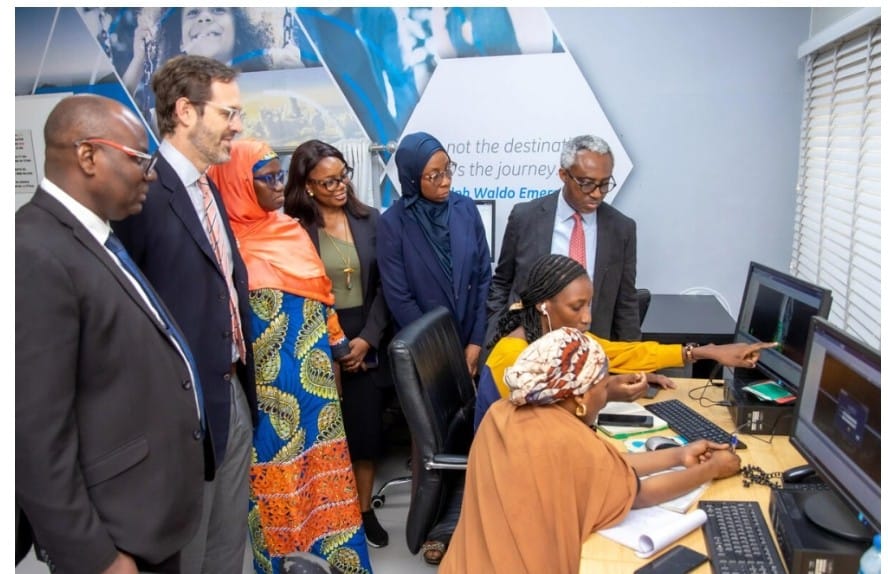
*A landmark clinical trial is underway in Nigeria, thanks to the collaborative efforts of Obafemi Awolowo University, Lagos University Teaching Hospital, Medserve and Memorial Sloan Kettering Cancer Centre. The trial investigates PD-1 blockade immunotherapy in patients with mismatch-repair-deficient colorectal cancer. The trial was approved by the National Health Research Ethics Committee (NHREC)—the organization responsible for ensuring that all health research conducted in Nigeria is ethical and globally compliant—and by the National Agency for Food and Drug Administration and Control (NAFDAC), the organisation that regulates and controls the manufacture, importation, exportation, distribution, advertisement, sale, and use of food, drugs, cosmetics, medical devices, packaged water, chemicals and detergents in Nigeria.*
This is a moment of great pride for the University of Ibadan (UI) College of Medicine! Three distinguished UI College of Medicine alumni: Dr Lilian Ekpo, Dr Zainab Yunusa-Kaltungo and Dr Tolu Adewole are instrumental in this initiative. They are part of a groundbreaking clinical trial that’s set to revolutionise colorectal cancer treatment in Nigeria. Their expertise underscores the institution’s commitment to advancing cancer research and treatment.
Dr Abraham Ariyo, a UI College of Medicine alumnus and cardiologist based in the US, shared this exciting news with me. We’d connected online about 4 months ago, bonding over our shared interest in UI and the College of Medicine. As he said, “I have read your pieces about Ibadanland and the University of Ibadan, especially about Profs. Ronke Baiyeroju and Olayinka Omigbodun. You are interested in UI and Ibadan. You are engaging in similar efforts with me regarding the alumni of the Ibadan College of Medicine. I appreciate you.” He’s been sharing stories about notable alumni achievements and this immunotherapy trial is the latest feat!
Back to the basics! This trial is a major turning point in Nigeria’s fight against cancer, with potential implications for sub-Saharan Africa. Alumni contributions reinforce the UI College of Medicine’s reputation as a hub for innovative research.
This trial’s success could establish Nigeria as a frontrunner in cancer research, demonstrating the nation’s capacity to tackle urgent health concerns. Kudos to the UI College of Medicine for nurturing talented professionals who are making a difference!
The trial is partially funded by the Thompson Family Foundation. Co-principal investigator Prof. Olusegun Isaac Alatise says, “The approval marks an important milestone in the fight against colorectal cancer in Nigeria.” Co-principal investigator Prof. Fatimah Abdulkareem adds, “This collaboration demonstrates our commitment to advancing cancer care.”
MSK’s Global Cancer Research and Training programme partnered with OAU Teaching Hospital in 2013 to establish the African Research Group for Oncology. Dr T. Peter Kingham says, “We hope this trial will lead to a similar shift in treatment possibilities for Nigerian colorectal cancer patients.”
Dr Tolulope Adewole, Medserve CEO, emphasises, “Quality oncology care should not be a privilege; it must be the minimum standard irrespective of location.”
If any advanced medical innovation occurs in Nigeria, UI alumni are likely behind it. They might not always be in the spotlight, but they are driving progress.
Globally, colorectal cancer is a significant issue, and Nigeria is not an exception, with less than half of Nigerian patients with colorectal cancer living one year after diagnosis. Colorectal cancer is a type of cancer that typically affects the colon or rectum, often presenting with no symptoms at first. But when it progresses, it can be tough to treat.
Some common signs to watch out for are changes in bowel habits (like diarrhoea or constipation); blood in stool or rectal bleeding; abdominal pain or cramps; unexplained weight loss; and Fatigue
Risk factors include age (50+); family history; diet (low fibre, high processed meat); lack of exercise; and smoking and heavy drinking.
Screening is key! Procedures like colonoscopies can catch it early when it is more treatable. The good news is that research is advancing, and treatments like immunotherapy (like the trial mentioned above) are offering new hope. Stay proactive about your health, and get checked if you’re due!
Tunji Oladejo, mnipr, JP, writes from the University of Ibadan and is the Chairman of The Progressive Forum, Ibadan (TPFI) via oladejo65@gmail.com
-

 news11 months ago
Interrogating the connection between social service and charity
-
news2 months ago
Arrive Early To Examination Centers, Comport Yourselves – Oyo HOS Admonishes Civil/Public Servants
-
news10 months ago
ANPP block in APC expresses deep concern over marginalisation to re-evaluate membership
-
news8 months ago
LG Commission Chairman ‘Wolekanle’ Gets Oyo NULGE’s Support
-
 news11 months ago
Abdulrazaq Inspects Govt’s Multistorey Prototype School
-
 economics12 months ago
NNPC Shipping, partners unveil joint venture to boost crude transport
-
 news12 months ago
Man arrested for beating girlfriend to death in Lagos
-

 economics12 months ago
Subscribers lament as MultiChoice raises DStv subscription by 21%