
news
Smart Journalism And AI: Redefining News Creation And Distribution

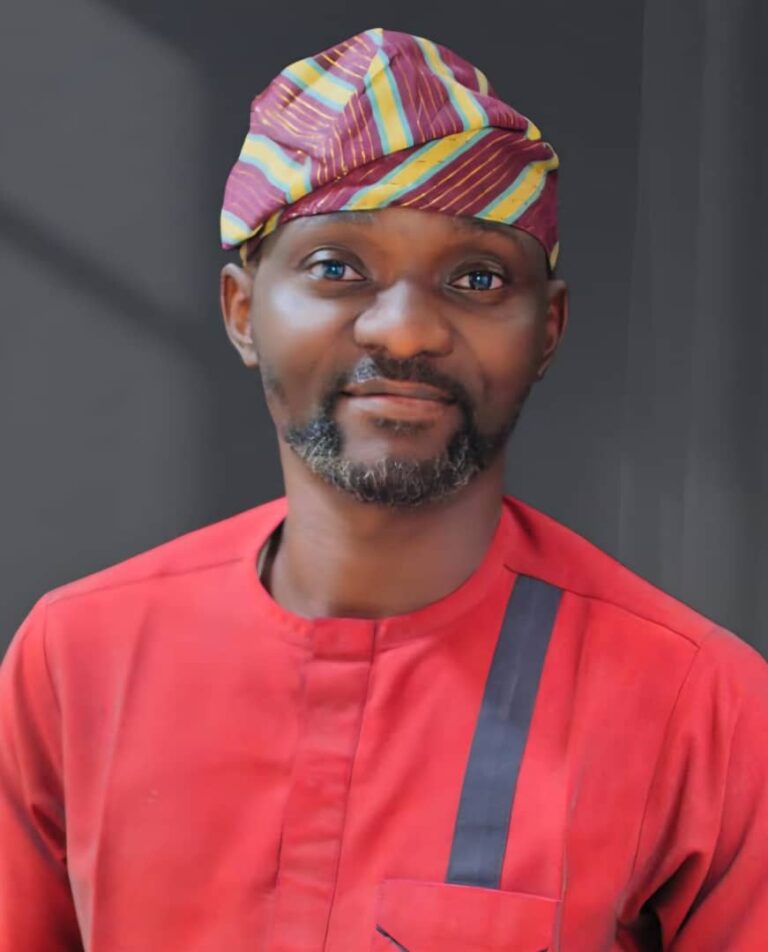
Being the lecture delivered Mr Olaoluwa Mimiola at The Mass Communication Department of the Southwestern University Nigeria, as a Guest Lecturer for 2026 Student Training and Development Programme themed “Bridging the Gap between Town and Gown.”
By: Olaoluwa Mimiola
Protocol:
The Vice-Chancellor, Southwestern University, Nigeria,
The Deputy Vice-Chancellor,
The Registrar and Council Members here present,
The Dean, Faculty of Social and Management Sciences,
The Head, Department of Mass Communication,
Distinguished Professors, Senior Lecturers, and Members of the Faculty,
Esteemed Guests from the Industry—the Captains of the “Town,”
And most importantly, the vibrant, forward-thinking students of this great citadel of learning—the future architects of the global media landscape.
Good morning.
The Nexus: Why We Are Here
It is an absolute privilege to stand before you today. We are gathered under a theme that is both urgent and prophetic: “Bridging the Gap between Town and Gown.” For decades, higher education globally followed a predictable rhythm. The “Gown” (academia) would spend years codifying theories, while the “Town” (the media industry) would operate on its own axis. Students would graduate, step into a newsroom, and immediately hear a veteran editor say: “Forget everything you learnt in the university; this is the real world.”
In 2026, that luxury of time is officially dead. The Town no longer waits for the Gown to catch up. The breakneck speed of technological evolution means that a mass communication degree can no longer be a mere certificate of attendance. It must be a license to innovate.
This brings us to the core of our conversation today: Smart Journalism. What is it? Smart Journalism is not the replacement of reporters by machines. Rather, it is the deliberate integration of Agentic AI—artificial intelligence systems capable of executing complex, multi-step workflows autonomously—to automate the mundane, repetitive elements of our craft. By outsourcing data entry, basic transcription, and the initial formatting to machines, we liberate the human journalist to focus on what is monumental: investigative reporting, structural empathy, and the relentless pursuit of truth.
The stakes for you, sitting in this auditorium in Okun-Owa, Ogun State, could not be higher. Nigeria possesses one of the most vibrant, chaotic, and culturally rich media ecosystems on earth. Yet, if you do not master these emerging tools to tell Nigeria’s stories, a software engineer sitting in Silicon Valley or a synthetic algorithm running out of Shanghai will do it for you. And make no mistake: they will get the nuances wrong. They will misinterpret the subtext of a local political alliance, flatten the richness of our indigenous histories, and mispronounce the very names of our ancestors. To bridge the gap, you must own the tools of the Town while sharpening the critical mind developed by the Gown.
Creation: From Data to Narrative
Let us talk about the practical reality of the 2026 newsroom. We have moved entirely past the era of viewing artificial intelligence as an adversarial force or a gimmick. In contemporary media structures, AI is your ultimate newsroom coworker. We no longer simply “write” news; we prompt, interrogate, and curate.
Consider the sheer volume of data generated in Nigeria daily. BudgIT, a local civic tech organisation, frequently publishes massive trackers on state budgets and federal allocations. Historically, a journalist would need weeks to pore over thousands of pages of government PDFs to uncover anomalies in constituency projects. Today, an agentic AI assistant can scan those identical documents in less than ten seconds, cross-referencing past spending bills to isolate the exact line items where public funds mysteriously vanished. The machine does not write the exposé; it simply finds the needle in the haystack so you can build the narrative.
Furthermore, we are experiencing a revolution in multimodality—the ability of AI to seamlessly translate one media form into another. Imagine you are a lone field reporter covering an agricultural crisis in a remote community outside Shagamu. You write a 500-word text report based on your interviews. In 2026, using synthetic media tools, that single text file can be instantly converted into:
A broadcast-ready video presentation delivered by a photorealistic, AI-generated anchor speaking fluent, idiomatic Yoruba.
An English-language podcast featuring natural-sounding voices discussing the economic implications of the crisis for Nigeria’s gross domestic product (GDP).
A highly visual infographic designed specifically for social media feeds.
This is where local relevance becomes revolutionary. According to data from the National Bureau of Statistics (NBS), millions of Nigerians, particularly at the grassroots across Southwestern Nigeria, face significant functional literacy barriers in English. True journalism cannot exist if the people most affected by public policy cannot access the news.
By utilising localised language models trained on proper Yoruba syntax, tonal variations, and cultural idioms, you can automatically democratise information. You can bridge the information asymmetry between the urban elite in Lagos and the market women in rural communities. Smart Journalism ensures that a major policy shift announced by the Central Bank of Nigeria in Abuja is translated, contextualised, and broadcast to a farmer in a village within minutes, in the language of their heart.
Distribution: Winning the Attention War
However, creating a brilliant, inclusive story is only half the battle. The digital ecosystem is loud, crowded, and unforgiving. We are currently locked in a brutal “attention war,” and the old playbooks are obsolete.
For the past two decades, journalism schools taught Search Engine Optimisation (SEO)—how to trick Google into ranking your article first when someone types a query. In 2026, traditional SEO is functionally dead. Audiences are increasingly bypassing standard search links altogether. Instead, they are turning to conversational engines like Perplexity, Gemini, and OpenAI’s search models. This shift has birthed a new discipline: GEO (Generative Engine Optimisation).
Your job as a modern publisher is to structure your investigative reports, your breaking news, and your features so cleanly that when an AI agent compiles an answer for a user, it identifies your platform as the primary, authoritative source to cite. If your news report is not cited in the footnotes of the conversational answers that users read on their phones, your media house does not exist in the digital consciousness.
But let us bring this closer to home. Where does news actually live and breathe in Nigeria? It does not live on obscure websites, and it certainly does not live on platforms inaccessible to the average citizen due to high data costs. In Nigeria, the news lives on WhatsApp.
A study by the Reuters Institute for the Study of Journalism highlights that WhatsApp remains the primary ecosystem for news sharing and consumption across several developing economies, with Nigeria leading the vanguard. Our parents, our peers, and our communities rely on WhatsApp statuses and forwarded messages for their daily briefings. Unfortunately, this makes it the undisputed capital of misinformation.
Smart Journalism demands that we meet audiences exactly where they are. Instead of fighting WhatsApp, we must occupy it. By building localised AI bots integrated directly into WhatsApp Business APIs, a small newsroom can manage vast digital communities simultaneously. These bots can perform three critical functions:
[Incoming WhatsApp Query]
Real-time Fact-Checking (Verifies viral voice notes/images)
Personalised Subscriptions (Delivers news via text/audio notes)
Automated Interactive Feeds (User asks: “What happened in Ogun today?”)
Real-time Rumour Debunking: When a user forwards a suspicious voice note about a fuel shortage or an ethnic clash to the bot, the AI instantly cross-references it against verified news databases and returns a fact-check within seconds.
Personalised News Snippets: Delivering targeted news updates based on explicit user preferences, circumventing high data costs by using compressed text and audio notes rather than heavy video files.
Interactive Local Databases: Allowing a user to type, “What did the local government chairperson promise about our roads last month?” and receive an immediate, accurate extract from the town hall archives.
What does this mean for you as students? It means the traditional barriers to entry have evaporated. A student sitting right here in Okun-Owa can run a hyper-local, global-standard news bureau from a smartphone, with zero infrastructure overhead. You do not need a multi-million naira printing press or a broadcast license from the National Broadcasting Commission (NBC) to transform your community’s media landscape. You need data, a strategy, and a phone.
The Guardrails: Ethics & The “Human” Edge
Now, let us pause. Everything I have described sounds spectacular—unprecedented speed, flawless translation, and global reach. But as future journalists, you must understand that with immense computational power comes an unprecedented crisis of truth. We are standing on the precipice of the upcoming 2027 electoral cycle in Nigeria. If you thought previous elections were plagued by “fake news,” brace yourselves.
We are already witnessing a torrent of sophisticated, AI-generated deepfakes. We will see video clips of political candidates seemingly confessing to corruption in their own voices, fabricated audio recordings designed to ignite sectarian tensions, and entirely synthetic photos of non-existent riots. In this hyper-polluted information ecosystem, your role as a journalist undergoes a fundamental paradigm shift. You are no longer an “Information Provider.” Information is cheap, ubiquitous, and heavily manipulated. Your new title is “Truth Validator.”
This is precisely where academia wins. This is where Southwestern University justifies its existence. This is the very core of the Gown’s strength.
An artificial intelligence system possesses vast data repositories, but it has absolutely no conscience. It has no legal liability under Nigerian law. It cannot feel the weight of a defamatory statement, it cannot understand the delicate social cohesion of a multi-ethnic society, and it lacks what veteran journalists call a “nose for news”—that intuitive, deeply human ability to look an official in the eye and know they are lying.
The rigorous media law courses, the ethical frameworks, and the philosophical foundations you are taught in these lecture halls are not outdated theories to be memorised for exams. They are your ultimate armour. They are your greatest competitive advantage when you step into the Town.
We must enforce a strict, unyielding policy in our workflows: The Human-in-the-Loop.
The Golden Rule of Smart Journalism
Never, under any circumstances, publish content that has not been vetted, cross-checked, and approved by a human editorial mind.
The machine provides the velocity; the human journalist must provide the soul. If an AI writes a summary of a court proceeding, a human must verify the legal terminology. If an AI translates a news brief into Yoruba, a human must ensure it does not inadvertently insult a traditional institution or violate local libel laws. We use the machine to accelerate our labour, never to abdicate our responsibility.
The Call to Action: Become a Media Architect
As I bring this lecture to a close, let us look practically at how you can bridge this gap starting today. To survive and dominate this landscape, your skillset must expand beyond traditional news writing and editing. You must actively develop three core competencies:
Prompt Engineering: Learning how to talk to machines. The quality of an AI’s output depends entirely on the sophistication of the human’s input. You must learn how to instruct an AI system to analyse data without introducing bias or hallucinating facts.
Data Literacy: Understanding how to read spreadsheets, clean messy datasets, and interpret statistical realities. Nigeria’s stories are hidden in data; you must learn how to make that data speak.
Radical Ethics: A commitment to transparency that borders on the fanatical. In an era of fakery, your audience must trust your process. You must be willing to show your sources, document your verification steps, and state clearly when and how AI was used in your creative process.
My final charge to you is simple: Do not wait for a job at a television station or a national newspaper. Do not wait for the Town to hand you an invitation.
Look at the device in your hand right now. The smartphone in your pocket contains more computing power than the technology NASA used to send humans to the moon. It contains the tools to build a media empire. Use the AI applications available to you today to launch your own investigative newsletters, your own hyper-local audio podcasts, your own data-driven fact-checking platforms.
Build the media house of the future from your hostel rooms. Let your innovations be so loud, so impactful, and so ethically unassailable that the industry is forced to look toward Southwestern University for direction. Your footsteps, your experiments, and your courage are the very elements that will bridge the gap between Town and Gown.
I leave you with the definitive quote of our era, coined by the media scholar Professor Charlie Beckett of the London School of Economics:
“AI will not replace journalists. But journalists who use AI will replace those who don’t.”
The future of African storytelling is not waiting in Silicon Valley. It is waiting in this room.
Thank you very much, and may your pens—and your prompts—never fail you.


The Chairman, Oyo State Leauge Of Veteran Journalists, Veteran Banji Ogundele has joined all members and well wishers of the Nigeria Union Of Journalists, Oyo State Council as it celebrate the maiden _Unity Sallah Soirée_
In a press statement he personally signed on Saturday, June 6, 2026, Veteran Ogundele said he feels greatly delighted with the uniqueness of the occasion and its innovation. The title of the celebration laid emphasis on unity. And there is no better time for members to unite than now at the celebration of Sallah, a feast of faith, sacrifice, forgiveness and divine mercy. As the famous proverb goes, “United we stand but divided we fall.” This emphasises strength in collaboration and weakness in division.
Veteran Ogundele said, since Oyo State Council of the NUJ remains the bastion of Nigeria’s free press, it behoves it to lead by example.
“I, therefore, urge all members to demonstrate the spirit of good sportsmanship and let bygone be bygone, because, in all contests, there must be winners and losers”, Veteran Ogundele said.
While winners should show magnanimity in victory, losers should not be discouraged but see it as a momentary setback. Participation itself is enough joy.
Veteran Ogundele therefore urge all aggrieved members to return home, since, _insha Allah,_ another contest is always around the corner.
Let every hand be on deck to strengthen the union to let it retain its pride of place as the _*primus inter pares*_ – the first among equals – in the country, Veteran Ogundele added.
Congratulations and enjoy your well-deserved _Soirée._
_*A s’eyi s’amodun. Oju wa yio ma r’odun.*_
*Banji Ogundele*
_Chairman, LVJ._
news
Oyo Police Debunks False Report Of Death Of Abducted School Pupil, Warns Purveyors Of Misinformation

Oyo State Police Command has observed with grave concern the circulation of a malicious and entirely unfounded report alleging that one of the schoolchildren abducted during the recent incident at Ahoro-Esiele, Oriire Local Government Area, has died while in captivity.
The Command categorically states that the report is false, misleading, mischievous, and without any factual basis whatsoever. At no time has the Oyo State Police Command, nor any other recognized security agency involved in the ongoing rescue efforts, confirmed such development. The publication is a fabrication carefully crafted by individuals whose objective is to arouse unnecessary public sentiment, create panic, spread fear, and undermine ongoing security operations.
It is particularly disturbing that the authors of the report deliberately employed emotional narratives, speculative claims, and unverified accounts in a calculated attempt to manipulate public opinion and generate anxiety among residents. Such conduct not only constitutes a disservice to responsible journalism but also advances the very objectives of criminal elements and terror merchants who thrive on fear, uncertainty, and public distress.
The Command wishes to assure members of the public that concerted efforts by security agencies remain ongoing and that all operational activities concerning the incident are being pursued with the utmost professionalism, diligence, and confidentiality. The dissemination of false information at such a critical time has the potential to jeopardize ongoing efforts, cause unnecessary trauma to affected families, and mislead the general public.
Consequently, the Oyo State Police Command strongly cautions individuals, bloggers, social media influencers, online content creators, and media platforms against the publication or amplification of unverified security-related information. The indiscriminate sharing of false reports, particularly those capable of inciting fear or causing public disorder, is irresponsible and unacceptable.
The Command therefore appeals to all media houses, bloggers, and online content creators to exercise professionalism, responsibility, and due diligence in the discharge of their duties. They must refrain from becoming unwitting accomplices to those whose stock-in-trade is misinformation, fearmongering, and the deliberate distortion of facts for ulterior motives.
Members of the public are advised to disregard the said publication in its entirety and rely solely on information disseminated through official channels of the Nigeria Police Force and other authorized government agencies.
The Oyo State Police Command remains steadfast in its commitment to public safety and security and will continue to keep residents appropriately informed of verified developments as circumstances warrant.
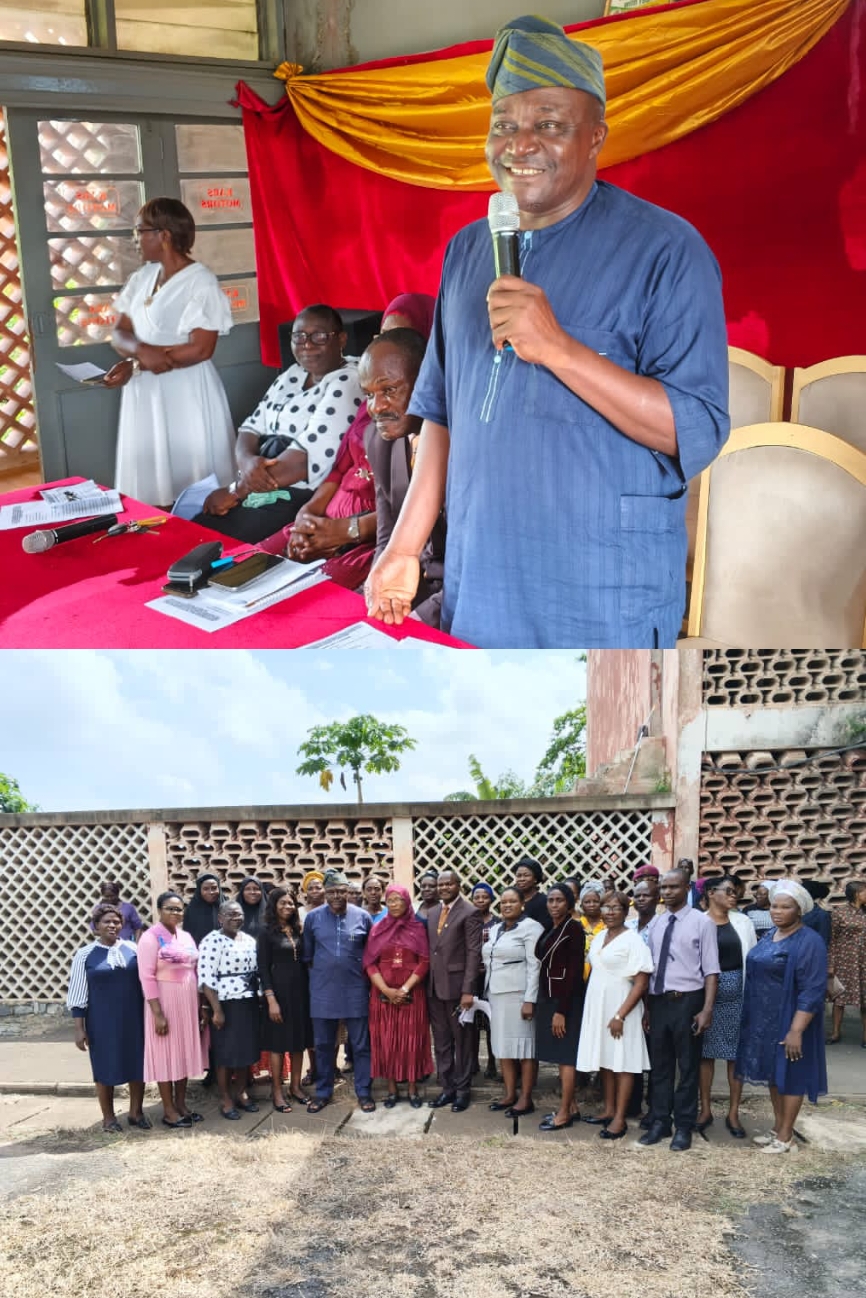
Civil servants in Oyo State have been charged to seek knowledge beyond their present human capacity training to remain relevant in office, as the state government organized a one-day training workshop for 85 workers on a series of capacity-building sessions.
The workshops comprised four groups of participants, including auditors, account officers, secretaries, and train-the-trainers, drawn from 25 Ministries, Departments and Agencies (MDAs).
Commissioner for Establishment and Training, Professor Abdulwaheed Saliu Adelabu, made this charge in an interview with journalists shortly after declaring the workshop open held at Simeon Adebo Staff Development Center, Secretariat. He encouraged participants to “learn to earn” in order to increase their source of income.
The Commissioner emphasized that civil servants need to undergo more training and acquire additional skills that will enhance their efficiencies and responsibilities at the state level.
According to him, the government, through the Simeon Adebo Staff Development Center, is not relenting in ensuring that all cadres in the service are trained; both the academic and non-academic staff are working to sustain the legacy of Simeon Adebo.
Addressing the economic situation in the country, Professor Adelabu assured that the welfare of workers remains a priority for the State Governor, Engr. Seyi Makinde. He noted that the economic hardship is not peculiar to Oyo State alone and that the government has been doing its best to cushion its effects.
“A couple of years back, it was only in Oyo State that we had an initiative called Sustainable Action for Economic Recovery (SAfER). Also, there is a fuel subsidy allowance of N10,000 for each worker to ease transportation burden, as well as buses to convey them to and from different location,” he said.
He added that based on the economic indices, Oyo State is among the three best states in Nigeria in terms of workers’ welfare.
In his remark, the Permanent Secretary, Ministry of Establishments and Training, Alhaji Alade Bello, who was represented by the Director, Pension and Gratuity, Mr. Olufemi Ogungbile, encouraged participants to listen with rapt attention, noting that competence must be involved; otherwise, it will expire.
He explained that capacity building is not about the number of years spent in service but about continuous updating.
He added that knowledge acquired for competence yesterday may not be sufficient to address the present challenge, which is why regular updates are necessary.
The Executive Secretary, Simeon Adebo Staff Development Center, Mrs. Stella Okedum, in her welcome address, stated that given where the world is heading, it is no longer business as usual. She assured that Artificial Intelligence (AI) will not take the position of anyone who continues to learn.
news
Oyo Police Commences Enforcement On Vehicle Identification Compliance And Crime Prevention Operations
Oyo State Police Command, in furtherance of its unwavering commitment to ensuring a safer and more secure environment and in line with ongoing efforts to rid the State of violent crime and other forms of criminality, has commenced a statewide enforcement operation targeting unmarked vehicular objects, fake and obscured number plates, as well as unauthorized covering of vehicle plates.
This enforcement action, which commenced on Thursday, June 4, 2026, is aimed at ensuring strict compliance with lawful vehicle identification standards and enhancing overall public safety and security architecture within the State.
Oyo State Police Command said, any person or persons found violating these directives will be promptly arrested, while such vehicles or motorcycles will be impounded in line with extant laws and operational procedures.
Furthermore, Oyo State Police Command will sustain intermittent stop-and-search operations, intelligence-led patrols, and coordinated raids of identified criminal blackspots across the State. There will also be increased police visibility and strategic deployment of personnel within key locations across urban and rural areas.
These measures are part of a broader security framework designed to deter criminal activities, enhance rapid response capabilities, and strengthen public confidence in policing operations.
Members of the public are therefore urged to remain calm, law-abiding, and cooperative with Police personnel during the course of these operations, as these actions are strictly in the interest of public safety and security.
The Command appreciates the continued support and understanding of residents and assures that all operations will be conducted professionally, lawfully, and with due respect for human rights.

The Oyo State Police Command has recorded another significant breakthrough in its ongoing efforts to combat cultism and other violent crimes across the State with the arrest of two confessed members of a secret cult group.
On Wednesday, June 3, 2026, operatives of the Command Monitoring Unit, while conducting a routine stop-and-search operation along the Oyo/Ogbomoso Expressway, intercepted and arrested two suspects identified as Ajala Bukola, male, 28 years, and Caleb Adesoye, male, 24 years.
Preliminary investigation revealed that the duo had been on the Command’s watchlist for some time owing to their suspected involvement in cult-related activities within Ogbomoso and its environs. During interrogation, the suspects confessed to membership of a dreaded secret cult group. Further investigation indicated that they occupy strategic positions within the group’s hierarchy and may be linked to other criminal activities currently under investigation.
A search conducted on a Lexus ES 350 vehicle, grey in colour. The search led to the recovery of three axes, one cutlass, one hammer, one Apple laptop computer, one HP laptop computer, two iPhones, one Samsung mobile phone, and substances suspected to be hard drugs.
The suspects remain in police custody and are assisting investigators with credible information aimed at identifying and apprehending other members and associates of the criminal group. Concerted efforts are ongoing to dismantle the network and bring all those connected with its activities to justice.
The Oyo State Police Command reiterates its unwavering commitment to combating cultism and all forms of criminality across the State. The Command therefore urges members of the public to remain vigilant and continue to provide timely and actionable information to security agencies.
The Command assures law-abiding residents that it will sustain its proactive crime-fighting strategies and ensure that all individuals involved in activities capable of threatening public peace and safety are dealt with in accordance with the law.

Oyo State Police Command has noted with serious concern a widely circulated publication containing detailed and purported operational information on the recent abduction incident in Ahoro-Esinele, Oriire Local Government Area, including alleged identities of suspects, communication interception details, and supposed financial transactions linked to ongoing investigations.
The Command wishes to categorically state that the said publication is misleading, speculative, and not an official security report. It contains numerous operational claims and technical assertions that did not emanate from the Oyo State Police Command or any constituted security authority involved in the ongoing investigation.
For the avoidance of doubt, the investigation into the unfortunate incident remains active, sensitive, and intelligence-driven. As it’s the standard practice in matters of this nature, operational details, identities of suspects, investigative leads, and financial intelligence components are strictly protected to safeguard ongoing efforts, prevent compromise of field operations, and ensure successful apprehension of all perpetrators.
Oyo State Police Command therefore cautions members of the public, bloggers, and online publishers against the dissemination of unverified, exaggerated, or operationally sensitive information capable of misleading the public, causing panic, or undermining active security operations.
Oyo State Police Command will not hesitate to apply the full weight of the law against any individual or group found deliberately circulating such false information, interfering with investigations, or attempting to obstruct ongoing security operations.
Members of the public are also urged to rely strictly on official communication channels of the Oyo State Police Command for verified information on the case and other security-related developments.
Oyo State Police Command reassures residents of its unwavering commitment to ensuring that all those involved in the crime are identified, arrested, and brought to justice in accordance with the law.
-
news6 months ago
Arrive Early To Examination Centers, Comport Yourselves – Oyo HOS Admonishes Civil/Public Servants
-

 news1 year ago
Interrogating the connection between social service and charity
-
news1 year ago
ANPP block in APC expresses deep concern over marginalisation to re-evaluate membership
-
news12 months ago
LG Commission Chairman ‘Wolekanle’ Gets Oyo NULGE’s Support
-

 news1 year ago
Abdulrazaq Inspects Govt’s Multistorey Prototype School
-

 news1 year ago
Man arrested for beating girlfriend to death in Lagos
-

 economics1 year ago
Subscribers lament as MultiChoice raises DStv subscription by 21%
-

 economics1 year ago
NNPC Shipping, partners unveil joint venture to boost crude transport